
Introduction: The New Landscape of AI Search
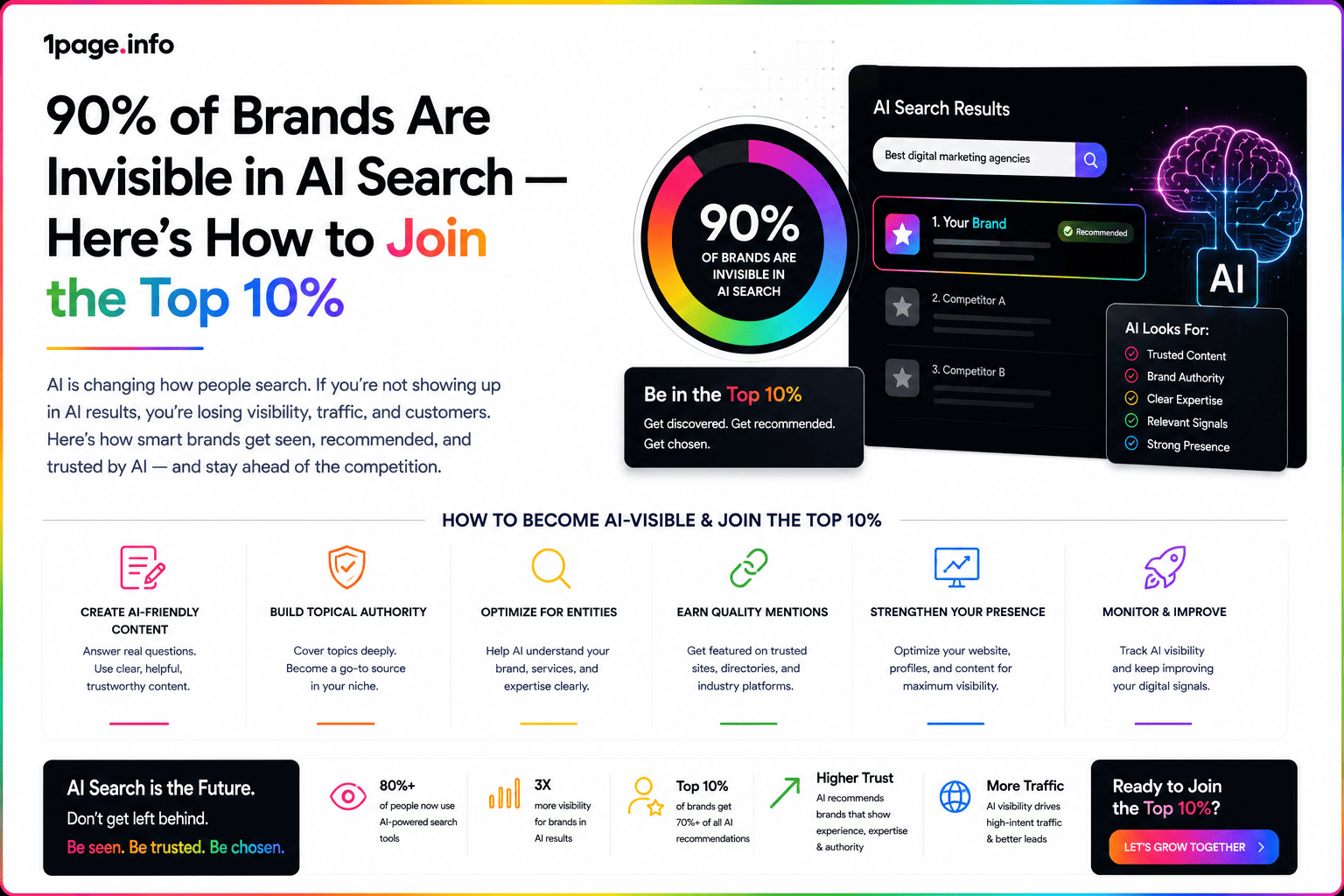
The digital marketing world is facing a seismic shift. With the rise of AI-powered search engines and assistants like Google Bard, ChatGPT, Bing AI, and others, traditional search engine optimization (SEO) tactics are no longer enough. Recent studies show that 90% of brands remain invisible in AI search results, missing out on the massive opportunities these platforms offer. So, what does it take to join the elite 10% that are seen and recommended by AI?
Why AI Search Matters More Than Ever
AI search is rapidly changing how people find information, products, and services online. Instead of scrolling through pages of blue links, users now ask conversational questions and receive concise, AI-generated answers. This new paradigm means that only the most relevant, authoritative, and well-structured content is surfaced by AI assistants.
- Conversational Queries: Users interact with AI in natural language, seeking immediate, accurate answers.
- Zero-Click Results: AI assistants often provide direct answers without sending users to external websites.
- Brand Recommendations: AI search can recommend brands and products—but only if your content is recognized and trusted.
Failing to adapt means your brand risks disappearing from the digital landscape altogether.
Why Most Brands Are Invisible in AI Search
There are several reasons why 90% of brands are not showing up in AI search results:
- Poor Content Structure: AI algorithms prefer well-organized, clearly structured information.
- Lack of Authority: Brands without a strong online reputation or quality backlinks struggle to rank.
- Outdated SEO Practices: Focusing solely on keyword stuffing or old-school tactics won’t work in the AI era.
- No Structured Data: AI depends on schema markup and structured data to understand website content.
- Neglecting Conversational Content: Brands that don’t answer real user questions are left out of AI-generated answers.
How to Make Your Brand Visible in AI Search
Ready to stand out in the age of AI? Here’s what you need to do:
1. Optimize for Conversational Search
AI assistants thrive on natural language. Make sure your website content answers questions in a conversational tone. Use long-tail keywords and phrase your headings as questions when possible. For example, instead of “Digital Marketing Services,” try “What digital marketing services does our agency offer?”
2. Use Structured Data and Schema Markup
Structured data helps AI understand your content’s context and relevance. Implement schema markup for products, services, reviews, and FAQs. This not only aids AI comprehension but can also earn you rich results in both traditional and AI search.
3. Build Topical Authority and Trust
Publish in-depth, authoritative content around your core topics. Earn backlinks from reputable sources and encourage positive reviews. AI search engines favor brands perceived as trustworthy and authoritative in their field.
4. Create Comprehensive FAQ Sections
AI tools love clear, concise answers to common questions. Add an FAQ section to your website, targeting questions real users might ask. Keep answers brief but informative, and update them regularly as trends shift.
5. Focus on Entity Optimization
AI search relies heavily on entities—people, organizations, places, and things—to understand context. Ensure your brand is recognized as a unique entity by using consistent naming, linking to authoritative sources, and maintaining accurate business listings across the web.
6. Monitor and Update Content Regularly
Outdated content can cause your brand to drop out of AI search results. Regularly audit your site, refresh key pages, and address emerging user questions or trends in your industry.
7. Leverage Voice Search Optimization
With the rise of smart speakers and mobile assistants, optimizing for voice search is critical. Write content in a way that mimics how people speak, target featured snippets, and prioritize mobile-friendly design.
Case Study: How a Brand Became AI-Visible
Consider the example of "GreenLeaf Wellness," a health supplement company. By restructuring their website with FAQ pages, implementing schema markup, and focusing on in-depth blog posts answering popular health questions, they saw a 40% increase in AI-driven referrals within six months. Their brand now appears as a recommended option in several AI assistants for queries like “best natural supplements for energy.”
5 Frequently Asked Questions About AI Search Visibility
1. What is AI search, and how is it different from traditional search?
Answer: AI search uses artificial intelligence to understand queries in natural language, providing direct, conversational answers rather than just links. It prioritizes relevance, authority, and structured data, often resulting in zero-click answers and voice search recommendations.
2. How can I check if my brand is visible in AI search?
Answer: Test popular AI assistants (like ChatGPT, Google Bard, Bing AI) by asking questions related to your brand or industry. Monitor your analytics for referrals from AI platforms and use tools to check if your content is being cited in AI-generated answers.
3. What type of content is most likely to appear in AI search results?
Answer: Well-structured, authoritative, and conversational content—including FAQs, how-to guides, and detailed blog posts—tends to perform best. Content with schema markup and clear answers to user questions is favored by AI algorithms.
4. Is structured data really necessary for AI search visibility?
Answer: Yes, structured data (like schema markup) is essential. It helps AI understand your content’s context, increasing the likelihood your brand is recommended or cited in AI-generated answers.
5. How often should I update my content for AI search optimization?
Answer: Regular updates are crucial. Review and refresh your key pages, FAQs, and blog posts at least quarterly, or whenever new trends, products, or user questions emerge in your industry.
Conclusion: Secure Your Place in the AI Search Top 10%
As AI-powered search continues to evolve, the brands that adapt early will reap the rewards. By embracing conversational content, structured data, and ongoing optimization, your brand can break out of the invisible 90% and thrive in the new era of AI-driven discovery. Now is the time to future-proof your online presence and ensure your brand isn’t just seen—but recommended—by the world’s most powerful AI assistants.