
Introduction: The Rise of AI-Generated Art
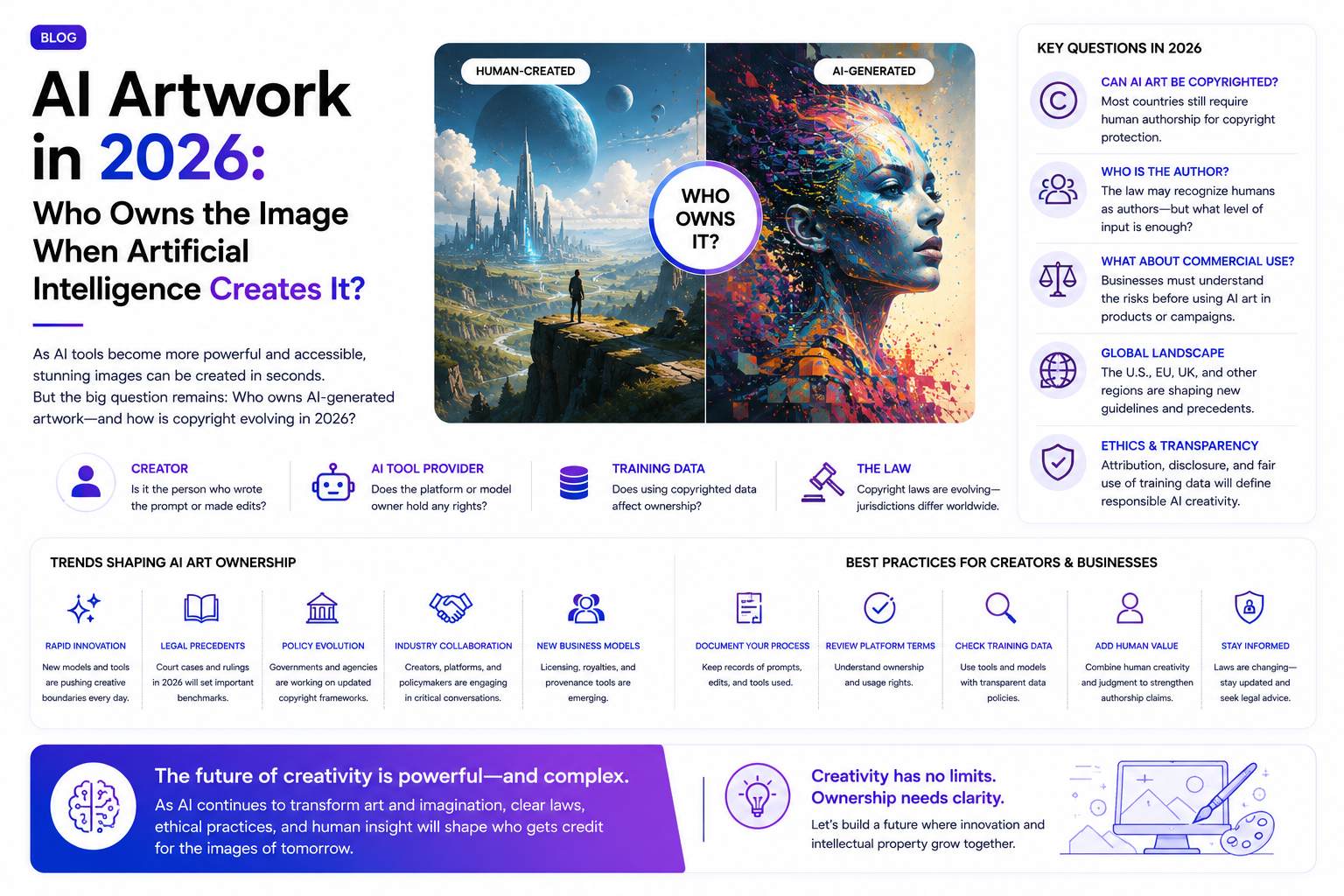
In recent years, artificial intelligence (AI) has revolutionized the art world. By 2026, AI-generated artwork is not only mainstream but also a hot topic in creative, legal, and technological circles. With advanced algorithms creating everything from digital paintings to photorealistic images, a pressing question arises: Who owns the image when artificial intelligence creates it?
How AI Creates Art in 2026
AI art generators now employ deep neural networks, advanced machine learning, and vast datasets to produce original works. Popular platforms allow users to input a prompt—sometimes just a few words—and receive stunning, unique artwork in seconds. The sophistication of these tools blurs the line between human and machine creativity, raising complex questions about authorship and ownership.
The Creative Process: Human vs. Machine
Unlike traditional art, where a human artist is clearly the creator, AI art involves several parties:
- The AI developer — The team or company that built and trained the AI model.
- The dataset curator — Individuals or organizations that assembled the images and data to train the AI.
- The user or prompt-giver — The person inputting prompts and making selections to guide the AI's output.
This multi-layered process complicates the question of who, if anyone, actually owns the resulting artwork.
Legal Perspectives on AI Artwork Ownership
Copyright Law: Where Does AI Fit?
Copyright law traditionally protects works created by humans. In many jurisdictions, including the United States and much of Europe, non-human entities cannot be awarded copyright. This means that, as of 2026, images generated solely by AI may not qualify for copyright protection at all. However, when a human exercises creative control over the process—such as curating prompts, editing outputs, or combining multiple images—there may be grounds for some level of ownership.
Who Owns the Output?
- The User: Many AI art platforms grant users rights to their generated images, especially if the user pays for the service or contributes significant creative input. These rights are often outlined in the platform's terms of service.
- The AI Platform: Some platforms claim partial or full ownership, arguing that the image is a product of their proprietary technology and data.
- No One: In the absence of human authorship, some legal experts argue that AI-generated art falls into the public domain.
The answer often depends on the specific AI tool, the user's actions, and the legal framework of the country in question.
Ethical and Practical Implications
Respecting Original Artists
Many AI models are trained on existing artwork, raising concerns about the rights of original artists. If an AI-generated image closely resembles or draws inspiration from copyrighted works, legal disputes can arise. By 2026, there are increased calls for transparency in AI training datasets and fair compensation for original creators whose works are used.
Commercial Use and Licensing
For businesses and creators looking to use AI-generated art commercially, understanding ownership is crucial. Without clear rights, using such images in marketing, products, or media could lead to legal challenges. As a result, many companies are establishing policies and seeking legal guidance before incorporating AI art into their portfolios.
The Future: Evolving Laws and Industry Standards
Governments and industry bodies are actively debating new regulations for AI-generated content. By 2026, several countries have proposed or enacted laws addressing AI authorship, data transparency, and ethical use of AI in creative industries. Some platforms now offer tools for creators to opt out of having their works used in AI training, while others are developing systems to track and credit original sources.
Best Practices for AI Art Users
- Read the Terms: Always review the terms of service for any AI art platform to understand your rights.
- Credit Appropriately: If possible, credit both the AI tool and any referenced artists.
- Seek Legal Advice: For commercial projects, consult intellectual property professionals to avoid potential pitfalls.
- Stay Informed: Laws and standards are evolving rapidly—what applies in 2026 may change in the coming years.
Conclusion: Navigating AI Art Ownership in 2026
The question of who owns AI-generated artwork remains complex and dynamic. While technology continues to push creative boundaries, legal and ethical frameworks are struggling to keep pace. By staying informed and adopting best practices, creators, businesses, and users can navigate this exciting new frontier responsibly.
References
- World Intellectual Property Organization. Who Owns the Copyright in AI-Generated Works? (2023).
- U.S. Copyright Office. Artificial Intelligence and Copyright (2024).
- European Parliament. Artificial Intelligence in the EU: Regulations and Approaches (2024).