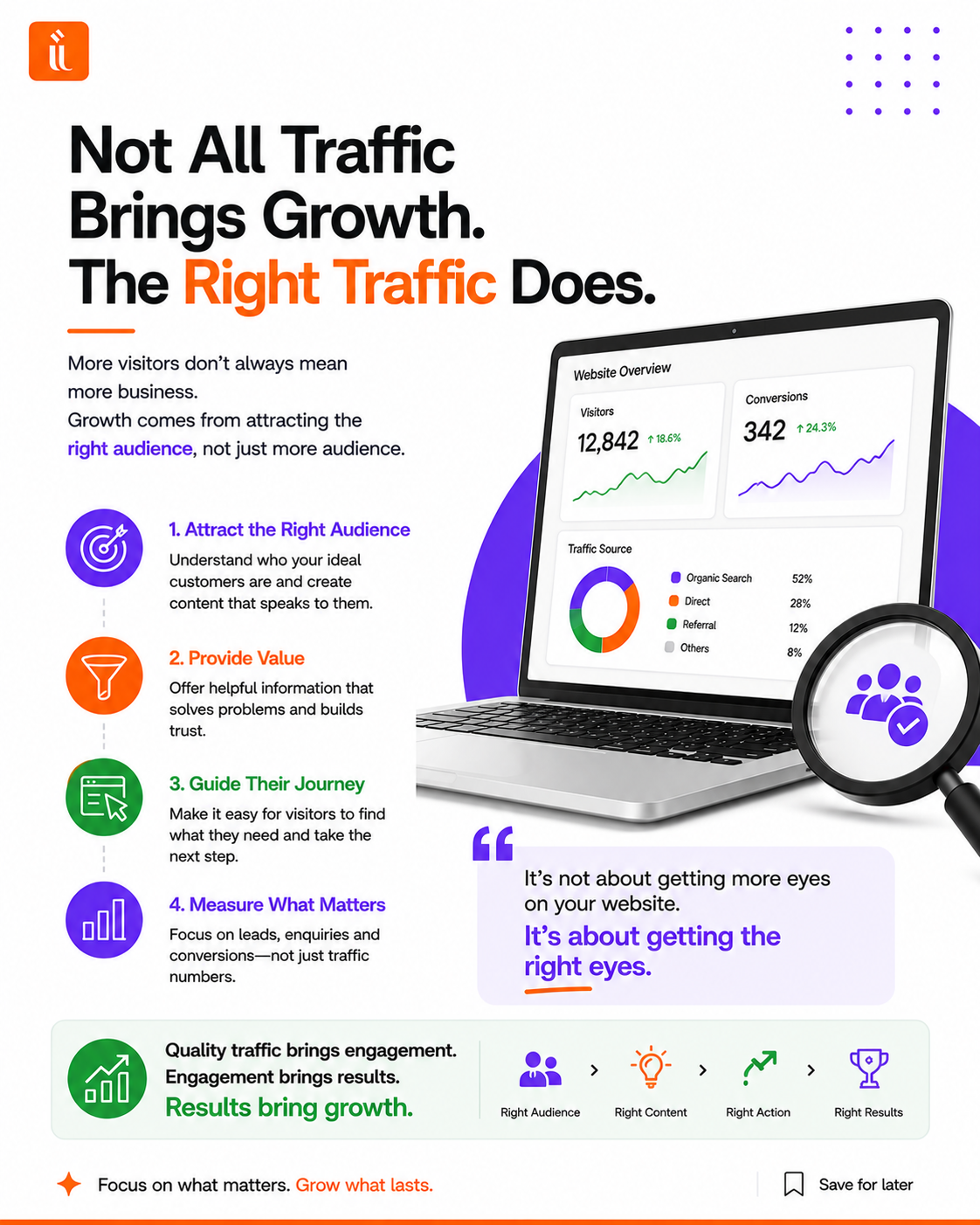
The digital marketing landscape is experiencing one of its biggest transformations since the rise of social media. Artificial Intelligence (AI) is changing how people search for information, compare products, and make purchasing decisions. Instead of scrolling through pages of search results, users are increasingly receiving direct, conversational answers from AI-powered search platforms. For technology companies, SaaS providers, software startups, IT service firms, and enterprise solution providers, this shift presents both an opportunity and a challenge. Traditional SEO remains important, but brands must now optimize their digital presence for AI-driven discovery as well. Businesses that adapt early will gain greater visibility, stronger credibility, and higher-quality leads. For a time people who do marketing tried to get their websites on the first page of search results. Now computers use intelligence to look at lots of good sources and then give users a suggestion. This means companies that make technology need to write things that people can understand answer their questions and show that they really know what they are talking about. Artificial intelligence systems like content that's easy to follow, true and actually helps people instead of just using certain words to get attention. Companies that always write and share things like tutorials, technical guides, comparisons and articles that show they are experts are more likely to be seen as trustworthy, by intelligence systems and be included in the answers they give to users. Publishing frequent content is no longer enough. Search engines and AI models increasingly evaluate whether content provides genuine value and satisfies user intent. Technology businesses should invest in detailed product pages, case studies, implementation guides, troubleshooting articles, industry reports, and customer success stories. High-quality content not only improves search visibility but also builds confidence among decision-makers researching software or technology solutions. When customers can quickly understand how a product solves their problem, conversion rates naturally improve. Technology products often require explanation. Videos have become one of the most effective ways to simplify technical concepts and showcase real-world applications. Short product demonstrations, customer testimonials, feature walkthroughs, webinars, and live Q&A sessions help potential customers understand software capabilities before requesting a demo. Video content also performs exceptionally well across social media platforms and supports higher engagement than text-only posts. As AI increasingly indexes multimedia content, businesses with diverse content formats may gain additional visibility. Technology marketers are changing the way they do things because third-party cookies are going away. They are focusing on getting information from people who use their products or services directly. This means they are making friends with customers through things like newsletters and webinars. They are also giving people a chance to try out their products and join communities. This helps them learn about their customers without using help. First-party data is really helpful because it lets businesses make email messages that're just for each person. They can also suggest things that're useful to each customer.. They can make sure that people have a good experience when they use their products. All of this is possible while still following the rules about keeping peoples information private. Companies that are open and honest about how they collect information are more likely to have customers who trust them for a time. First-party data is important for this. Businesses that use first-party data can do a job of respecting their customers privacy. This is good for the customers. It is also good, for the businesses that use first-party data. Technology buyers increasingly rely on peer recommendations before making purchasing decisions. Online communities, discussion forums, webinars, professional groups, and user communities have become powerful marketing channels. Encouraging customers to share experiences, publish reviews, answer questions, and participate in product discussions creates authentic brand advocacy that paid advertising alone cannot achieve. Building a knowledgeable community around a technology product strengthens customer loyalty while generating valuable user-generated content that supports search visibility. Artificial Intelligence and automation are really helping marketing teams get a lot done with people. They can send emails automatically to the people figure out which leads are good use chatbots to help customers look at numbers to predict what will happen and suggest the right content to people. This helps businesses talk to customers at the time when they are buying something. Artificial Intelligence is not taking the place of marketers. It just lets them think about the picture be creative and build relationships, with people. Artificial Intelligence takes care of the tasks that need to be done over and over. When companies use automation in a way they usually get more work done and turn leads into customers faster. Website traffic alone is no longer the ultimate measure of marketing success. Technology businesses should focus on metrics that reflect business impact, including qualified leads, customer acquisition cost, engagement quality, product demo requests, customer lifetime value, and retention rates. Advanced analytics platforms provide deeper insights into user behavior, allowing marketers to optimize campaigns continuously and invest in channels that generate meaningful business outcomes. Data-driven marketing decisions help organizations remain agile in an increasingly competitive marketplace. The technology industry is changing fast and digital marketing needs to change with it. Things like search that uses intelligence talking to devices, automation, marketing that cares about privacy and getting people involved in a community are changing how companies talk to their customers. Companies that make technology and do things like create content make sure their website is easy to find give customers experiences that are just for them and use artificial intelligence in a fair way will be more likely to gain the trust of people who buy things online. Digital marketing is not about getting people to see your ads anymore. It is about being the company that people think is the trustworthy when they are trying to make a smart decision, about what to buy. The companies that start doing things this way now will be the ones that're in charge of the digital economy in the future.Beyond Search Rankings: Winning AI Recommendations
Content Quality Has Become a Competitive Advantage
Video Is Becoming the New Product Demonstration
First-Party Data Is More Valuable Than Ever
Community-Led Marketing Drives Sustainable Growth
Marketing Automation Improves Efficiency
Measuring Success Beyond Traffic
The Future Belongs to Brands That Adapt


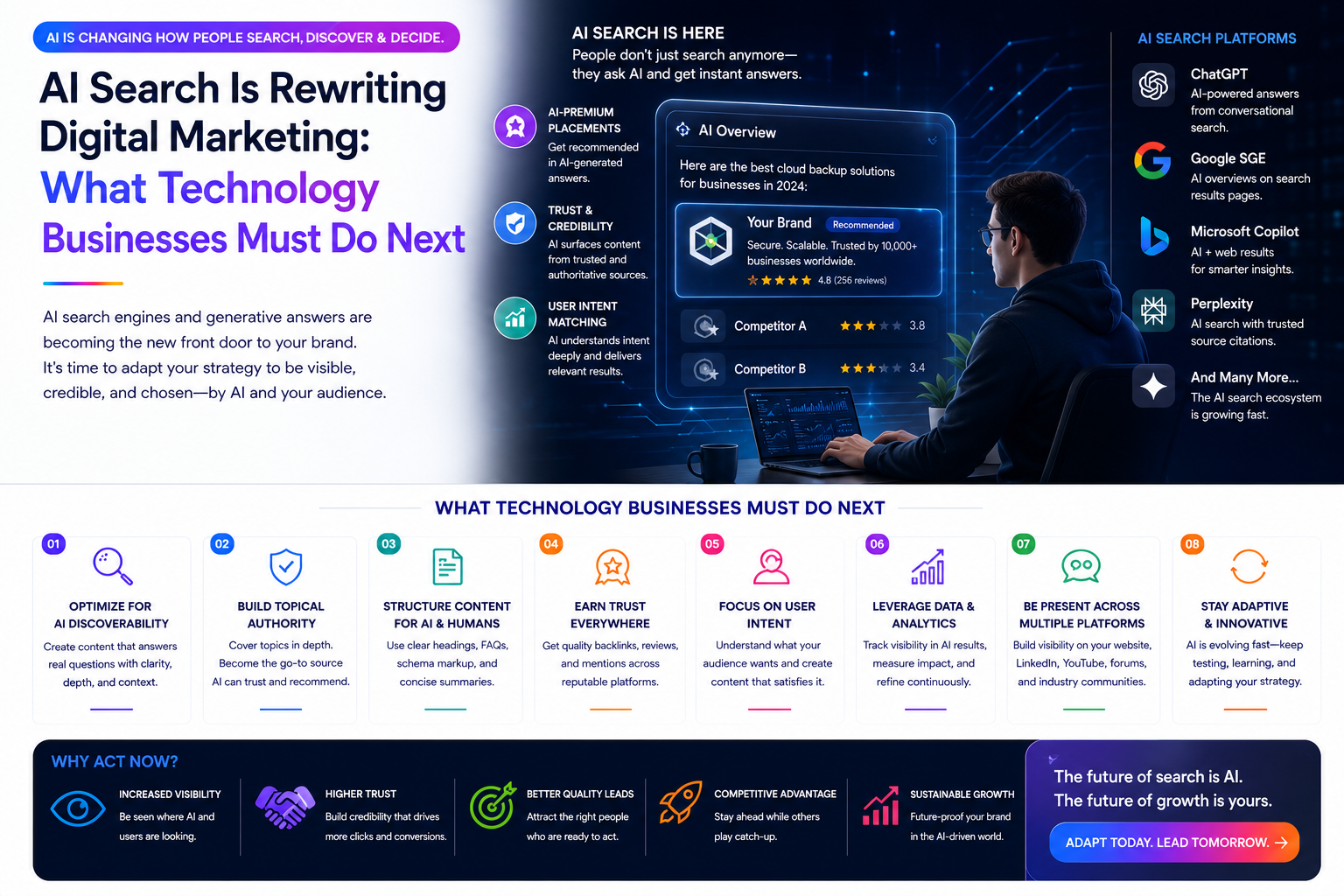
AI Search Is Rewriting Digital Marketing: What Technology Businesses Must Do Next
Author
Discover how AI-powered search, automation, first-party data, and community-led marketing are reshaping digital marketing for technology businesses. Learn the latest strategies to improve visibility, generate qualified leads, and stay competitive in an AI-driven digital landscape.
Related Articles

Was this content helpful?

1page.info is a discovery platform built on user-generated content — entity pages, descriptions, and listings are created and controlled by users themselves. We do not verify, validate, or endorse any listing. Read our full Disclaimer before relying on information found here.
© 2026 Onepageinfo India Pvt. Ltd. — India. All rights reserved.