
The Dawn of a New Literary Age
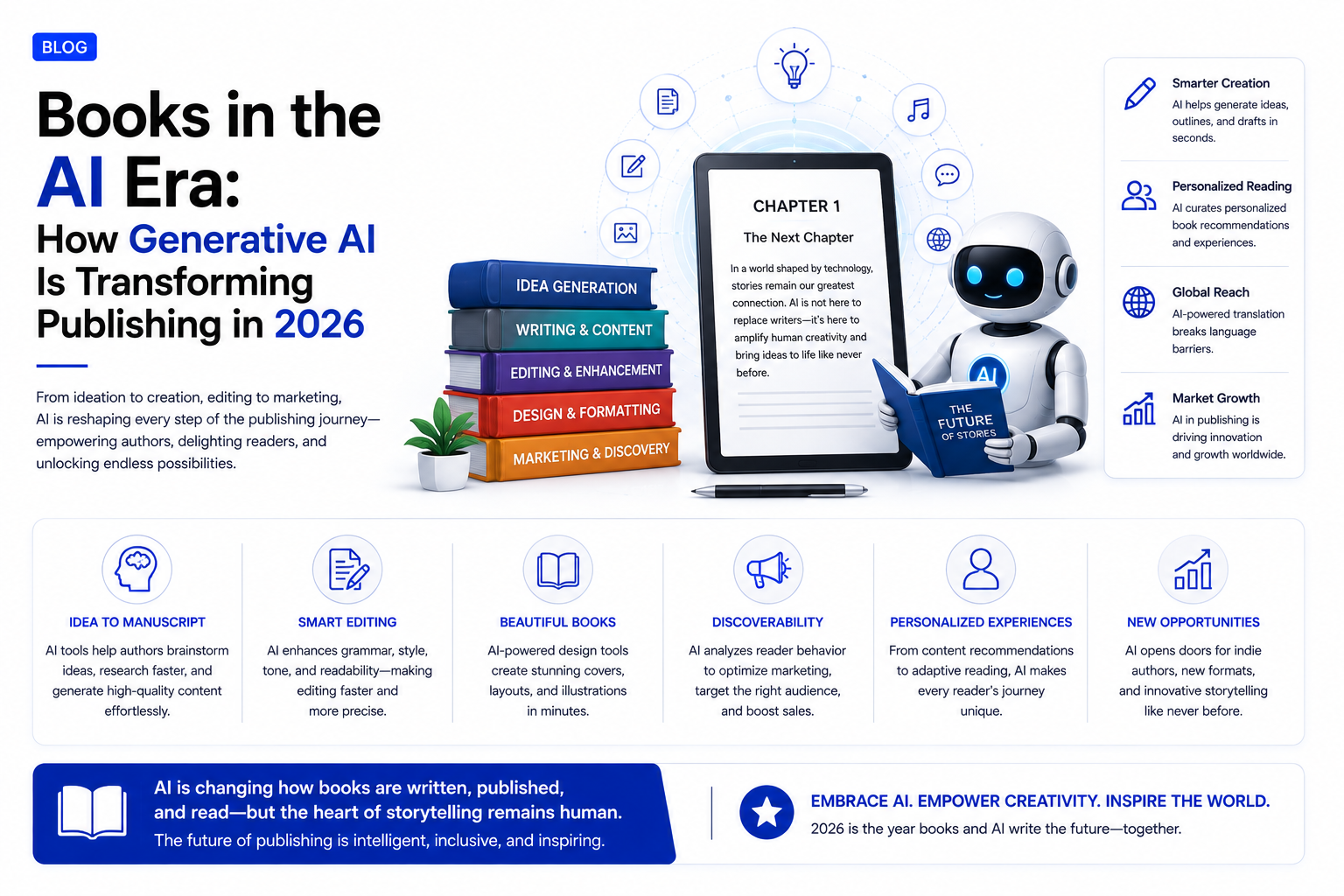
In 2026, the intersection of artificial intelligence and literature has become one of the most exciting developments in the world of books. Generative AI, a technology once limited to experimental labs, now permeates every aspect of publishing and reading. From AI-assisted authorship to personalized reading experiences, the entire ecosystem of books is evolving rapidly.
Generative AI: The Catalyst for Change
Generative AI refers to advanced algorithms capable of creating content — including text, imagery, and even music — that mimics human creativity. In publishing, this has opened the floodgates for innovation:
- Automated Writing: AI can now draft novels, short stories, and poetry with remarkable coherence and imagination.
- Editing and Proofreading: Tools powered by generative AI offer real-time suggestions for grammar, tone, and style, elevating the quality of manuscripts.
- Cover Design and Illustration: AI-generated artwork is making book covers more dynamic and customizable.
AI-Powered Authorship: Friends or Foes?
One of the most debated innovations is AI-assisted authorship. In 2026, it's not uncommon for writers to collaborate with AI co-authors. These tools can help brainstorm plots, develop characters, and even write entire chapters. While some purists worry about the dilution of the human touch, many authors embrace AI as a partner that enhances creativity and productivity.
Notably, AI is also democratizing the publishing world. Budding writers with limited resources can now access powerful tools that previously only established authors could afford. This has led to a surge in self-publishing and a more diverse range of voices in literature.
AI in Publishing: Streamlining the Industry
Publishers, too, are leveraging generative AI to speed up and personalize the book creation process. Here’s how:
- Market Analysis: AI algorithms analyze reading trends, helping publishers identify emerging genres and potential bestsellers.
- Targeted Marketing: Advanced AI tools segment audiences and craft personalized marketing campaigns, increasing engagement and sales.
- Automated Translation: Multilingual AIs make it possible to translate books instantly, connecting authors with global audiences.
These advancements make the publishing process more efficient and cost-effective, reducing the time it takes for a manuscript to reach readers' hands.
The Reading Experience Reimagined
AI is not only changing how books are written and published but also how they are consumed. In 2026, readers enjoy unprecedented personalization and interactivity:
- Personalized Recommendations: AI-driven platforms offer book suggestions tailored to individual tastes, reading habits, and even current moods.
- Interactive Narratives: Choose-your-own-adventure stories powered by AI adapt in real time to readers’ choices, creating a unique experience for every person.
- Adaptive Accessibility: For readers with disabilities, AI generates audio, visual, and tactile versions of books on demand, ensuring literature is accessible to all.
Digital Libraries and the Rise of AI Bookstores
Digital libraries in 2026 are more than just repositories of eBooks. They're intelligent platforms that understand and anticipate readers’ needs. AI-powered bookstores curate selections based on trending topics, seasonal interests, and user feedback, creating a more engaging shopping experience.
Challenges and Ethical Considerations
While generative AI offers incredible opportunities, it also raises important questions:
- Authenticity: As AI-written books proliferate, how do we distinguish human creativity from machine-generated content?
- Copyright and Ownership: Who owns the rights to a novel co-authored by an AI?
- Job Displacement: Will traditional roles like editors and illustrators become obsolete, or will they evolve alongside AI?
Publishers, authors, and readers are grappling with these dilemmas, prompting calls for clear guidelines and ethical standards in AI-assisted publishing.
The Future: Collaboration Over Competition
Looking ahead, the most successful stories in the AI era will likely be those born from collaboration — not just between humans and machines, but among writers, publishers, and readers themselves. As generative AI continues to mature, the line between technology and artistry will blur, ushering in a new golden age for books.
References
- "How AI Is Changing the Publishing Industry" – Publishing Perspectives, 2026
- "Generative AI and the Future of Storytelling" – Wired, May 2026
- "AI in Book Publishing: Trends and Challenges" – BookNet Canada Blog, April 2026