
Introduction: The Age of AI-Driven Brands
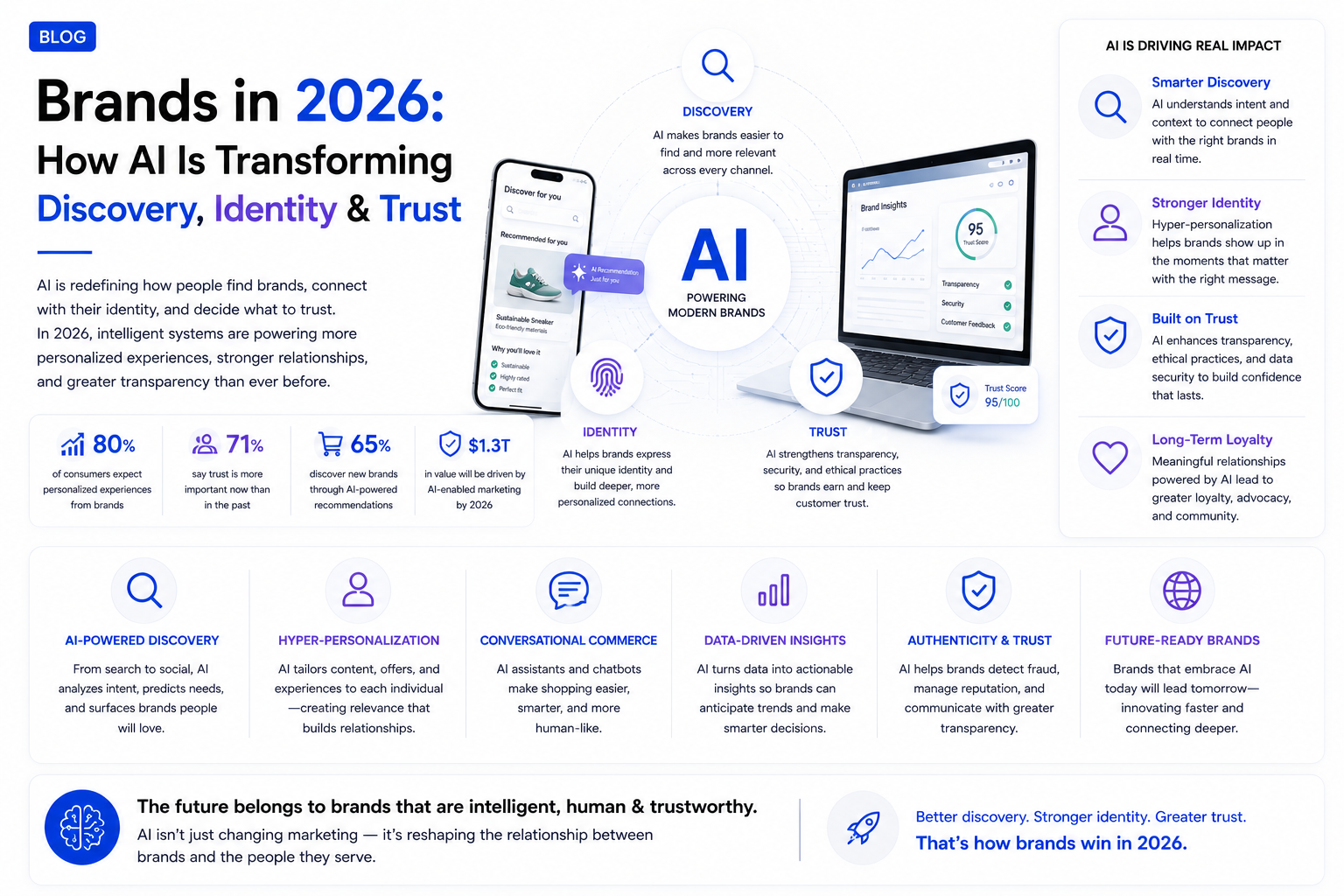
As we move swiftly into 2026, artificial intelligence (AI) is no longer a futuristic concept—it's the driving force reshaping how brands are discovered, how they build their identities, and how they foster consumer trust. For marketers, entrepreneurs, and consumers alike, understanding AI's impact is crucial to staying relevant in an evolving landscape. In this blog, we explore the latest trends in AI-powered branding and what they mean for the future.
AI and Brand Discovery: Smarter, Faster, Personalized
Finding new brands has never been easier—or more complicated. AI has revolutionized how consumers discover brands, making the process highly personalized and efficient.
Hyper-Personalized Recommendations
Modern AI algorithms analyze vast amounts of data from social media, purchase histories, and browsing habits to recommend brands and products tailored to individual preferences. Platforms like TikTok and Instagram use AI to surface trending brands based on your behavior, making traditional advertising almost obsolete for some demographics.
- Predictive Analytics: AI predicts what consumers might want even before they know it, delivering suggestions with uncanny accuracy.
- Conversational Search: Virtual assistants like Siri, Alexa, and Google Assistant use AI to recommend brands via voice search, streamlining the path from curiosity to purchase.
- Visual Search: Shoppers can now snap a photo and let AI-powered apps suggest similar products or brands, bridging the gap between inspiration and acquisition.
AI and Brand Identity: Dynamic, Adaptive, and Consistent
Brand identity is no longer static. AI has enabled brands to adapt their messaging, visuals, and experiences in real time, ensuring relevance across diverse audiences and touchpoints.
AI-Generated Content and Design
Tools like DALL-E and ChatGPT create logos, taglines, and campaigns at scale. This democratizes branding, allowing startups and small businesses to craft high-quality identities without massive budgets.
- Real-Time Adaptation: AI systems modify brand messaging and visuals based on audience data, location, and even emotional tone detected in user interactions.
- Consistency Across Channels: AI ensures consistent application of branding guidelines, monitoring everything from social media posts to packaging design.
- Dynamic Personalization: Brands can now adapt their identities—colors, slogans, and even product names—depending on the viewer, creating a sense of unique connection.
AI and Consumer Trust: Building Authentic Relationships
Consumer trust remains the cornerstone of brand success. While AI offers immense opportunities, it also brings new challenges and expectations around transparency, privacy, and authenticity.
Transparency and Ethical AI
Consumers are increasingly aware of how their data is used. Brands that leverage AI must be transparent about data collection and usage, building trust through clear communication and ethical practices.
- Explainable AI: Brands are adopting AI models that explain their decisions, helping consumers understand why certain recommendations or actions occur.
- Privacy and Data Security: With regulations tightening, brands use AI-driven security protocols to protect consumer data, reinforcing trust and loyalty.
- Authentic Engagement: AI chatbots and virtual assistants are becoming more human-like, but consumers still crave real connections. Successful brands combine AI efficiency with genuine, empathetic communication from human representatives.
Key Trends Shaping Brand-AI Relationships in 2026
- AI-Driven Influencers: Virtual influencers powered by AI are collaborating with brands, creating content, and engaging audiences in ways that blend entertainment and commerce.
- Sentiment Analysis at Scale: Brands use AI to analyze public sentiment across millions of posts, helping them respond proactively to trends, crises, and opportunities.
- Automated Crisis Management: AI tools detect reputational risks and deploy rapid, brand-safe responses to mitigate damage and maintain trust.
- Inclusive Branding: AI helps brands ensure their messaging and imagery are inclusive, analyzing content for bias and suggesting improvements.
Challenges and Considerations for Brands
While AI unlocks powerful new branding opportunities, it raises important questions:
- Maintaining Authenticity: Over-automation can feel impersonal. Brands must balance AI efficiency with authentic storytelling.
- Ethical AI Use: Bias in AI models can lead to missteps, so brands must prioritize fairness and inclusivity.
- Data Privacy: Respecting user data is critical—not just for compliance, but for building lasting trust.
Conclusion: The Future of Brand Building
By 2026, AI is at the heart of brand discovery, identity, and trust. The most successful brands will embrace AI-driven personalization and efficiency, while maintaining transparency, empathy, and authenticity. As consumers grow savvier, brands must continually adapt—leveraging AI as a tool for connection, not just conversion.
References: McKinsey & Company, "The State of AI in 2024"; Deloitte Insights, "Branding in the Age of AI"; Harvard Business Review, "How AI Is Changing Marketing" (2024-2025).