
The Evolution of News Consumption in 2026
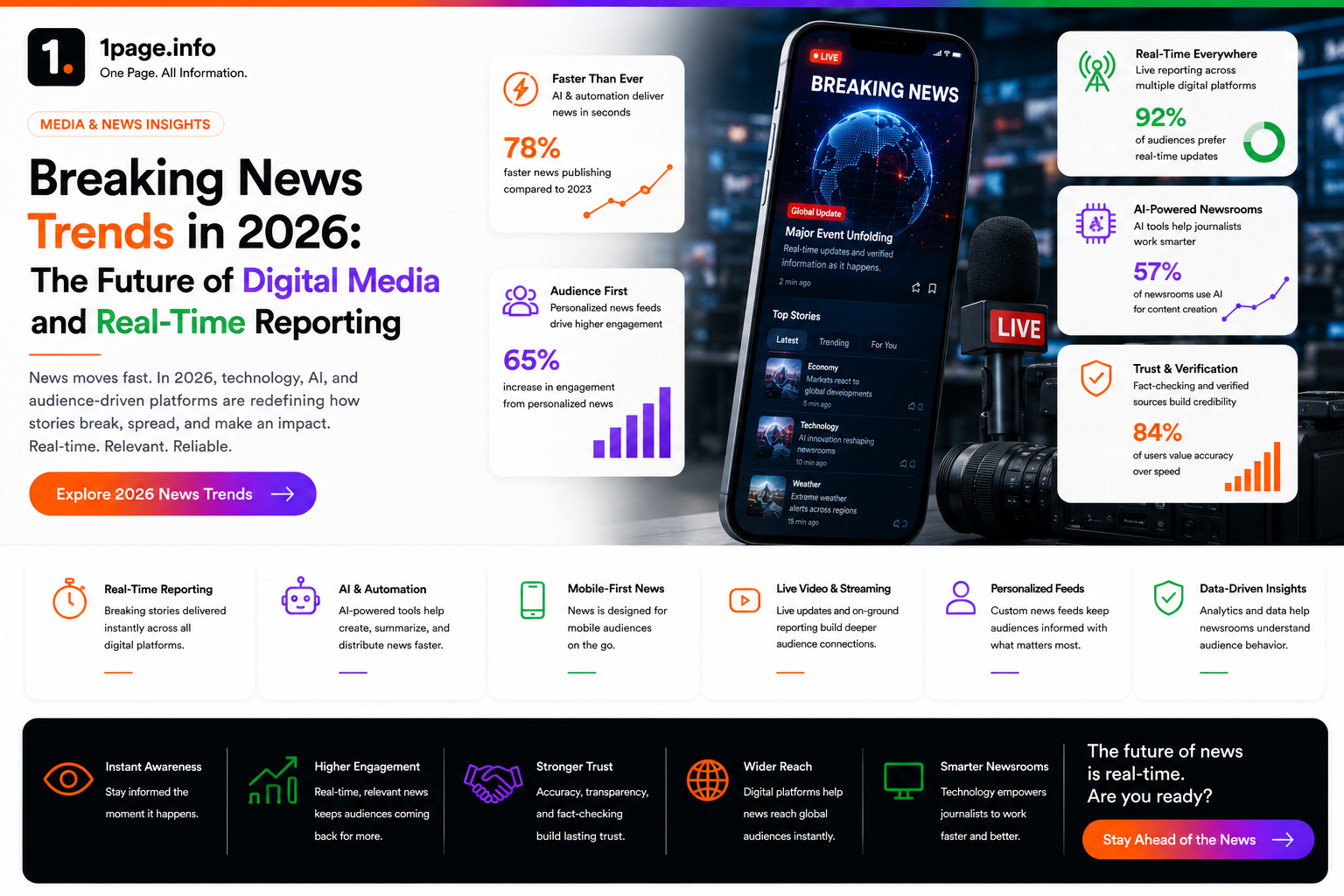
In an era defined by rapid digital transformation, the way audiences consume breaking news is undergoing significant change. As we approach 2026, the digital media landscape is being reshaped by emerging technologies, new content delivery formats, and evolving audience expectations. Let’s explore the trends driving the future of news reporting and digital media.
1. Real-Time Reporting Powered by AI
Artificial Intelligence (AI) is at the forefront of real-time news reporting in 2026. Newsrooms are leveraging AI algorithms to monitor global events, verify sources, and even draft initial news bulletins within seconds. This not only accelerates the speed at which breaking stories reach audiences but also enhances accuracy by filtering out misinformation.
- Automated Alerts: AI-driven platforms instantly notify journalists about trending topics or critical incidents worldwide.
- Fact-Checking Bots: Real-time verification tools reduce the spread of fake news by cross-referencing multiple sources before publication.
2. Immersive Storytelling with AR and VR
Augmented Reality (AR) and Virtual Reality (VR) are transforming the way stories are told. In 2026, many leading news outlets offer immersive experiences where users can virtually ‘step into’ a breaking news scene. This level of engagement fosters deeper understanding and empathy, particularly for complex or distant events.
- Live 360° Broadcasts: Audiences can experience live events from multiple perspectives, making them feel as though they are on the ground.
- Interactive Infographics: AR overlays provide real-time data visualization, giving viewers richer context and analysis as news unfolds.
3. Hyper-Personalized News Feeds
Gone are the days of one-size-fits-all news delivery. In 2026, machine learning and data analytics enable media platforms to curate hyper-personalized news feeds. Readers receive updates tailored to their interests, location, and reading habits, ensuring the most relevant stories always appear at the top of their screens.
- Customizable Alerts: Users set preferences for topics, regions, or formats (text, video, audio) to filter their news experience.
- Smart Summaries: AI-driven summarization tools condense lengthy reports into key takeaways, saving time for busy readers.
4. Rise of Citizen Journalism and Social Verification
As social media platforms continue to play a pivotal role in breaking news, citizen journalism is thriving. Eyewitnesses can broadcast events in real-time via their smartphones, often providing the first images or videos from the scene. In 2026, media organizations are adopting advanced verification processes and collaborating with citizen reporters to ensure authenticity.
- Geo-Location Tools: Verifies the origin of user-generated content to ensure authenticity.
- Community Moderation: Trusted communities help flag misinformation or unverified claims before they spread.
5. Blockchain for Transparency and Trust
With the rising threat of manipulated media and deepfakes, blockchain technology is being implemented to authenticate news content. In 2026, leading newsrooms are timestamping articles and videos on blockchain networks, allowing audiences to trace the origin and verify the integrity of information.
- Immutable Records: Each news report has a transparent, uneditable history, building trust with readers.
- Decentralized Fact-Checking: Multiple independent entities can review and validate news items, reducing central bias.
6. The Growing Impact of Audio and Voice-Driven News
Audio content, including podcasts and voice-activated news briefings, continues to surge in popularity. By 2026, smart speakers, wearables, and in-car assistants deliver real-time updates, making on-the-go news consumption seamless and interactive.
- Voice Search Optimization: News outlets are optimizing content for voice search, ensuring accurate and timely responses to user queries.
- Interactive Q&A: Listeners can ask follow-up questions or request deeper analysis, making news consumption more dynamic.
Challenges Ahead: Navigating Ethics and Misinformation
While technological advancements offer incredible opportunities, they also bring challenges. Newsrooms in 2026 must balance speed with accuracy, protect privacy, and uphold journalistic ethics amid the pressure to break stories first. Media literacy education and transparent reporting practices remain essential in combating misinformation and maintaining public trust.
Conclusion: A Dynamic and Responsive News Ecosystem
The future of digital media and real-time reporting is defined by innovation, interactivity, and personalization. As we move into 2026, audiences can expect news delivery to be faster, more immersive, and tailored to individual needs. By embracing new technologies and ethical standards, the media industry is poised to strengthen its vital role in informing and empowering society.
References:
1. Reuters Institute for the Study of Journalism, Digital News Report 2025.
2. Nieman Lab, "Predictions for Journalism 2026".
3. Pew Research Center, "The Future of News in a Changing Digital Landscape".