

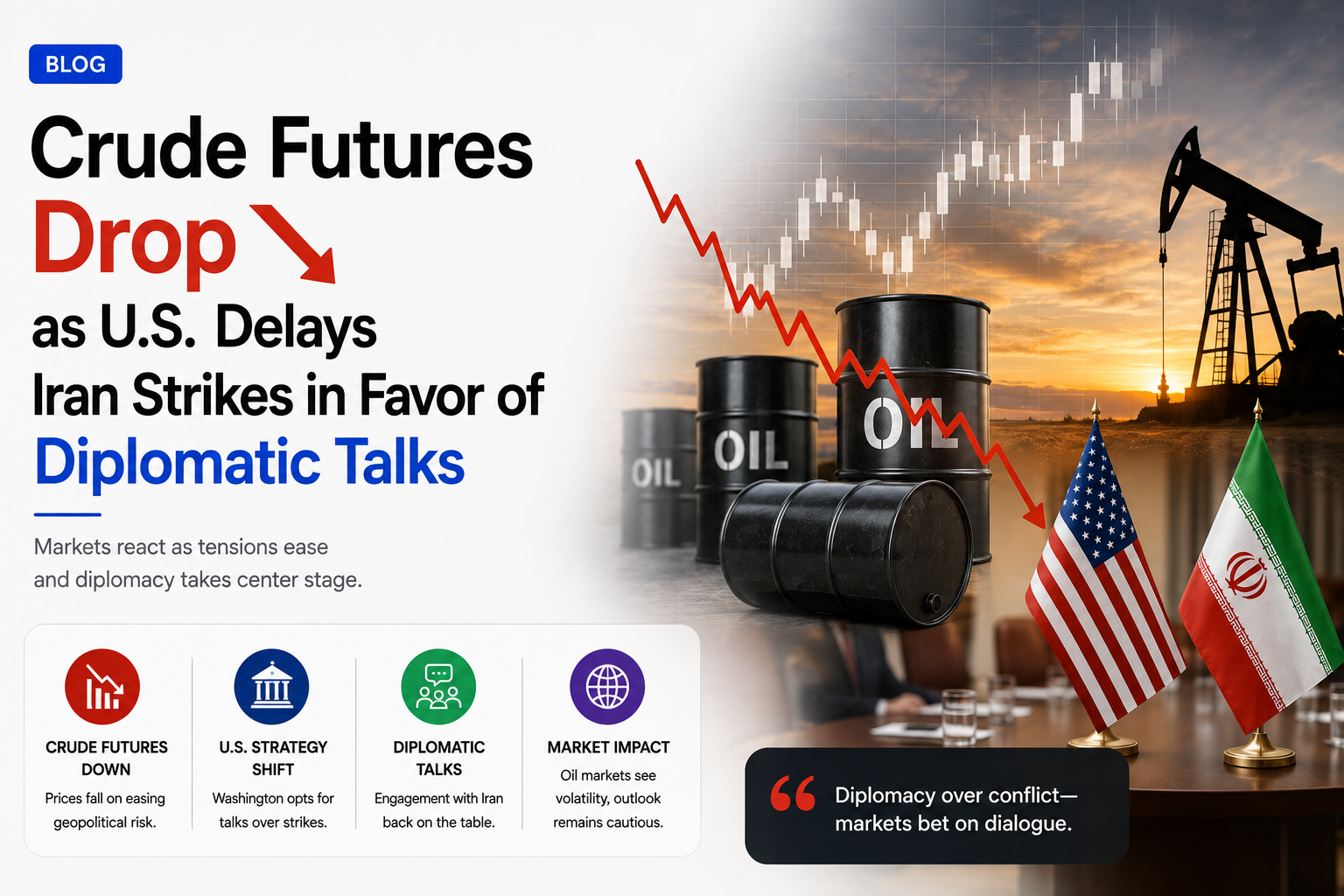
Crude Oil Futures Tumble Amid Easing Geopolitical Tensions
The global oil market witnessed a significant downturn as crude futures fell sharply following the United States' decision to postpone planned military strikes on Iran. Instead, U.S. officials have signaled a pivot toward diplomatic negotiations, sparking a rapid easing in geopolitical risk premiums that had recently buoyed oil prices. The shift has sent ripples through energy markets, with traders re-evaluating the near-term outlook for supply disruptions in the politically volatile Middle East.
Background: Rising Tensions and Market Jitters
In the past weeks, escalating tensions between the U.S. and Iran had fueled fears of a broader conflict that could threaten oil supplies from the region. After a series of incidents—including attacks on shipping in the Strait of Hormuz and drone strikes—the market priced in the risk of imminent military action. This speculation propelled crude prices to multi-week highs, with Brent and WTI benchmarks climbing as traders rushed to hedge against potential supply shocks.
U.S. Reverses Course, Eyes Diplomacy
However, the market narrative shifted dramatically as reports emerged that the U.S. administration had decided to put off immediate military action. Instead, diplomatic channels have been prioritized, with top officials from both countries expressing cautious openness toward dialogue. The move was welcomed by international allies and major oil-consuming nations, who are keen to avoid disruptions in global energy flows.
Market Reaction: Crude Futures Slide
Within hours of the announcement, crude futures experienced notable declines:
- Brent crude dropped over 3% to trade below $83 per barrel.
- West Texas Intermediate (WTI) futures fell nearly 4%, settling near $78 per barrel.
Trading volumes surged as speculative positions were unwound and investors recalibrated their risk assessments. The volatility underscored the market's sensitivity to geopolitical developments in the Middle East, which supplies roughly one-third of the world's oil.
Why Do Geopolitical Tensions Move Oil Prices?
Oil markets are notoriously reactive to turmoil in the Middle East. Several key factors explain this dynamic:
- Supply Disruption Fears: Any military conflict involving major oil producers like Iran can threaten physical supply chains, especially through chokepoints such as the Strait of Hormuz.
- Risk Premiums: Traders often price in a 'geopolitical risk premium' during periods of heightened tension, pushing prices higher even if no actual supply loss occurs.
- Speculation: Rapid news cycles and uncertainty encourage speculative trading, amplifying price swings.
Short-Term Outlook: What’s Next for Oil Prices?
With the immediate threat of conflict receding, analysts expect some downward pressure on crude prices in the short term. However, the situation remains fluid. Any signs of renewed escalation or breakdown in talks could quickly reverse current trends.
"While the risk premium has deflated for now, the underlying tensions haven’t disappeared," noted a senior energy analyst at a major investment bank. "Markets will remain on edge until there is a clear and lasting diplomatic solution."
Additionally, other market fundamentals—including global demand trends, OPEC+ supply strategies, and macroeconomic indicators—will continue to influence price direction.
Global Impact: Relief for Consumers, Uncertainty for Producers
The retreat in oil prices offers short-term relief for consumers and energy-intensive industries, potentially easing inflationary pressures in major economies. For oil-exporting nations, however, falling prices could strain fiscal budgets and add urgency to diplomatic efforts to stabilize the region.
Expert Opinions
- Economists: Many economists believe that a diplomatic resolution could bring greater stability to global energy markets in the medium term.
- Traders: Oil traders are closely monitoring headlines for any sign of renewed tension or surprise developments.
- Policy Makers: Governments are urging restraint on all sides, emphasizing the importance of uninterrupted energy supplies for global economic stability.
Conclusion
The recent drop in crude futures underscores the powerful influence of geopolitics on global markets. As the U.S. shifts from a military stance to diplomatic engagement with Iran, oil prices have responded by shedding their risk premium. While the immediate crisis has been averted, the situation remains fluid, and markets will continue to watch developments closely. For now, relief prevails—but as history shows, the oil market’s mood can change in an instant.
References:
- Reuters: "Oil falls as U.S. puts Iran strikes on hold, seeks talks"
- Bloomberg: "Crude Drops After U.S. Delays Iran Response"
- CNBC: "Oil prices tumble as U.S. steps back from Iran conflict"