

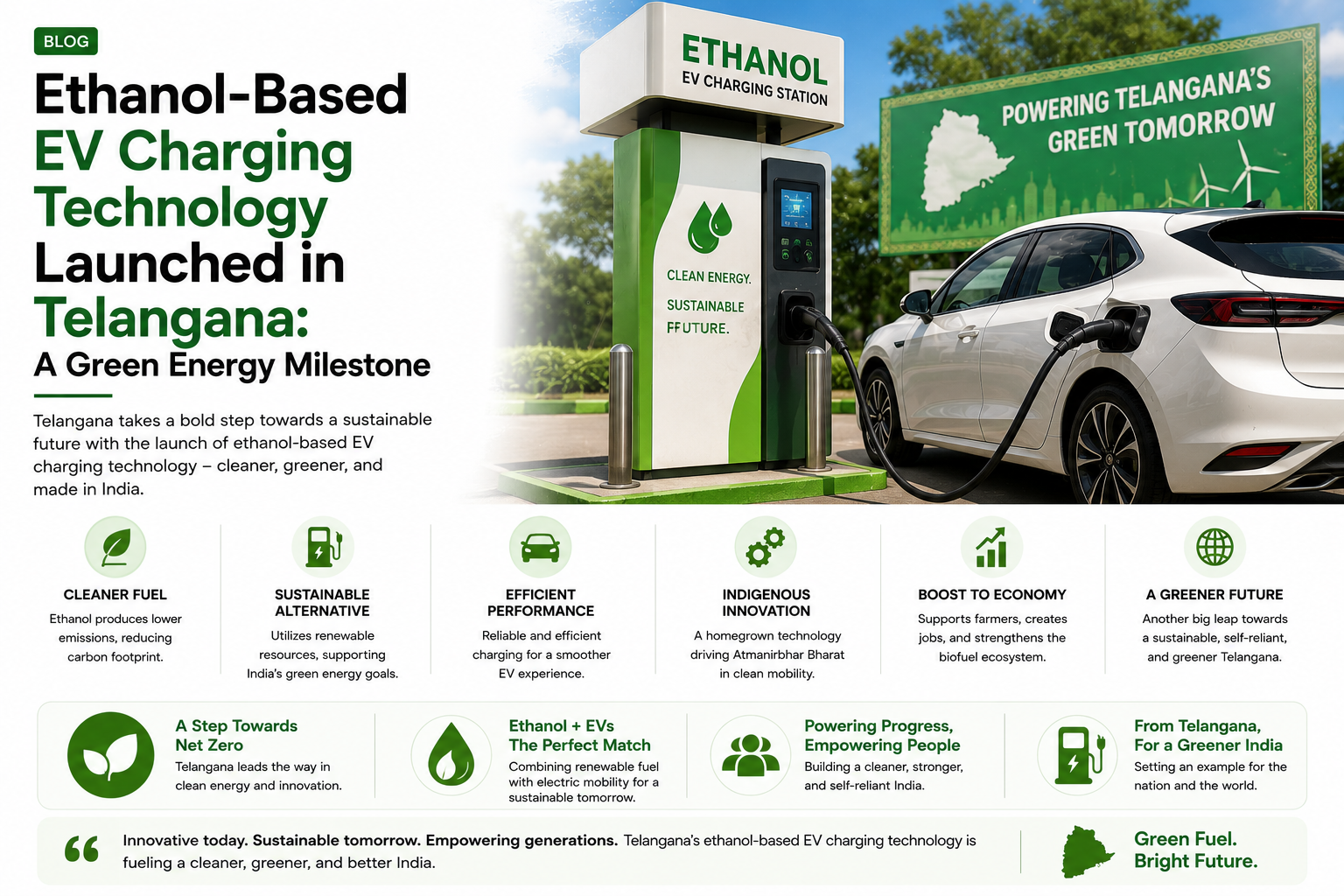
Ethanol-Based EV Charging Technology Debuts in Telangana
In a significant leap towards sustainable transportation, Telangana has become the first Indian state to introduce ethanol-based electric vehicle (EV) charging technology. The initiative, recently unveiled by Union Minister Kishan Reddy, marks a major stride in India's journey towards green energy and cleaner mobility solutions. As the world grapples with climate change and pollution, such forward-thinking innovations are crucial to shaping a greener, more sustainable future for generations to come.
Understanding Ethanol-Based EV Charging
Traditionally, EV charging stations in India rely on grid electricity, which often comes from fossil fuel sources. Ethanol-based charging technology, however, uses ethanol—a biofuel produced from renewable plant sources, such as sugarcane and corn—as the primary energy input. Specialized generators convert ethanol into electricity, which is then used to power EVs at charging stations.
- Renewable Source: Ethanol is derived from biomass, making it a renewable and more environmentally friendly alternative to coal or diesel.
- Lower Emissions: Compared to conventional fuels, ethanol combustion emits significantly less carbon dioxide and other pollutants.
- Energy Independence: Promoting ethanol utilization supports domestic agriculture and reduces reliance on imported fossil fuels.
Kishan Reddy's Vision for a Greener Telangana
Speaking at the inauguration ceremony, Union Minister Kishan Reddy lauded the ethanol-based EV charging initiative as a "major green energy initiative", emphasizing its potential to transform the state's urban transport ecosystem. "This is not just a technological upgrade but a step towards energy self-reliance and environmental responsibility," Reddy stated. He highlighted the synergy between India's ambitious target to achieve net-zero emissions by 2070 and regional efforts such as this.
How Ethanol-Based Charging Works
- Biofuel Supply: Locally sourced ethanol is delivered to charging stations equipped with ethanol-compatible generators.
- Electricity Generation: These generators convert ethanol into electricity in a controlled and efficient process.
- EV Charging: The generated electricity powers fast-charging units that can charge multiple electric vehicles simultaneously.
This setup is particularly advantageous for locations with unreliable grid connectivity or frequent power outages, ensuring uninterrupted EV charging services while reducing the carbon footprint.
Benefits for Telangana and Beyond
- Cleaner Air: Reduced emissions from both transportation and energy generation contribute to improved urban air quality.
- Support for Farmers: Increased demand for ethanol can provide a stable revenue stream for local farmers growing sugarcane and maize.
- Job Creation: The rollout of new charging infrastructure and ethanol supply chains will create fresh employment opportunities across the state.
- Scalability: Successful implementation in Telangana could pave the way for nationwide adoption, accelerating India's green mobility goals.
Challenges and Considerations
While the ethanol-based charging model is promising, it does come with certain challenges:
- Supply Chain Management: Ensuring a consistent supply of high-quality ethanol is vital for uninterrupted charging services.
- Initial Investment: Setting up ethanol-based generators and retrofitting existing stations requires significant initial capital.
- Awareness and Adoption: Public and private stakeholders must be educated about the long-term benefits to encourage widespread adoption.
Public Reception and Industry Response
The response from industry leaders and the public has been overwhelmingly positive. Automobile manufacturers, environmentalists, and local businesses have expressed optimism about the initiative's potential to stimulate sustainable development. "Ethanol-based charging technology is a game-changer for India's EV ecosystem," said a spokesperson from a leading EV manufacturer. "We look forward to collaborating with the government to expand this model nationwide."
Looking Ahead: The Road to Sustainable Mobility
The launch of ethanol-based EV charging in Telangana underscores the state's commitment to innovative and practical green energy solutions. As the technology matures and infrastructure expands, more Indian states are likely to follow suit, amplifying the impact of this pioneering initiative. With the dual benefits of reducing emissions and supporting local agriculture, ethanol-based charging stands poised to play a pivotal role in India's sustainable mobility future.
Conclusion
Telangana's adoption of ethanol-based EV charging technology, championed by Kishan Reddy, sets a powerful example for the rest of the country. By embracing renewable energy and supporting local communities, this initiative not only accelerates the EV revolution but also strengthens India's resolve to combat climate change. As the world watches, Telangana leads the way—proving that when innovation meets intent, a cleaner and greener future is within reach.