

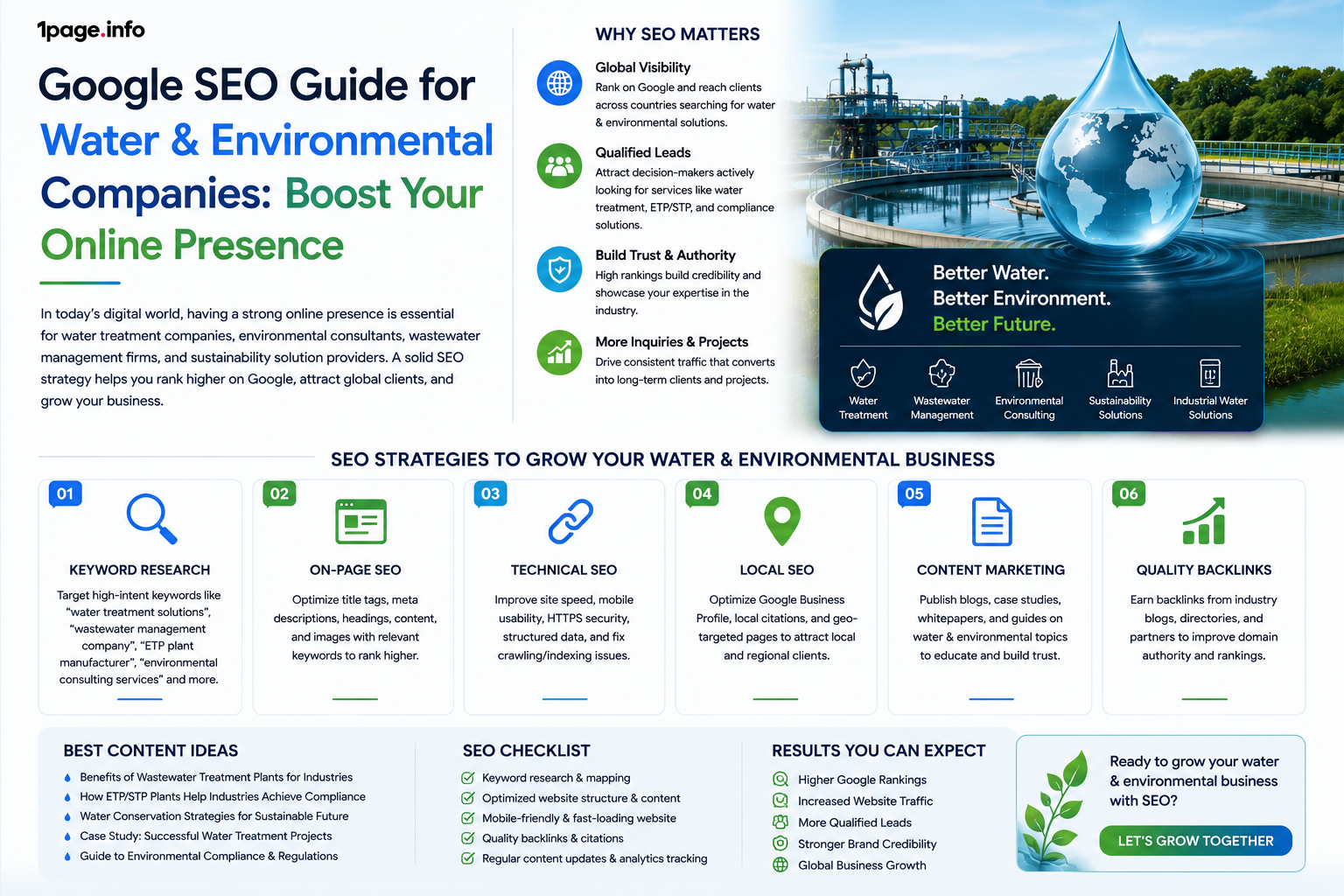
Introduction: Why SEO Matters for Water & Environmental Companies
In today’s digital landscape, water and environmental companies must have a strong online presence to reach customers, partners, and stakeholders. Google Search is the gateway to visibility, making Search Engine Optimization (SEO) essential. Whether you offer water treatment solutions, environmental consulting, or sustainability services, a robust SEO strategy helps your business stand out, attract qualified leads, and drive growth.
Understanding SEO Basics for the Water & Environmental Sector
SEO is the process of optimizing your website to rank higher in search engine results for relevant keywords. For water and environmental companies, this means appearing when users search for services like "industrial water treatment," "environmental impact assessment," or "stormwater management." Effective SEO targets your audience’s needs, showcases your expertise, and builds trust.
Step 1: Keyword Research for Water & Environmental Services
The foundation of any successful SEO campaign is keyword research. This involves identifying the terms and phrases your potential customers are using to search for your services.
- Brainstorm Core Services: List your main offerings like water purification, soil remediation, environmental compliance, and sustainability audits.
- Use Keyword Tools: Tools like Google Keyword Planner, SEMrush, and Ahrefs help discover high-traffic keywords specific to your niche.
- Focus on Local & Long-Tail Keywords: Include location-based keywords (e.g., "water treatment company in Seattle") and specific queries (e.g., "how to reduce industrial water usage").
Pro Tip: Analyze competitors’ websites to find keyword opportunities you might have missed!
Step 2: On-Page SEO Best Practices
On-page SEO involves optimizing individual website pages to improve rankings and user experience. Here’s how to apply on-page SEO to your water or environmental company website:
- Title Tags & Meta Descriptions: Craft unique, keyword-rich titles and meta descriptions for each page. For example, "Industrial Water Treatment Solutions | [Your Company]"
- Header Tags: Use
<h1>,<h2>, and<h3>tags to structure content for readability and relevance. - Image Optimization: Add descriptive alt text to images, such as "municipal wastewater treatment plant." Compress images for faster loading times.
- Internal Linking: Link related pages (e.g., from "Stormwater Management" to "Rainwater Harvesting Solutions") to keep visitors engaged and help search engines understand your site structure.
- Content Quality: Write informative, original content that answers customer questions and demonstrates your expertise.
Step 3: Content Marketing Strategies
Content is king in SEO. For water and environmental companies, educational and problem-solving content builds authority and attracts organic traffic.
- Blog Posts & Articles: Publish articles on topics like "Benefits of Sustainable Water Management" or "How to Meet Environmental Compliance Standards." Use clear language and actionable insights.
- Case Studies: Showcase successful projects—describe challenges, solutions implemented, and measurable results. Case studies help build trust and attract new clients.
- FAQs: Address common customer queries such as "What is groundwater remediation?" or "How does industrial wastewater treatment work?"
- Videos & Infographics: Visual content is highly engaging. Create explainer videos or infographics on topics like the water cycle or pollution prevention.
Step 4: Local SEO for Water & Environmental Companies
Many water and environmental businesses serve specific regions. Local SEO ensures your company appears in searches like "environmental consultants near me" or "water testing services [city]."
- Google Business Profile: Claim and optimize your Google Business Profile listing with accurate contact details, service categories, business hours, and photos.
- Local Listings: Ensure consistent NAP (Name, Address, Phone) information across directories like Yelp, Yellow Pages, and industry-specific portals.
- Local Content: Write location-based blog posts or landing pages targeting your city or region.
- Reviews: Encourage satisfied clients to leave positive Google reviews, which improve your local ranking and credibility.
Step 5: Building Authority with Backlinks
Backlinks—links from other reputable websites to yours—signal trust to search engines and boost your rankings.
- Industry Directories: Submit your website to relevant environmental and water industry directories.
- Partnerships: Collaborate with industry associations, NGOs, or research organizations for guest posts or joint content.
- Press Releases: Share newsworthy achievements, certifications, or project launches with local and national media.
- Content Outreach: Reach out to bloggers and journalists with unique data, reports, or expert commentary.
Step 6: Technical SEO Essentials
Technical SEO ensures your website functions smoothly for both users and search engines.
- Mobile-Friendliness: Ensure your website is responsive and looks great on all devices.
- Fast Loading Times: Optimize images, enable caching, and use a reliable hosting provider to reduce load times.
- Secure Website (HTTPS): Protect your visitors and improve rankings with an SSL certificate.
- XML Sitemap and Robots.txt: Submit an XML sitemap to Google Search Console and ensure your robots.txt file is correctly configured.
Step 7: Measuring SEO Success
Track your SEO progress using tools like Google Analytics and Google Search Console. Monitor key metrics:
- Organic traffic growth
- Keyword rankings
- Bounce rate and average session duration
- Conversion rates (form submissions, calls, downloads)
Regularly review and adjust your strategy based on data insights.
Conclusion: Achieve Sustainable Growth with SEO
Implementing a smart SEO strategy empowers water and environmental companies to reach the right audience, showcase expertise, and drive real business results. By focusing on keyword research, on-page optimization, content marketing, local SEO, authority building, and technical best practices, your company can achieve higher Google rankings and long-term online success. Start optimizing today and ensure your vital services are found by those who need them most.