
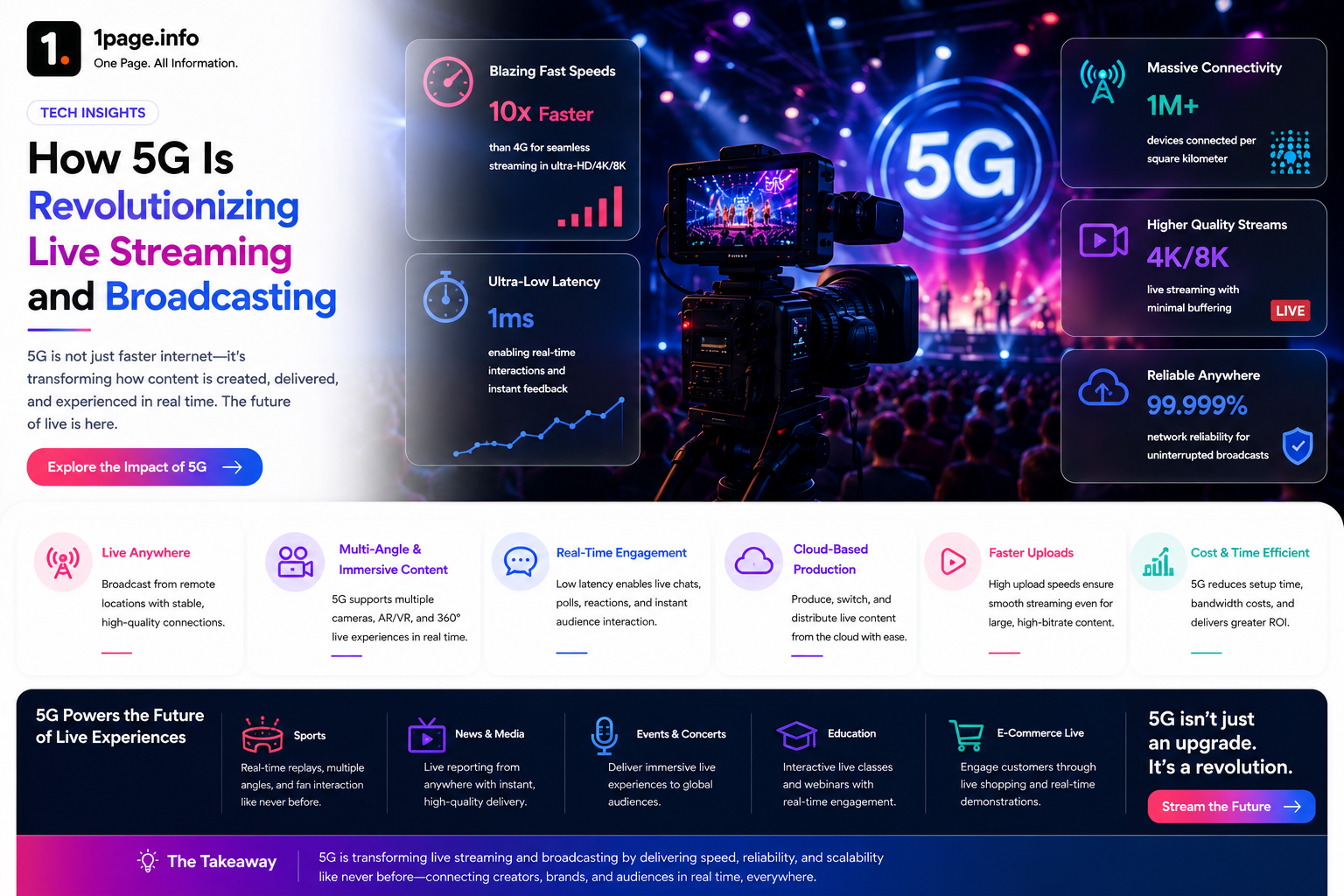
The introduction of 5G technology is changing the media and entertainment industry. It is creating ways for people to watch live events and broadcasts. 5G technology is really fast. It can send information quickly. This means that 5G technology is changing how people make media how they share it and how people watch it. In the year 2026 people who make television shows, sports organizations and companies that stream media are using 5G technology more and more. They want to give people around the world an experience when they watch live events. 5G technology is becoming very important for things, like events, online games and virtual concerts. As more people want to watch these things 5G technology is going to be the way that people get to watch them. 5G technology is the future of media and it is going to change the way people watch things. One of the biggest advantages of 5G is its ability to deliver significantly higher data speeds compared to previous mobile networks. This allows broadcasters and streaming platforms to transmit Ultra HD (4K) and even 8K video with minimal buffering. Viewers can enjoy smoother playback, higher image quality, and uninterrupted streaming, even during major sporting events, concerts, and breaking news broadcasts where millions of users are connected simultaneously. For media companies, this means delivering premium viewing experiences without compromising quality. Latency—the delay between capturing and displaying live content—has always been a challenge in broadcasting. With 5G, latency is reduced to just a few milliseconds, enabling near real-time transmission. This improvement is particularly valuable for live sports, news reporting, esports tournaments, financial market coverage, and interactive entertainment. Broadcasters can now deliver live content with minimal delay, making audience interactions more immediate and engaging. Traditional live broadcasting often requires large production crews, satellite trucks, and extensive equipment at event locations. 5G enables remote production by allowing high-quality video feeds to be transmitted directly to centralized production studios. Camera operators, editors, and production teams can collaborate from different locations without sacrificing broadcast quality. This reduces operational costs while increasing flexibility for covering live events in multiple locations simultaneously. Mobile journalism has grown rapidly as reporters increasingly use smartphones and portable equipment to cover breaking news. With reliable high-speed 5G connectivity, journalists can stream live video, upload high-resolution footage, conduct live interviews, and report from virtually anywhere without relying on traditional broadcasting infrastructure. This enables faster news coverage and improves the ability to report from remote or challenging locations. Sports broadcasting is one of the biggest beneficiaries of 5G technology. Broadcasters can deploy multiple wireless cameras throughout stadiums to capture immersive viewing angles without extensive cabling. Viewers can access multiple camera perspectives, real-time statistics, instant replays, and interactive features during live matches. Concerts, cultural events, and festivals are also becoming more immersive through multi-camera streaming, virtual attendance, and high-definition live broadcasts. 5G is enabling the integration of advanced technologies into live broadcasting. Artificial intelligence assists with automated camera tracking, highlight generation, subtitles, and content recommendations. Cloud-based production systems allow editing and broadcasting from virtually any location. Augmented Reality (AR) and Virtual Reality (VR) experiences are becoming more practical because 5G supports the high bandwidth and low latency these technologies require. Together, these innovations create richer and more interactive viewing experiences. People who make their stuff and influencers are getting a lot out of 5G connectivity. With 5G connectivity they can show videos live from their phones. The videos look really good like they were made with expensive equipment. This means that 5G connectivity has made it easier for people to share their work with everyone, in the world through media and streaming platforms. Independent creators can also send video files to the internet faster which helps them get more work done and share their videos with people sooner. 5G connectivity is really helping creators and influencers. Although 5G offers significant advantages, several challenges still need attention. Network coverage continues to expand, but availability remains uneven in some rural and remote areas. Infrastructure investments are required to ensure reliable connectivity across the country. Media organizations must also address cybersecurity risks, increasing bandwidth costs, and compatibility with legacy broadcasting systems as they modernize their operations. Ensuring affordable access to 5G-enabled devices will also influence the pace of widespread adoption. As 5G networks continue to expand, live broadcasting is expected to become more intelligent, flexible, and immersive. Future developments may include holographic broadcasting, AI-powered personalized viewing experiences, real-time multilingual translations, cloud-native production workflows, and interactive live events where audiences can actively participate through connected devices. The combination of 5G, artificial intelligence, cloud computing, and edge computing will continue to redefine how media organizations produce and distribute content in the years ahead. The effect of 5G on streaming and broadcasting is really big. It is not, about getting faster internet. 5G is making it possible for people to communicate in time. It is also making broadcasts look better. 5G is helping people make shows and videos from away. It is making it easier for journalists to report from their phones.. It is making new and exciting ways for people to watch things using artificial intelligence augmented reality and cloud technologies. As people who make broadcasts, streaming platforms and content creators start using 5G, people who watch can expect to have smarter and more fun digital experiences. People are putting a lot of money into making the infrastructure and coming up with new ideas. This means that 5G is going to keep changing the way we watch and interact with streaming and broadcasting. Ministry of Communications, Government of India Telecom Regulatory Authority of India (TRAI) GSMA Ericsson Mobility Report International Telecommunication Union (ITU)Faster Speeds Enable High-Quality Streaming
Ultra-Low Latency Improves Live Broadcasting
Remote Production Becomes More Efficient
Better Mobile Journalism
Enhanced Sports and Event Broadcasting
Supporting Emerging Technologies
Benefits for Content Creators
Challenges That Remain
The Future of Broadcasting
Conclusion
References
5G is transforming live streaming and broadcasting in 2026 with faster speeds, ultra-low latency, remote production, AI-powered workflows, and immersive viewing experiences. Discover how next-generation connectivity is reshaping the future of digital media.