
The AI Revolution: A New Era for Global Branding
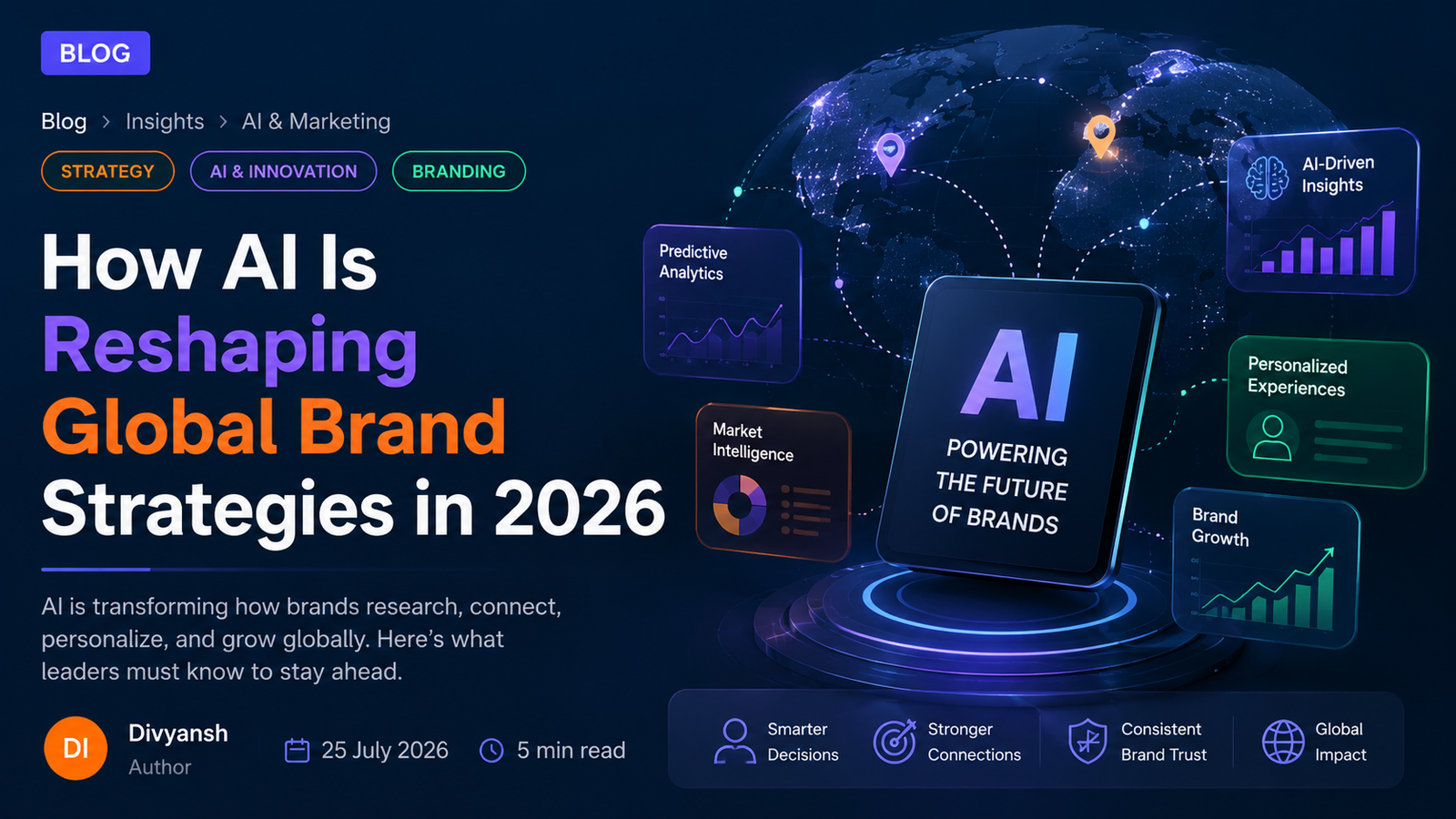
As we move further into 2026, Artificial Intelligence (AI) is more than just a buzzword—it’s a transformative force driving unprecedented change in global brand strategies. Brands are leveraging AI not only to streamline operations but also to foster deeper customer connections, unlock new markets, and create personalized experiences that were once unimaginable. In this post, we’ll explore how AI is reshaping the landscape of brand strategy worldwide, drawing on recent advancements and industry insights.
Personalization at Scale: The New Standard
One of AI’s most significant impacts is its ability to deliver hyper-personalized experiences at scale. With access to vast amounts of consumer data, AI-powered platforms analyze customer behaviors, preferences, and interactions in real time. Brands like Sephora and Netflix have set the standard, using AI-driven recommendation engines to tailor content and product suggestions for individual users (Forbes, 2025). This level of personalization boosts customer engagement, drives loyalty, and increases conversion rates.
- Dynamic Content: AI tools automatically adjust website layouts, email campaigns, and app interfaces based on user profiles.
- Predictive Analytics: Brands predict future buying behaviors, optimizing inventory and marketing campaigns accordingly.
- Localized Strategies: Global brands use AI to adapt messaging and offers to specific cultural contexts and languages.
AI-Driven Creativity and Content Generation
In 2026, AI is not just analyzing data—it’s creating. Sophisticated AI models generate compelling copy, design graphics, and even produce video content. For example, Coca-Cola used AI-powered creative engines to produce regionally tailored advertisements, resulting in a 30% increase in engagement compared to traditional campaigns (Adweek, 2026).
- Generative AI: Tools like DALL-E and ChatGPT 5 are enabling marketers to produce high-quality creative assets in seconds.
- Brand Consistency: AI ensures messaging, tone, and design remain consistent across geographies and channels.
Global Expansion Through AI Insights
AI’s ability to process and interpret massive datasets allows brands to identify and enter new markets with unprecedented accuracy. By analyzing local consumer trends, competitor activity, and regulatory environments, AI enables data-driven global expansion. For instance, Unilever leveraged AI to identify untapped markets in Southeast Asia, customizing launch strategies based on predictive models of consumer preferences (McKinsey, 2025).
- Market Analysis: AI evaluates social media sentiment, economic indicators, and purchasing habits to spot emerging opportunities.
- Risk Mitigation: Predictive algorithms assess potential regulatory or reputational risks before market entry.
Enhancing Customer Support and Engagement
AI-powered chatbots and virtual assistants are now the front line of customer support for many global brands. These tools provide instant, 24/7 assistance in multiple languages, improving customer satisfaction and reducing operational costs. HSBC reported a 40% reduction in support response times after implementing AI-driven customer service solutions (Gartner, 2026).
- Omnichannel Support: AI integrates communication across email, chat, social media, and phone for seamless customer journeys.
- Emotion Recognition: Advanced systems detect customer emotions and sentiment, allowing for empathetic and effective responses.
Ethical AI and Responsible Branding
With great power comes great responsibility. In 2026, ethical AI practices are integral to global brand strategies. Consumers are increasingly aware of privacy, bias, and transparency issues. Brands that proactively address these concerns build trust and reputation. Leading companies like Microsoft and Procter & Gamble have established AI ethics boards and transparent AI usage policies (Harvard Business Review, 2025).
- Data Privacy: Brands adopt robust data protection measures and transparent consent processes.
- Bias Mitigation: Regular audits ensure AI algorithms do not propagate harmful biases.
- Transparency: Clear communication about AI’s role in customer interactions builds trust.
Challenges Ahead and the Future of AI Branding
Despite its many benefits, integrating AI into global brand strategies presents challenges. Issues like algorithmic bias, data security, and the need for human oversight remain top concerns. However, as technology advances and regulatory frameworks mature, brands that prioritize responsible AI adoption will stand out.
Looking ahead, we can expect even more sophisticated AI applications—such as real-time emotional intelligence and autonomous brand management—further transforming the way brands connect with audiences worldwide.
References
- Forbes (2025). "How AI is Redefining Personalization in Retail." Read more
- Adweek (2026). "AI-Driven Creativity: The Future of Brand Storytelling." Read more
- McKinsey (2025). "AI and Analytics: The Next Frontier for Global Expansion." Read more
- Gartner (2026). "AI in Customer Service: Trends and Impact." Read more
- Harvard Business Review (2025). "Ethical AI: Building Trust in the Age of Automation." Read more
Conclusion
AI is fundamentally reshaping global brand strategies in 2026, enabling unprecedented personalization, creative innovation, and market expansion. Brands that harness AI’s power responsibly are poised to lead the next era of global business success.