

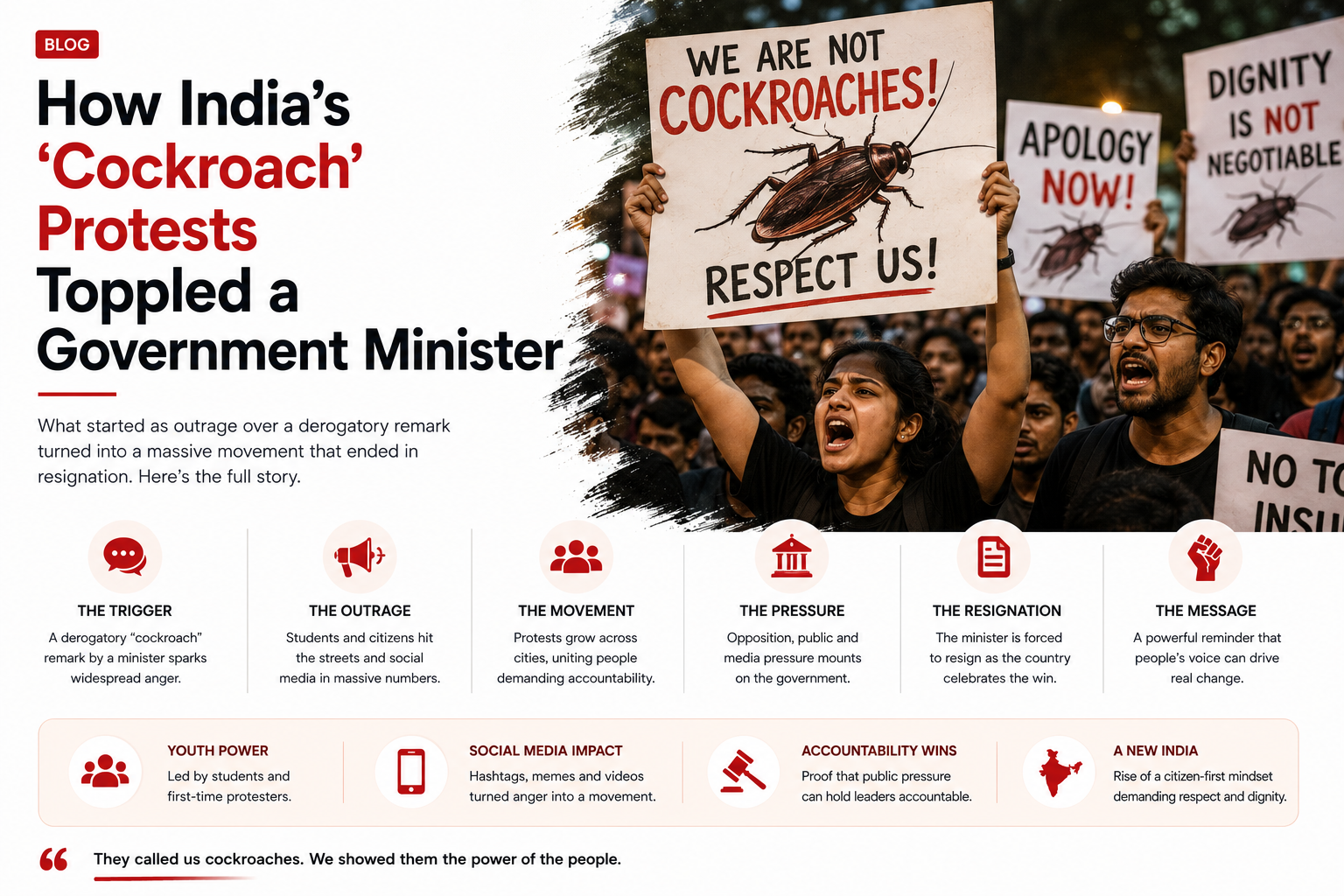
Introduction: Unlikely Symbols of Dissent
In the landscape of Indian politics, where protests often capture national attention, a new and unexpected symbol emerged in 2024: the humble cockroach. What started as a quirky meme rapidly evolved into a powerful movement, culminating in the resignation of a high-profile government minister. This blog post delves into the remarkable rise of India's 'cockroach' protests, the viral video that galvanized millions, and how a grassroots movement leveraged humor, symbolism, and digital activism to achieve real political change.
The Spark: Viral Video Unleashes a Storm
It all began with a short video clip that surfaced on social media, showing a group of university students releasing dozens of plastic cockroaches in a government office. The symbolic act was a direct response to a minister’s dismissive comment that likened persistent activists to "cockroaches that refuse to go away." Instead of feeling insulted, protestors embraced the comparison, flipping the narrative to highlight their resilience and tenacity.
The video quickly went viral, garnering millions of views within hours. Hashtags like #CockroachProtest and #ResilientVoices trended across platforms such as Twitter, Instagram, and WhatsApp. Memes and parodies flooded the internet, amplifying the movement's message and drawing widespread attention from both traditional and digital media outlets.
Roots of Discontent: Why the Protests Began
While the cockroach became the face of the protest, the underlying causes stemmed from deep-seated public frustration. The movement was triggered by:
- Unaddressed Grievances: The minister in question had long been accused of ignoring crucial issues such as unemployment, corruption, and environmental concerns.
- Disrespectful Rhetoric: The "cockroach" remark was seen as emblematic of a broader pattern of dismissive and insensitive political discourse.
- Youth Activism: University students and young professionals, already mobilized through campus groups and online forums, saw this as a rallying point.
These factors combined to turn a spontaneous act of protest into a coordinated national campaign.
From Meme to Movement: The Power of Social Media
What distinguished the cockroach protests from previous political movements was the strategic use of social media. Protestors utilized a variety of digital tools to organize, educate, and mobilize the public:
- Viral Videos: The original video inspired a wave of similar clips, with citizens across India staging their own "cockroach" protests in public spaces and government offices.
- Memes and Art: Artists and meme-creators reimagined the cockroach as a symbol of resilience, producing shareable content that made the movement accessible and relatable.
- Collaborative Platforms: Online petitions, live-streamed debates, and open forums facilitated dialogue and helped articulate clear demands.
The decentralized nature of the campaign made it difficult to suppress, while its humor and creativity engaged a broad demographic, including those previously disengaged from politics.
Escalation: Nationwide Demonstrations
As the movement gained traction, it spilled from the digital realm onto the streets. Peaceful demonstrations took place in cities like Delhi, Mumbai, and Bengaluru, with protestors donning cockroach costumes or distributing symbolic plastic insects. The protests remained largely non-violent, with participants emphasizing satire and spectacle over confrontation.
Media coverage intensified, and opposition leaders voiced support, further legitimizing the protestors’ demands. The movement’s inclusive, lighthearted approach attracted families, artists, professionals, and activists from diverse backgrounds.
The Tipping Point: Minister’s Resignation
Facing mounting public pressure, relentless media scrutiny, and a growing chorus of dissent within his own party, the minister ultimately resigned. In his statement, he acknowledged the "creative energy" of the protestors and expressed regret for his earlier remarks. The resignation was celebrated as a victory for citizen activism and a testament to the power of symbolic protest in a digital age.
Lessons from the Cockroach Protests
The success of India's 'cockroach' protests offers valuable insights into contemporary activism:
- Symbolism Matters: Reclaiming negative labels can empower movements and foster unity.
- Digital Platforms are Force Multipliers: Social media can amplify grassroots voices and circumvent traditional power structures.
- Humor and Creativity Engage Wider Audiences: Satirical and artistic approaches can make political engagement more accessible and less intimidating.
- Persistence Pays Off: Just like their symbolic insect, protestors showed that tenacity can yield tangible results.
Conclusion: A New Chapter in Indian Protest Culture
The 'cockroach' protests have set a precedent for how everyday citizens can influence the highest levels of government through creativity, resilience, and collective action. As India continues to grapple with complex social and political challenges, the legacy of these protests will inspire future generations to find their own unique symbols—and voices—for change.