

Introduction
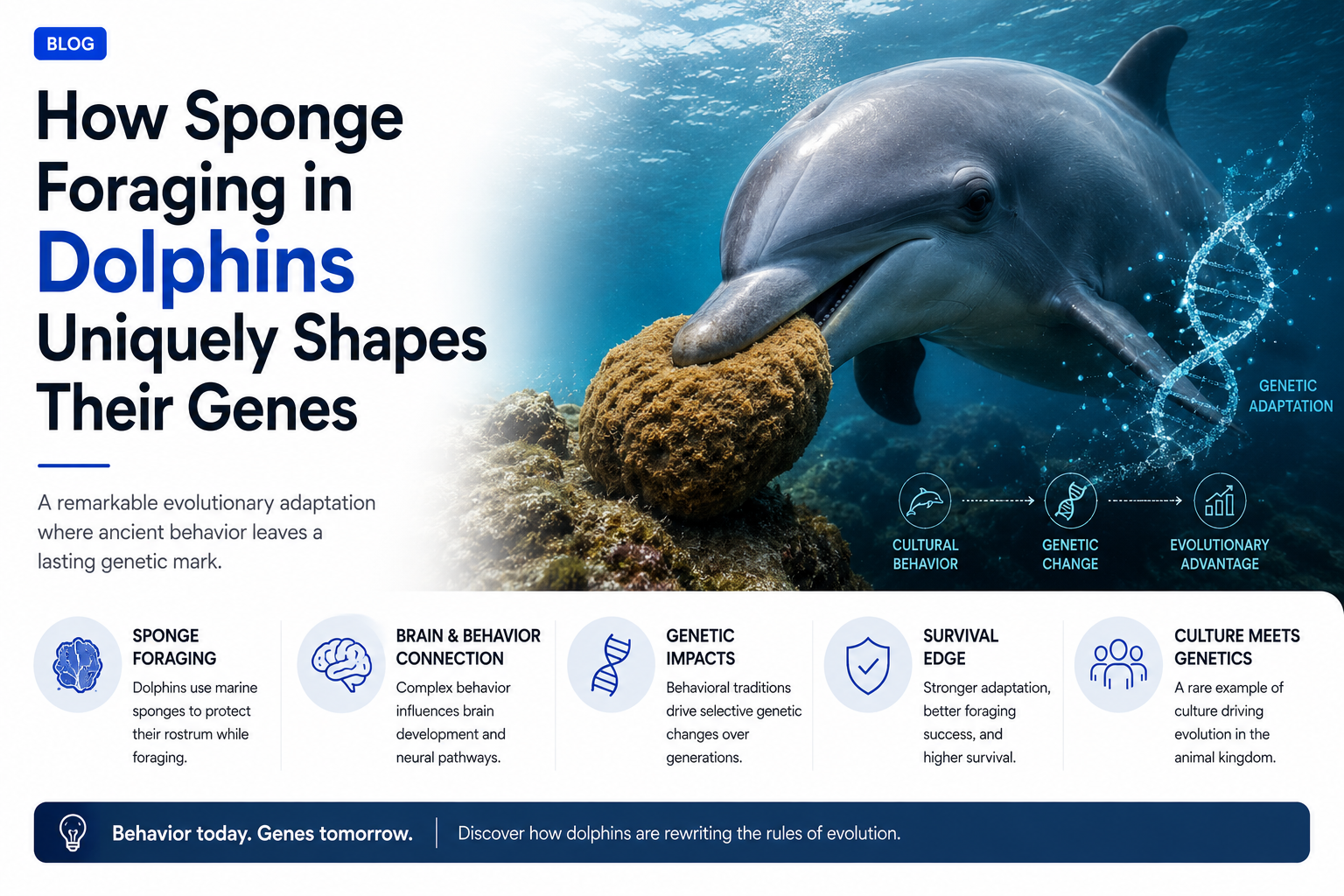
When we think of dolphins, their remarkable intelligence and playful nature often come to mind. Yet, dolphins continue to surprise scientists with unique behaviors and adaptations. One such behavior, known as sponge foraging, not only distinguishes certain dolphins socially and culturally but also leaves a remarkable imprint on their genetic code. Recent research reveals that this unique foraging strategy is more than just a learned behavior—it actually influences the genes of dolphins engaged in this activity.
What is Sponge Foraging?
Sponge foraging refers to a rare hunting technique observed in some bottlenose dolphins, particularly in Shark Bay, Western Australia. These dolphins break off marine sponges and wear them over their snouts while searching for food on the seafloor. This technique protects their sensitive beaks from sharp rocks, spiny fish, and stinging creatures hidden in the sand.
How Dolphins Learn Sponge Foraging
This behavior is not innate. Instead, it’s passed down through generations—primarily from mother to calf—making it one of the clearest cases of animal culture outside of humans. Young dolphins closely observe their mothers and practice handling sponges until they master the technique. This learning process can take years, demonstrating the complex social structures within dolphin communities.
The Genetic Link: More Than Just Behavior
For many years, scientists believed that sponge foraging was merely a cultural behavior. However, recent genetic studies have uncovered something extraordinary: dolphins that practice sponge foraging have unique genetic signatures, particularly in genes related to brain function, memory, and sensory perception.
Key Findings from Recent Research
- Genetic Adaptation: A 2022 study published in Science Advances found that sponge foragers in Shark Bay share specific gene variants not found in non-foraging dolphins in the same area. These variants are linked to enhanced cognitive abilities and tactile sensitivity.
- Epigenetic Changes: Researchers also discovered epigenetic modifications—changes in gene expression without altering DNA sequences—in dolphins that regularly use sponges. This suggests that the act of sponge foraging itself may trigger adaptive changes at the molecular level.
- Natural Selection in Action: The prevalence of these gene variants in sponge foragers indicates that natural selection may favor individuals with traits that support this unique hunting method, allowing them to access food sources unavailable to other dolphins.
Why Does This Matter?
This discovery is groundbreaking for several reasons:
- Bridging Culture and Genetics: It challenges the traditional divide between learned behaviors and innate genetic traits, showing that culture can influence evolutionary pathways.
- Understanding Animal Intelligence: It highlights how animal intelligence and social learning can drive genetic change, offering clues about the evolution of intelligence in humans and other species.
- Conservation Implications: Recognizing the genetic uniqueness of sponge foragers helps conservationists protect not just species, but also the cultural and genetic diversity within species.
How Do Genes and Behavior Influence Each Other?
The interaction between genes and behavior is a two-way street. While genes can predispose animals to certain behaviors, engaging in complex behaviors like sponge foraging can also influence gene expression. This dynamic relationship fuels adaptation and innovation in animal populations.
Examples from Other Species
Similar phenomena have been observed in other animals. For example, tool use in some bird species and primates has been linked to changes in brain structure and genetic markers related to learning and memory. The dolphin example extends this concept, showing that even underwater, culture and genetics are deeply intertwined.
What’s Next for Dolphin Research?
Scientists are eager to explore how widespread these genetic adaptations are among dolphins and whether other foraging strategies also leave genetic footprints. They are also investigating how environmental changes, such as habitat loss and climate change, may affect the survival of culturally and genetically distinct dolphin groups.
Potential Applications
- Conservation Strategies: Protecting dolphin populations may require targeted efforts to preserve both their genetic diversity and unique cultural behaviors.
- Insights into Human Evolution: Studying dolphins offers a glimpse into how culture and genetics might have co-evolved in our own species.
Conclusion
Sponge foraging in dolphins is more than a quirky habit—it’s a powerful example of how animal culture can shape evolution at the genetic level. As researchers continue to uncover the intricate ties between genes and behavior, dolphins remind us that nature’s creativity knows no bounds.
References
- Kopps, A. M., et al. (2022). "Cultural behavior and gene–culture coevolution in bottlenose dolphins." Science Advances, 8(5), eabl4648.
- Wild, S., et al. (2020). "Social transmission and genetic variation in tool use in bottlenose dolphins." Current Biology, 30(1), 144-148.
- Krützen, M., et al. (2005). "Cultural transmission of tool use in bottlenose dolphins." Proceedings of the National Academy of Sciences, 102(25), 8939-8943.