

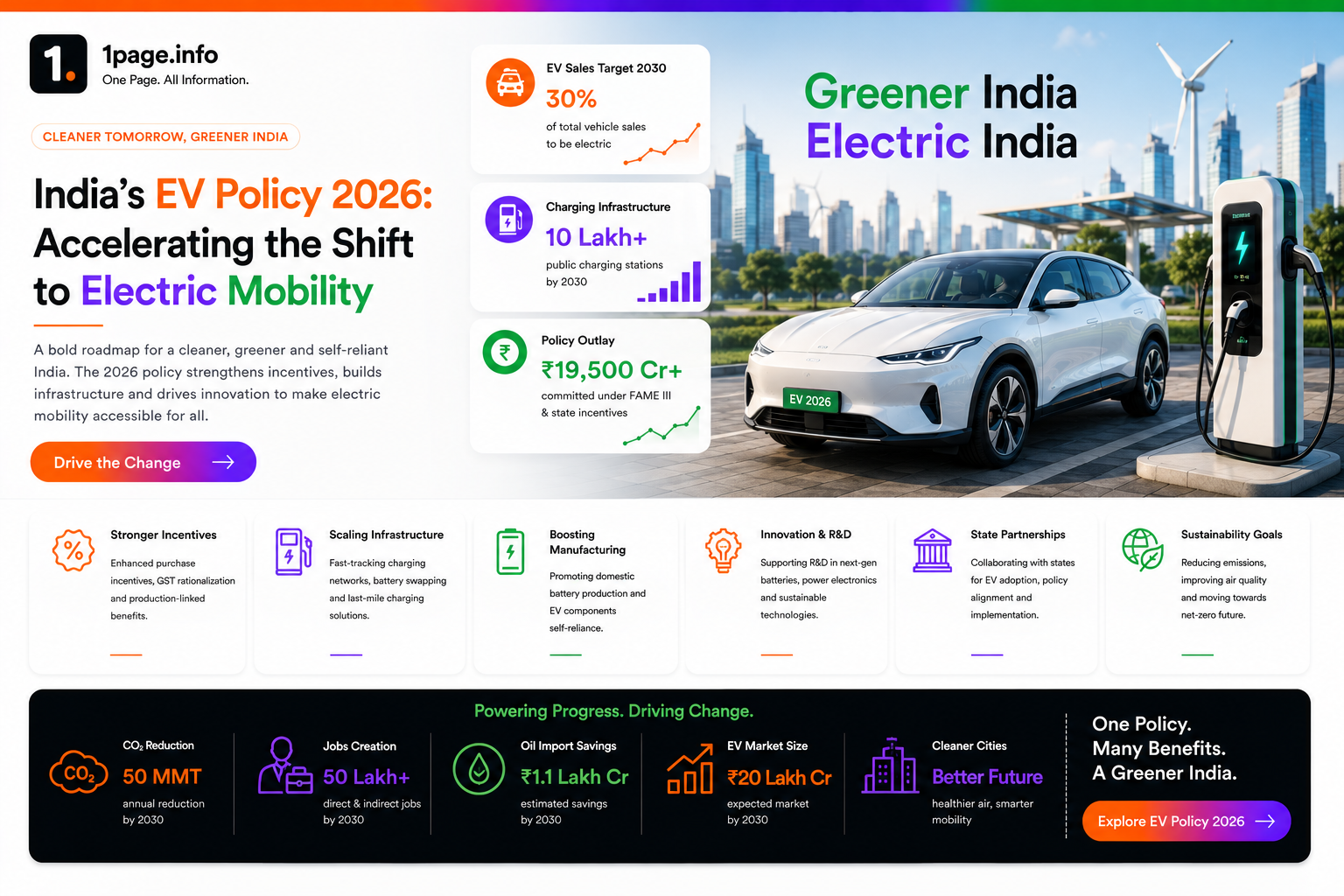
India is becoming a market for electric vehicles really fast. By 2026 a lot of people in India are starting to buy vehicles because the government is helping out and there are more places to charge them. India wants to reduce the things it puts into the air and make sure it has enough energy so electric vehicles are a big part of its plan for transportation. The government is giving money to companies that make vehicles and to people who buy them. They are also spending money on making batteries and building charging stations. All of this is helping India switch to vehicles, which are better, for the environment and will last longer. Indias electric vehicle policy is making this happen. It is going to make a big difference. The Government of India has introduced several initiatives to encourage the adoption of electric vehicles across passenger cars, two-wheelers, three-wheelers, buses, and commercial fleets. Policy support focuses on reducing dependence on fossil fuels, lowering vehicle emissions, promoting domestic manufacturing, and creating employment opportunities in the EV sector. Various central and state-level incentives continue to make electric vehicles more affordable while encouraging manufacturers to expand production capacity. Government-backed initiatives also support research, innovation, battery technology development, and localization of critical EV components to strengthen India's manufacturing ecosystem. A reliable charging network is essential for the widespread adoption of electric vehicles. In 2026, India has significantly expanded its public and private charging infrastructure across metropolitan cities, highways, residential communities, and commercial spaces. Fast-charging stations are becoming more common, reducing charging times and making long-distance EV travel increasingly practical. Oil marketing companies, private energy firms, automobile manufacturers, and startups are collaborating to establish charging corridors connecting major cities. Smart charging technologies and mobile applications now help drivers locate nearby charging stations, check charger availability, and make digital payments seamlessly. Battery production has become one of the most strategic priorities for India's electric mobility sector. Government incentives under advanced manufacturing initiatives have encouraged investments in lithium-ion battery manufacturing, battery recycling, and energy storage technologies. Domestic battery production helps reduce import dependence while supporting the government's vision of building a self-reliant clean energy ecosystem. Research into alternative battery chemistries, improved energy density, and faster charging capabilities is expected to further improve EV affordability and performance in the coming years. While electric two-wheelers continue to dominate India's EV market, adoption is rapidly expanding across passenger vehicles, commercial fleets, buses, and logistics services. Ride-hailing companies, delivery platforms, and fleet operators are increasingly transitioning to electric vehicles due to lower operating costs and government support. Public transport agencies are also introducing electric buses to reduce urban pollution and improve sustainable mobility. The growing availability of affordable EV models from domestic and global manufacturers is giving consumers more choices across different price segments. Artificial intelligence, Internet of Things (IoT), and connected vehicle technologies are making electric mobility smarter than ever. Modern EVs now feature intelligent battery management systems, predictive maintenance, remote diagnostics, navigation integrated with charging stations, and real-time vehicle monitoring. AI-powered software helps optimize battery performance, improve driving efficiency, and extend battery life. Connected mobility platforms also enable fleet operators to monitor vehicle performance, charging schedules, and energy consumption through centralized dashboards. The move to vehicles brings many good things for the economy and the environment. Cutting down on fuel imports helps India be more secure when it comes to energy and also makes transportation cheaper for companies and people. Making things in the country creates jobs, in areas like making cars making batteries writing software and setting up places to charge the vehicles. In terms of the environment electric cars help make the air cleaner lower the gases that cause climate change and make cities quieter. This helps India keep its promises to take care of the planet for a time. Despite strong momentum, several challenges remain. Charging infrastructure still needs to expand in smaller cities and rural areas to ensure nationwide accessibility. Battery costs, charging speed, recycling infrastructure, and the availability of critical raw materials continue to influence the pace of EV adoption. Consumer awareness also remains important, as many buyers still have concerns regarding vehicle range, battery life, and charging convenience. Addressing these challenges through continued policy support, technological innovation, and public-private collaboration will be crucial for achieving India's electric mobility goals. India's EV policy in 2026 reflects a long-term commitment to building a sustainable transportation ecosystem. Future priorities include expanding fast-charging networks, strengthening domestic battery manufacturing, encouraging clean energy integration, and supporting next-generation technologies such as solid-state batteries and vehicle-to-grid (V2G) systems. With continued investments in innovation, infrastructure, and manufacturing, India is well-positioned to become one of the global leaders in electric mobility over the coming decade. Indias EV Policy 2026 is helping the country move toward cleaner, smarter and more sustainable ways to travel. Government support, places to charge electric vehicles making batteries locally and fast improvements in technology are building a solid base for future growth. Even though problems like finding charging stations and the cost of batteries still exist the teamwork between the government, businesses and tech companies is pushing the electric vehicle movement forward. As more people use cars, buses and trucks Indias plan, for a cleaner and more efficient way to move is slowly turning into a real thing. Ministry of Heavy Industries (MHI) Ministry of Road Transport and Highways (MoRTH) NITI Aayog Ministry of Power Press Information Bureau (PIB)Government Policies Driving EV Adoption
Expansion of EV Charging Infrastructure
Battery Manufacturing Strengthens Self-Reliance
Electric Mobility Gains Across Multiple Segments
Technology Is Transforming Electric Vehicles
Economic and Environmental Benefits
Challenges That Need Attention
The Road Ahead
Conclusion
References
India's EV Policy 2026 is accelerating the shift to electric mobility through government incentives, expanded charging infrastructure, domestic battery manufacturing, and advanced technologies. Explore the latest developments, challenges, and future goals driving India's clean transportation revolution.