

Introduction
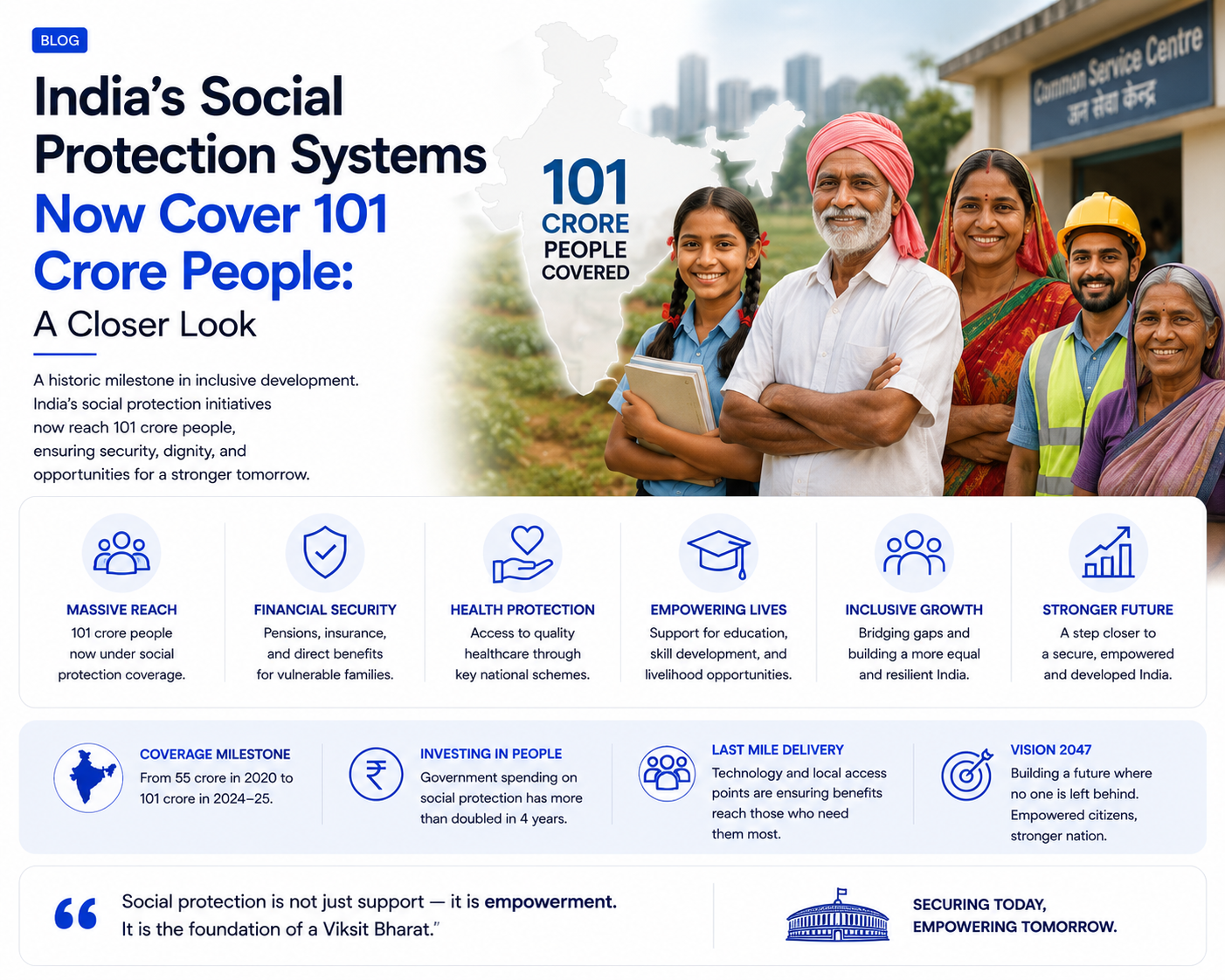
India has made remarkable progress in building robust social protection systems. As of 2024, these systems now cover an estimated 101 crore (1.01 billion) people, providing a vital safety net for a vast majority of the population. This achievement signifies a leap towards inclusive growth and poverty alleviation, with the government leveraging digital platforms, direct benefit transfer schemes, and innovative policy frameworks. In this blog, we’ll explore the significance, scope, and future of India’s social protection initiatives.
What is Social Protection?
Social protection encompasses a range of policies and programs designed to reduce poverty and vulnerability. These measures aim to ensure that individuals and families have access to essential services and income security during periods of hardship, such as unemployment, illness, or old age.
Key Components of Social Protection
- Social Assistance: Cash transfers, food assistance, and subsidies for the vulnerable groups.
- Social Insurance: Health, life, and accident insurance schemes.
- Labor Market Programs: Employment guarantee schemes and skill development initiatives.
How Did India Achieve This Milestone?
India’s journey toward universal social protection has been shaped by a mix of longstanding welfare programs and bold new initiatives. Over the past decade, several flagship schemes have been expanded and digitized to ensure broader and more efficient coverage.
Major Schemes Driving Expansion
- Mahatma Gandhi National Rural Employment Guarantee Act (MGNREGA): Provides 100 days of wage employment to rural households.
- Pradhan Mantri Jan Dhan Yojana (PMJDY): Financial inclusion through zero-balance bank accounts for all adults.
- Pradhan Mantri Awas Yojana (PMAY): Affordable housing for urban and rural poor.
- Ayushman Bharat: Health insurance coverage for over 50 crore individuals.
- National Food Security Act (NFSA): Subsidized food grains for nearly two-thirds of India’s population.
- Direct Benefit Transfers (DBT): Digital transfer of subsidies and benefits to beneficiaries’ bank accounts, reducing leakages.
The Role of Technology and Digital Infrastructure
One of the pivotal factors behind the expansion of social protection has been India’s digital infrastructure. The Aadhaar biometric identification system, Jan Dhan bank accounts, and mobile connectivity have enabled seamless registration, targeting, and delivery of benefits. This integration has reduced administrative costs, minimized fraud, and ensured that benefits reach the intended recipients without delay.
Impact on Society
The expansion of social protection has had far-reaching effects:
- Poverty Reduction: Millions have been lifted out of extreme poverty thanks to improved access to food, healthcare, and financial services.
- Women’s Empowerment: Direct cash transfers and employment guarantees have empowered women, especially in rural areas.
- Resilience Against Shocks: Social protection played a crucial role during the COVID-19 pandemic by cushioning vulnerable groups from economic shocks.
- Financial Inclusion: Increased access to formal banking and insurance services has fostered financial security across demographics.
Challenges and the Road Ahead
Despite impressive coverage, challenges remain. Gaps in awareness, digital literacy, and last-mile delivery need to be addressed. Ensuring the quality of services, preventing exclusion errors, and adapting programs to changing social and economic realities will require continued innovation and investment.
Key Areas for Future Focus
- Enhanced Data Integration: Streamlining databases to avoid duplication and improve targeting.
- Inclusive Design: Making programs accessible to marginalized groups, such as migrants and the disabled.
- Continuous Monitoring: Regular program evaluation and adapting to emerging needs.
Conclusion
India’s social protection systems now stand as one of the largest in the world, covering nearly 101 crore people. This remarkable achievement has not only improved the quality of life for millions but also set a global example for inclusive welfare. As India continues to innovate and invest in social protection, the goal of a truly equitable and resilient society appears closer than ever.
References
- Government of India, Ministry of Finance, Economic Survey 2023-24
- World Bank, Social Protection for a Changing India, 2023
- Press Information Bureau, Government of India, 2024