
Mark Zuckerberg's Bold Stand Against Centralized AI
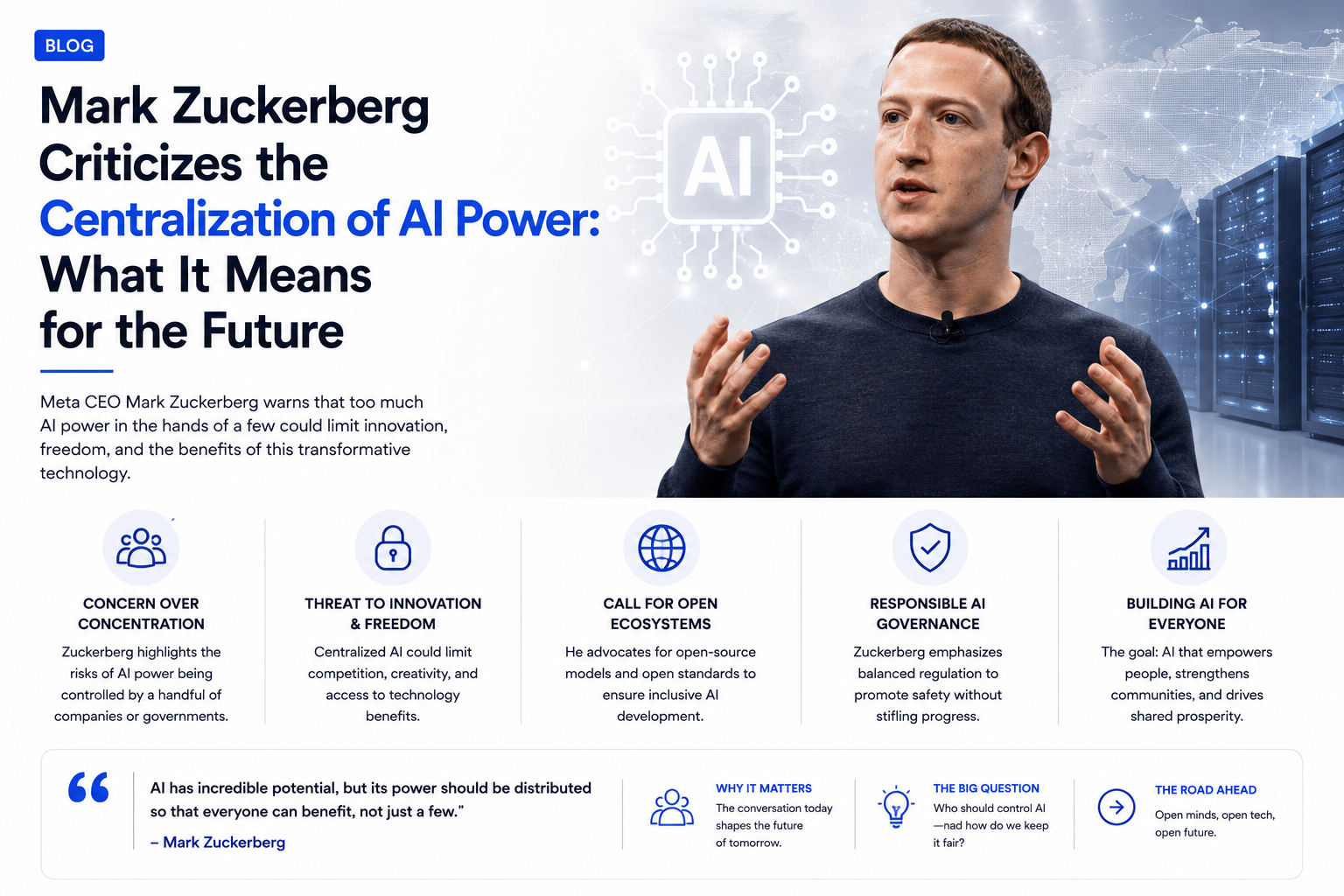
The conversation around artificial intelligence (AI) is rapidly changing, and few voices have been as prominent in recent debates as Mark Zuckerberg, the CEO of Meta Platforms. Recently, Zuckerberg made headlines by sharply criticizing the growing centralization of AI power among a handful of tech giants. His remarks have ignited widespread debate about the risks and future trajectory of AI development. In this article, we’ll explore Zuckerberg’s concerns, the potential dangers of centralized AI, and what a more open AI ecosystem could look like.
Understanding Centralization in AI
Centralization in the context of AI refers to a scenario where only a limited number of companies or organizations control the majority of advanced AI systems, research, and resources. These organizations, often tech behemoths, possess enormous computational power, proprietary data, and world-class research talent. While this concentration can drive rapid innovation, it also raises significant concerns about control, ethics, and access.
Why Is Zuckerberg Speaking Out Now?
During a recent industry summit, Mark Zuckerberg directly addressed the growing trend of AI centralization. He cautioned that allowing just a few entities to dictate the direction, ethics, and availability of AI technologies could stifle innovation, limit competition, and put critical social decisions in the hands of a select few. Zuckerberg's comments come at a time when Meta is positioning itself as a champion of open-source AI, in contrast to some competitors who favor more closed, proprietary approaches.
"If you concentrate power in the hands of a few, you risk missing out on the diverse ideas and applications that come from a broader community," Zuckerberg stated. "AI should be a tool for everyone, not just the privileged few."
The Dangers of Centralized AI Power
- Lack of Transparency: When AI development is dominated by a handful of companies, the processes and algorithms used can become opaque, making it challenging for the public and regulators to understand or audit their impact.
- Potential for Bias and Abuse: Centralized control increases the risk that AI systems reflect the biases or interests of their creators, potentially leading to discriminatory outcomes or misuse.
- Stifled Innovation: With fewer players in the field, new and diverse ideas may struggle to gain traction, slowing the overall progress of AI technology.
- Security Risks: Concentrating AI expertise and resources makes them a more attractive target for malicious actors, increasing the risks of cyberattacks or misuse.
The Case for Open-Source AI
Zuckerberg has long advocated for a more open approach to AI, and Meta has released several AI tools and models to the public in recent years. Proponents of open-source AI argue that it democratizes access, fosters collaboration, and accelerates innovation by allowing a broader range of individuals and organizations to participate in development.
- Greater Collaboration: Open-source models encourage researchers, developers, and institutions to work together, sharing insights and improvements.
- Enhanced Transparency: Publicly available code and models make it easier to audit, improve, and adapt AI tools for diverse needs.
- Wider Accessibility: Open-source AI lowers the barriers to entry for startups, academics, and underrepresented communities, helping to ensure that AI benefits are more equitably distributed.
Challenges Facing Decentralized AI
While openness has clear advantages, it’s not without challenges. Critics argue that open-source models can be misused, and that without proper governance, open AI tools could contribute to the spread of misinformation, cybercrime, or other harms. The challenge, then, is to find a balance between openness and responsible stewardship.
Industry Response and the Road Ahead
Zuckerberg’s remarks have been met with both support and skepticism from the tech industry. Some companies argue that centralized control is necessary to ensure safety, quality, and accountability in AI. Others believe the risks of monopoly and unchecked power outweigh these potential benefits.
Regulators and policymakers are also paying close attention. As lawmakers consider new rules for AI development, Zuckerberg’s comments could help shape future regulations that promote greater transparency and competition.
Conclusion: Navigating AI’s Future
Mark Zuckerberg’s outspoken criticism of centralized AI power underscores a pivotal moment for the tech industry and society at large. As AI plays an increasingly central role in our lives, the questions of who controls it, how it’s governed, and who benefits will only grow in importance. Striking the right balance—between innovation and oversight, openness and responsibility—will shape the future of technology for years to come.
References: Zuckerberg, M. (2024). Keynote at AI Industry Summit; The Verge. (2024). "Mark Zuckerberg says AI shouldn’t be controlled by just a few companies."