
Introduction: The Overlooked Power of Organization in Digital Marketing
In today’s rapidly evolving digital landscape, marketing professionals face an ever-expanding array of platforms, tools, and data. While creativity and strategy are crucial, organization is the unsung hero that transforms chaos into consistent results. Without a strong organizational framework, even the best marketing campaigns can falter. Let’s explore how mastering digital organization can elevate your marketing game and help you stay ahead of the competition.
Why Organization Matters More Than Ever in Digital Marketing
With multiple channels—social media, email, content, paid ads, and more—marketers juggle countless tasks daily. Being organized isn’t just about neat files; it’s about optimizing workflows, increasing productivity, and ensuring that your messaging remains consistent across all platforms. Here’s why organization is essential:
- Efficiency: Well-structured campaigns save time and reduce errors.
- Clarity: Clear processes help align teams and stakeholders.
- Scalability: Organized systems can easily adapt to growth and new trends.
- Insight: Structured data collection enables actionable analytics.
Key Elements of an Organized Digital Marketing Strategy
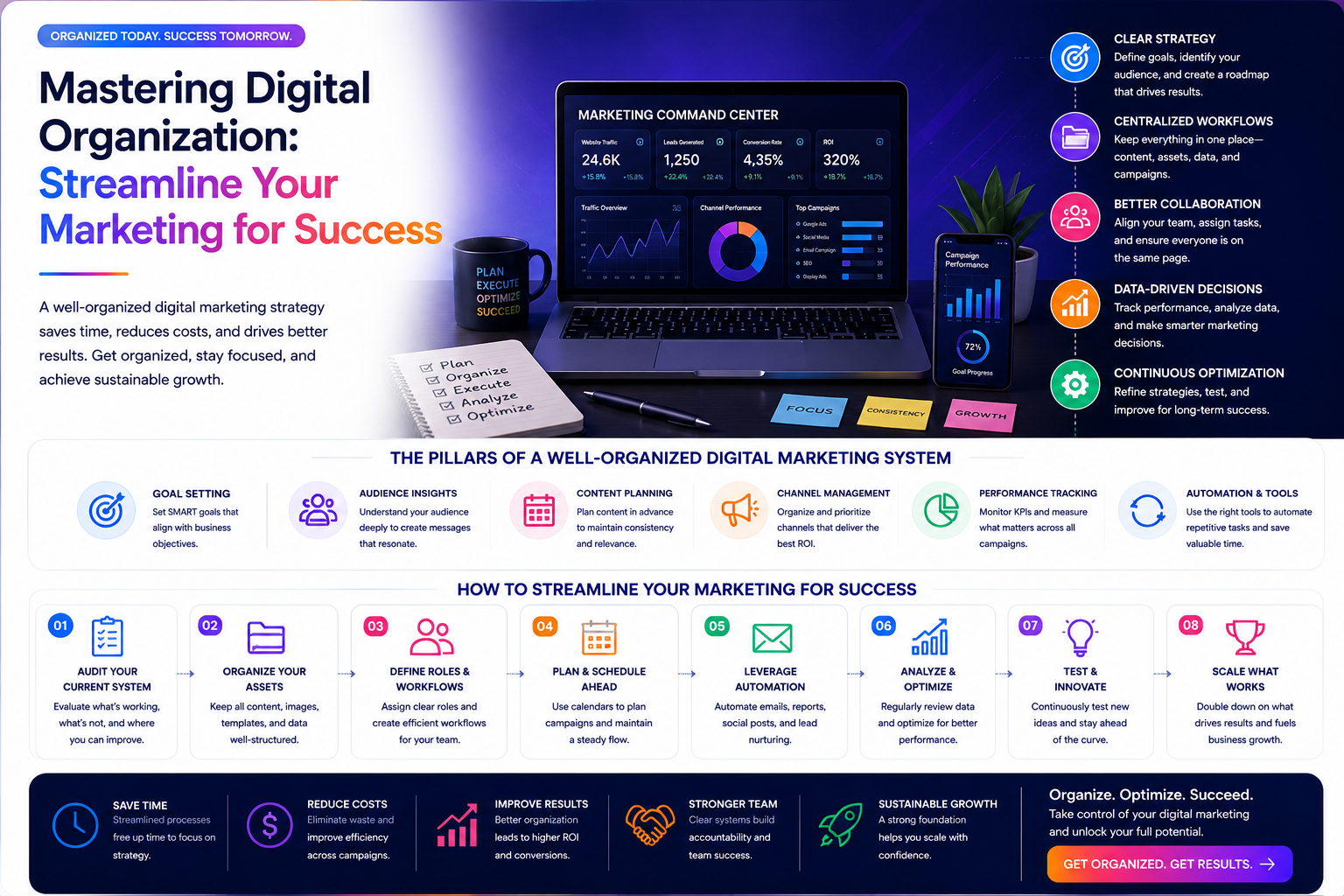
1. Centralized Project Management
Digital marketing campaigns involve numerous moving parts—content creation, scheduling, publishing, and analysis. Using project management tools like Trello, Asana, or Monday.com can help teams track progress, assign responsibilities, and set clear deadlines. Establishing a central hub for all campaign assets and timelines ensures nothing slips through the cracks.
2. Structured Content Calendars
A content calendar is the backbone of a well-organized marketing strategy. It provides a visual overview of what’s being published, where, and when. This not only streamlines content creation but also ensures thematic consistency and helps marketers plan around key dates, product launches, or trending topics.
- Identify core channels: List all platforms you publish on.
- Map out topics: Align content with business goals and audience interests.
- Schedule posts: Assign specific dates and times to each piece of content.
3. Workflow Automation
Automation platforms like HubSpot, Mailchimp, or Zapier can eliminate repetitive tasks such as email follow-ups, social media posting, and lead nurturing. By automating these processes, marketers free up valuable time for strategy and creativity while reducing the risk of human error.
4. Organized Data and Analytics
Digital marketing generates vast amounts of data. To extract meaningful insights, marketers must organize their data sources, set up consistent tracking parameters, and centralize reporting dashboards. Tools like Google Analytics, Data Studio, or Tableau can help consolidate data and visualize performance metrics in real time.
Tips to Boost Your Digital Marketing Organization
- Document Processes: Create standard operating procedures (SOPs) for recurring tasks. This ensures consistency and makes onboarding new team members easier.
- Declutter Regularly: Archive outdated assets, unsubscribe from unnecessary tools, and clean up your database to maintain focus.
- Collaborate Effectively: Use communication platforms like Slack or Microsoft Teams to streamline conversations and share updates efficiently.
- Set Clear Objectives: Define campaign goals, KPIs, and success metrics before launching any marketing initiative.
Trending Tools for Digital Organization in 2024
Staying organized means keeping up with the latest digital tools. Here are some trending solutions transforming digital marketing workflows:
- Notion: Combines note-taking, task management, and knowledge sharing in one intuitive workspace.
- Airtable: Merges the simplicity of spreadsheets with the power of databases for campaign tracking.
- ClickUp: Offers highly customizable project and workflow management for teams of all sizes.
- Canva Teams: Enables centralized asset management and collaborative design editing.
Best Practices for Maintaining Digital Organization
Organization is not a one-time activity—it’s an ongoing process that requires discipline and adaptability. Here are some best practices to maintain digital organization:
- Review Regularly: Conduct monthly audits of your campaigns, tools, and workflows to identify bottlenecks or outdated processes.
- Train Your Team: Invest in ongoing education to ensure everyone is comfortable with your chosen tools and processes.
- Embrace Flexibility: As new platforms emerge, be ready to update your systems and adapt your strategies.
Conclusion: Organization as a Competitive Advantage
In a digital world where attention spans are short and competition is fierce, organization gives your marketing team the edge it needs to succeed. By centralizing project management, streamlining content workflows, leveraging automation, and keeping data organized, you can deliver impactful campaigns with confidence and agility. Start implementing these organizational strategies today and watch your digital marketing efforts soar to new heights.