

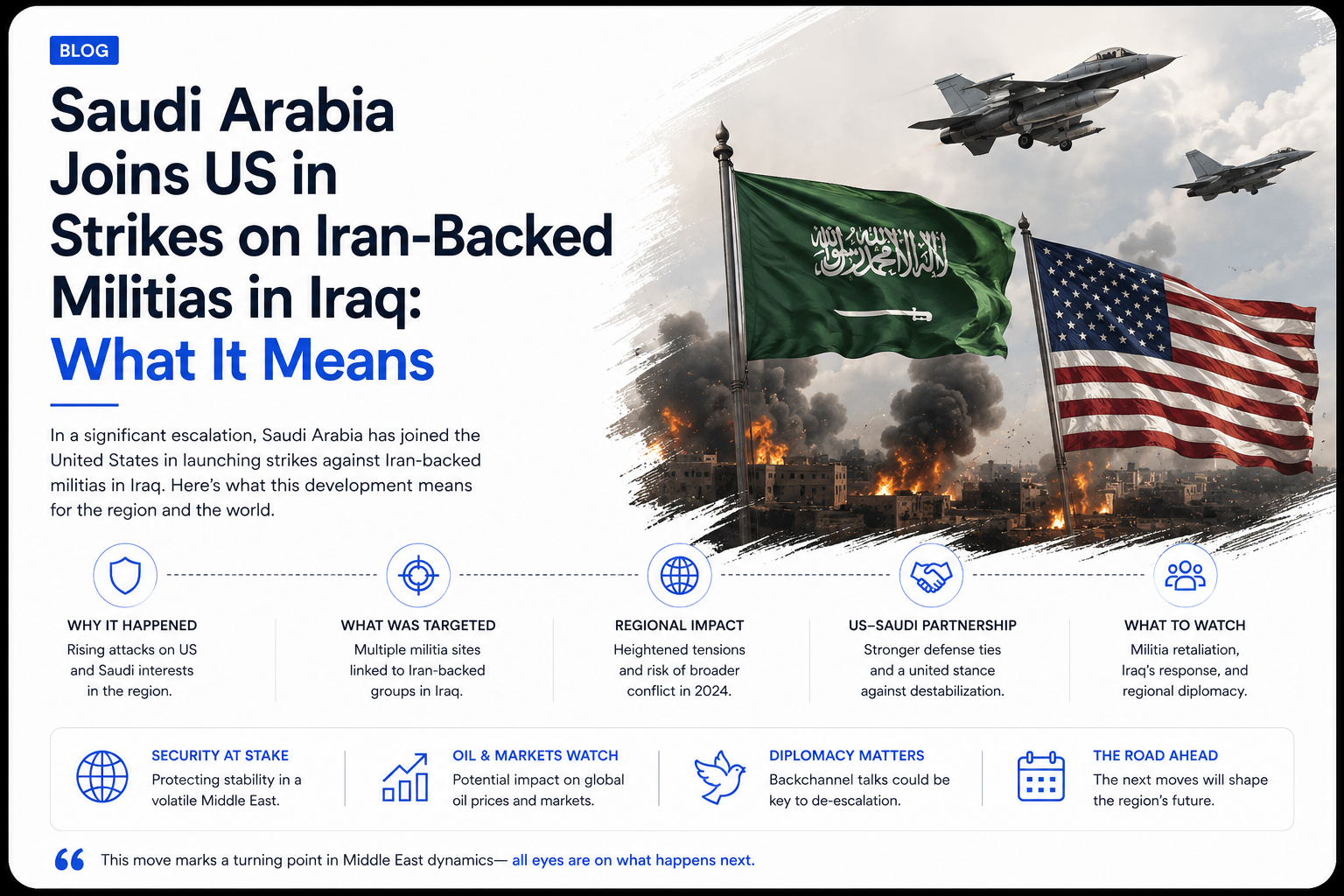
Saudi Arabia and US Launch Joint Strikes in Iraq: A New Chapter in Middle East Tensions
In a significant escalation of Middle East hostilities, Saudi Arabia has joined the United States in launching air strikes against Iran-backed militias in Iraq. The coordinated attacks, which took place north of Muqdadiyah in Iraq's Diyala province, mark the first time Riyadh has openly participated alongside Washington in such operations. The move comes in response to a series of Iranian-backed drone and missile attacks targeting US forces and Saudi energy infrastructure across the region.
The Background: Rising Tensions and Proxy Warfare
The Middle East has long been a battleground for proxy conflicts, with Iran, Saudi Arabia, and the US playing pivotal roles. The Iran-backed Popular Mobilisation Forces (PMF), a coalition of mostly Shia Muslim militias, have been integrated into Iraq's security forces since their formation to fight ISIS. However, several factions within the PMF maintain strong ties to Iran, often acting as Tehran's regional proxies.
In recent years, these groups have repeatedly targeted US assets in Iraq, aiming to pressure the withdrawal of American troops. Iran’s Islamic Revolutionary Guard Corps (IRGC) is widely believed to provide support, training, and weapons to these militias, further entrenching Tehran’s influence in Iraq and beyond.
Details of the Joint US-Saudi Strikes
According to US Central Command (Centcom), the latest strikes were specifically aimed at “Iran-aligned terrorists that the Islamic Revolutionary Guard Corps (IRGC) directed to attack US forces and Saudi energy infrastructure.” Centcom reported that multiple logistics and weapons sites across eastern Iraq were hit by US and Saudi fighter jets, in what it described as a “strong response to over 30 IRGC-directed aerial drone attacks in the last 72 hours.”
The Iraqi PMF stated that at least 20 of its fighters were killed and 32 wounded in these strikes. The group condemned the attacks as a “dangerous escalation” and a violation of Iraq’s sovereignty, warning of potential repercussions.
Triggering Events: Iranian Attacks and Regional Fallout
The joint US-Saudi operation followed a dramatic uptick in hostilities. Hours before the strikes, Iran reportedly launched missiles at US forces in Jordan, in what Centcom described as an “attempted surprise attack.” Fortunately, US defense systems intercepted all incoming missiles, averting casualties.
Additionally, the IRGC claimed responsibility for an attack on three oil tankers in the Strait of Hormuz, accusing them of taking an “unsafe and illegal route” through the strategic waterway. These actions underscore Iran’s willingness to project power far beyond its borders, especially in response to perceived Western aggression.
Saudi Arabia’s Calculated Move: Motivations and Risks
Saudi Arabia’s decision to join the US in direct military action against Iran-backed militias is a notable shift. Traditionally, Riyadh has relied on diplomatic channels and regional alliances to counter Iranian influence. However, repeated attacks on its energy infrastructure and mounting pressure from Washington appear to have altered its calculus.
- Defending Energy Interests: Iran-backed militias have targeted Saudi oil facilities and pipelines, threatening the kingdom’s economic lifeline and global energy markets.
- Strengthening US Ties: By partnering with the US, Saudi Arabia reinforces its strategic alliance and signals its commitment to regional security cooperation.
- Sending a Message to Iran: The joint strikes serve as a warning to Tehran and its proxies that further aggression will be met with force, not just from the US but from regional powers as well.
Reactions from Iraq and Iran
The Iraqi government faces a delicate balancing act. While Iran-backed militias are nominally part of its security forces, Baghdad is wary of foreign military operations on its soil. The PMF’s strong condemnation of the strikes as a violation of sovereignty reflects domestic pressures and the complexity of Iraq’s political landscape.
An Iranian defense official, quoted by state media, denied any connection to recent attacks on US and Saudi interests. However, Washington and Riyadh remain unconvinced, citing intelligence linking the IRGC to both the drone operations and the latest missile assaults.
Implications for Regional Stability
The joint US-Saudi strikes against Iranian proxies represent a significant escalation with far-reaching consequences:
- Risk of Wider Conflict: Direct military engagement increases the risk of a broader regional war, potentially drawing in other actors such as Israel, Turkey, and Gulf states.
- Energy Market Volatility: Attacks on infrastructure and shipping routes could disrupt oil supplies, impacting global markets and prices.
- Domestic Instability in Iraq: Continued violence threatens Iraq’s fragile security environment and could inflame sectarian tensions.
What Comes Next?
The Middle East remains on edge as the US and Saudi Arabia signal their readiness to respond forcefully to further provocations. With the IRGC and its proxies vowing retaliation, the risk of tit-for-tat escalation is high. Diplomatic efforts to de-escalate the situation will be crucial to prevent a wider conflict that could engulf the region.
For now, the world watches closely as two of the most powerful militaries in the Middle East join forces against a common adversary, reshaping alliances and raising the stakes in an already volatile landscape.
Reference: Gritten, D. (2026, July 29). Saudi Arabia joins US in strikes on Iran-backed militias in Iraq. BBC News.