
The Dawn of a New Era in Transportation
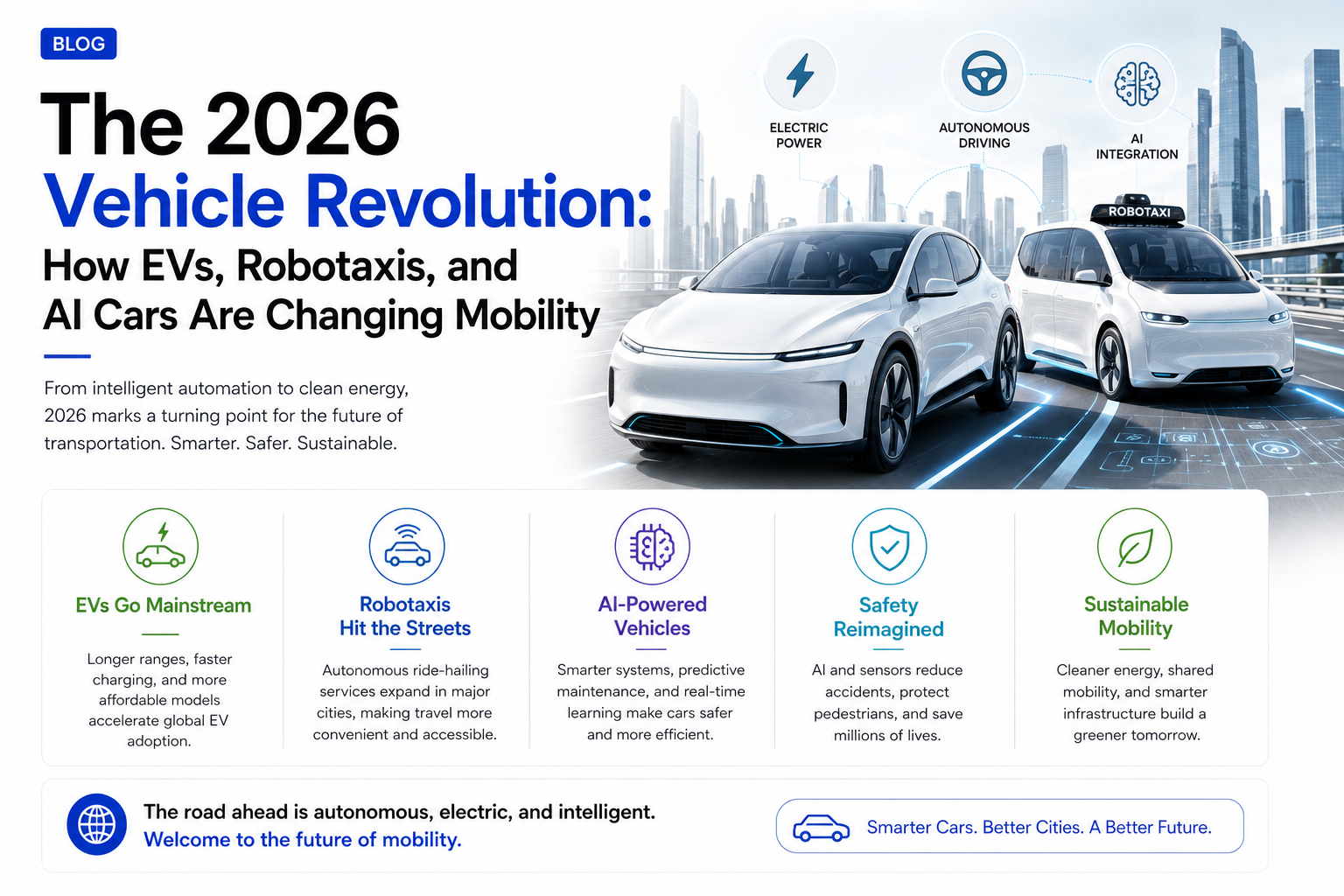
By 2026, the automotive industry is on the cusp of a revolution, driven by cutting-edge technologies such as electric vehicles (EVs), robotaxis, and artificial intelligence (AI)-powered cars. These advancements are not just transforming the way we drive but are also redefining the very concept of mobility. This blog dives into the key trends shaping the future of transportation and how they will impact urban life, environmental sustainability, and everyday commuting.
Electric Vehicles: Charging Ahead
Electric vehicles have witnessed exponential growth over the past decade. By 2026, experts predict that EVs will make up a significant share of new car sales worldwide. This surge is fueled by several factors:
- Government Incentives: Many countries are offering tax breaks, rebates, and infrastructure support to encourage EV adoption.
- Improved Battery Technology: Advances in lithium-ion and solid-state batteries have led to longer ranges, faster charging, and reduced costs.
- Eco-Conscious Consumers: With growing awareness about climate change, more buyers are prioritizing zero-emission vehicles.
Automakers like Tesla, Ford, Volkswagen, and startups such as Rivian are racing to expand their EV lineups. By 2026, it's expected that charging stations will be as ubiquitous as gas stations in major cities, making range anxiety a thing of the past.
Robotaxis: The Rise of Autonomous Rides
One of the most exciting developments in the vehicle revolution is the emergence of robotaxis—fully autonomous ride-hailing vehicles. Companies like Waymo, Cruise, and Baidu are already piloting robotaxi services in select cities, and by 2026, these fleets are set to expand globally.
How Robotaxis Will Change Urban Mobility
- Lower Transportation Costs: Without the need for a human driver, robotaxi rides could become more affordable than traditional taxis or ride-sharing services.
- Reduced Traffic Congestion: AI-powered routing and efficient pick-up/drop-off systems can optimize traffic flow.
- Enhanced Accessibility: Robotaxis will make transportation more accessible for people with disabilities, the elderly, and those without a driver’s license.
As regulatory frameworks evolve, more cities are preparing for a future where robotaxis coexist with traditional vehicles—offering a glimpse into a world of on-demand, highly efficient mobility.
AI-Powered Cars: Smarter, Safer, and More Connected
Artificial intelligence is the backbone of modern automotive innovation. By 2026, AI will be seamlessly integrated into vehicles, delivering benefits such as:
- Advanced Driver Assistance: Features like adaptive cruise control, lane-keeping, and automatic emergency braking will be standard, reducing accidents and saving lives.
- Personalized Experiences: AI will allow cars to learn driver preferences, adjust settings automatically, and even recommend routes based on real-time traffic and weather data.
- Predictive Maintenance: Smart sensors and machine learning algorithms will predict component failures before they happen, minimizing downtime and repair costs.
Connected vehicles will also communicate with each other and with smart city infrastructure, creating a network that optimizes everything from traffic lights to parking availability.
Sustainability and Urban Planning: A Greener, Smarter Future
The 2026 vehicle revolution isn’t just about technology—it’s about creating a more sustainable and livable world. With fewer emissions, quieter streets, and more efficient transportation, cities have the opportunity to redesign urban spaces for people instead of cars.
- Reduced Carbon Footprint: Widespread EV adoption will lead to significant reductions in greenhouse gas emissions.
- Shared Mobility: Robotaxis and car-sharing services could reduce the number of privately owned vehicles, freeing up space for parks, bike lanes, and pedestrian zones.
- Smarter Cities: Data from AI-powered vehicles will help urban planners make informed decisions about infrastructure and public transport.
Challenges on the Road Ahead
While the outlook is promising, the transition won’t be without challenges. Issues such as cybersecurity, data privacy, the need for massive infrastructure upgrades, and regulatory hurdles must be addressed. Additionally, ensuring equitable access to these new technologies will be crucial to avoid widening the urban mobility gap.
Embracing the Vehicle Revolution
As we approach 2026, it’s clear that the automotive world is undergoing its most significant transformation in a century. Electric vehicles, robotaxis, and AI-powered cars will not only reshape how we move but also how we live, work, and interact with our cities. The journey ahead promises cleaner air, safer roads, and a smarter, more connected future for all.
References
- International Energy Agency, Global EV Outlook 2024
- McKinsey & Company, The Future of Mobility 2030
- Waymo, Autonomous Vehicle Safety Reports
- World Economic Forum, The Impact of AI on Urban Mobility