
The New Era of AI: The Model Race of 2026
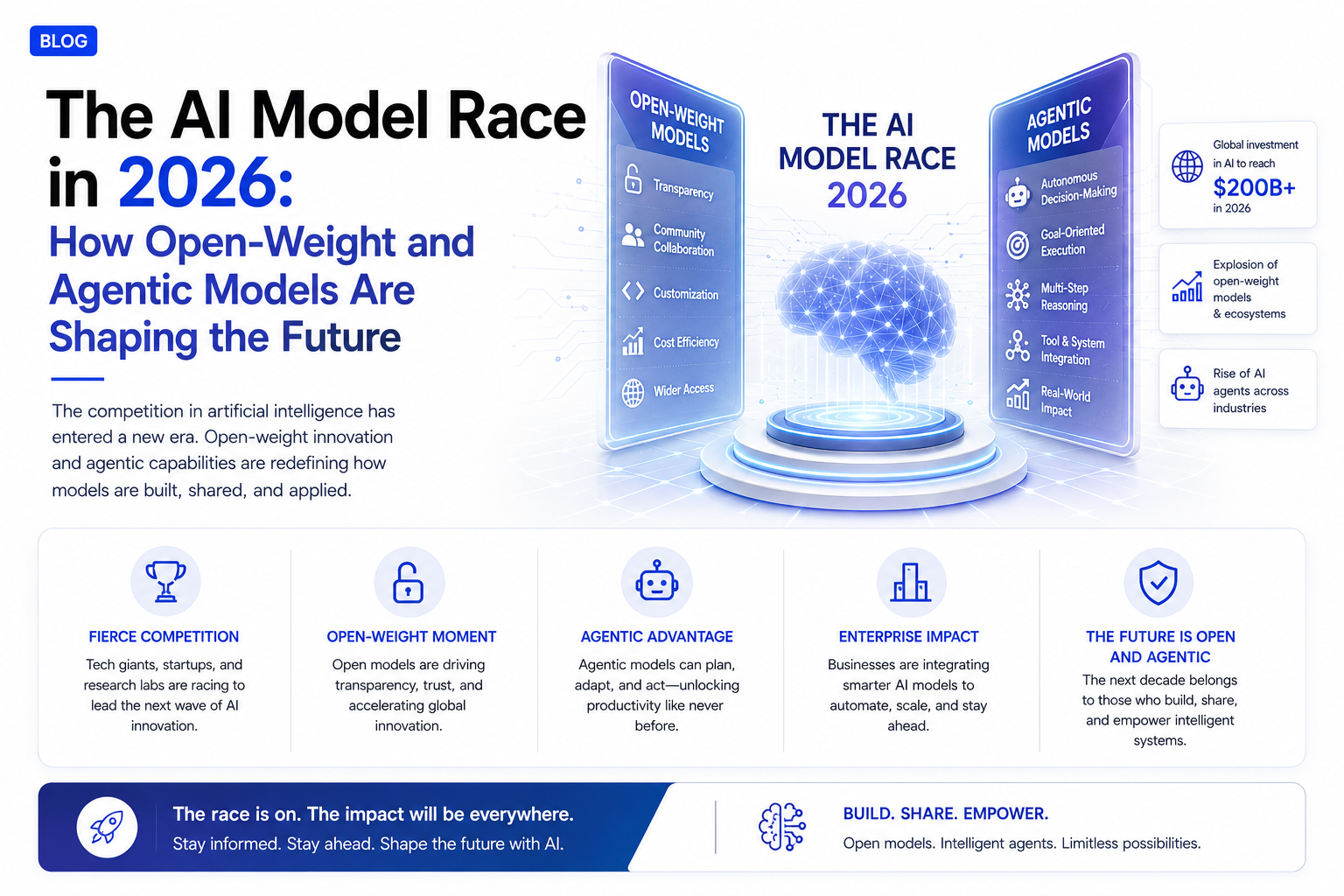
Artificial intelligence is evolving at breakneck speed, and 2026 is set to be a watershed year. With open-weight and agentic models now at the forefront, the AI landscape is undergoing a seismic transformation. But what do these terms mean, and how are they poised to change the game for developers, businesses, and users alike?
Understanding Open-Weight Models
Traditionally, most state-of-the-art AI models have been released as closed systems—black boxes accessible only through APIs or paid access. However, open-weight models—AI systems whose underlying parameters and architectures are publicly available—are rapidly gaining popularity.
Why Open-Weight Models Matter
- Transparency: Researchers and developers can inspect, modify, and audit these models, leading to better understanding and trust.
- Customization: Businesses can fine-tune these models for niche applications without waiting for proprietary providers to update their offerings.
- Innovation: Open-weight models encourage community-driven improvements, collaboration, and faster iteration cycles.
In 2026, leading models like Meta’s LLaMA-3 and OpenAI’s open-weight competitors have empowered a new wave of open-source AI innovation, reminiscent of the early days of Linux and the open-source movement.
Agentic Models: From Tools to Teammates
While open-weight models are about access, agentic models are about autonomy. These next-generation systems don’t just generate text or images—they act as decision-making agents capable of planning, reasoning, and executing complex tasks on behalf of users.
Key Features of Agentic AI
- Autonomous Problem Solving: Agentic models can break down goals into actionable steps and adapt strategies in real time.
- Context Awareness: They maintain a working memory of ongoing tasks, making them more reliable for multi-step workflows.
- Proactive Learning: These models learn from user feedback, improving their performance without explicit retraining.
With the rise of agentic models, AI is no longer just a passive assistant but an active collaborator—capable of managing projects, automating research, or even running entire digital businesses.
Why 2026 Is a Turning Point
Several factors are converging to make 2026 a pivotal year for AI:
- Increased Computing Power: Advances in hardware, including specialized AI chips and distributed cloud infrastructure, have made it easier to train and deploy large models.
- Regulatory Pressures: Governments and organizations are demanding more transparency and accountability, pushing for open-weight releases and explainable AI.
- Community Ecosystem: The global developer community is embracing open-source tools, model sharing, and collaborative research at an unprecedented scale.
These trends are democratizing access to cutting-edge AI while ensuring that ethical, transparent, and customizable solutions are within reach for everyone.
How Open-Weight and Agentic Models Are Changing the Game
The combined rise of open-weight and agentic models is fundamentally altering the way AI is developed and deployed:
For Businesses
- Cost Savings: Open-weight models eliminate licensing fees, while agentic AI reduces the need for manual labor in repetitive or complex workflows.
- Competitive Edge: Companies can rapidly prototype and deploy customized models, giving them an edge in fast-moving markets.
- Data Privacy: With fully open models, sensitive data can be processed locally, minimizing privacy risks associated with cloud-only solutions.
For Developers and Researchers
- Freedom to Experiment: Open weights allow for deep experimentation, model improvement, and the creation of domain-specific agents.
- Faster Innovation Cycles: Shared improvements, bug fixes, and new features propagate rapidly through the ecosystem.
For End Users
- Greater Choice: Users benefit from a wider range of apps and services, tailored to specific needs.
- Improved Trust: Transparent, explainable models foster higher trust and adoption.
Challenges Ahead
Despite these advantages, the AI model race is not without hurdles. Open-weight models raise concerns about misuse, security vulnerabilities, and the potential for rapid proliferation of harmful AI. Agentic models, meanwhile, present new questions about accountability, alignment, and the boundaries between human and machine decision-making.
Ongoing research, thoughtful regulation, and active community engagement will be essential to address these challenges as the field continues to evolve.
Conclusion: The Road to 2026 and Beyond
As we approach 2026, the AI model race is entering a thrilling new phase. Open-weight models are breaking down barriers to innovation, while agentic AI is redefining what’s possible in automation and collaboration. The winners in this new era will be those who embrace transparency, prioritize ethical design, and foster open ecosystems that empower everyone.
References:
- "Meta AI Blog: LLaMA-3 Open-Weight Release," Meta, 2026.
- "Agentic AI: The Next Step in Autonomous Systems," Stanford AI Lab, 2025.
- "The State of Open Source AI," Hugging Face Community Report, 2026.