
Introduction
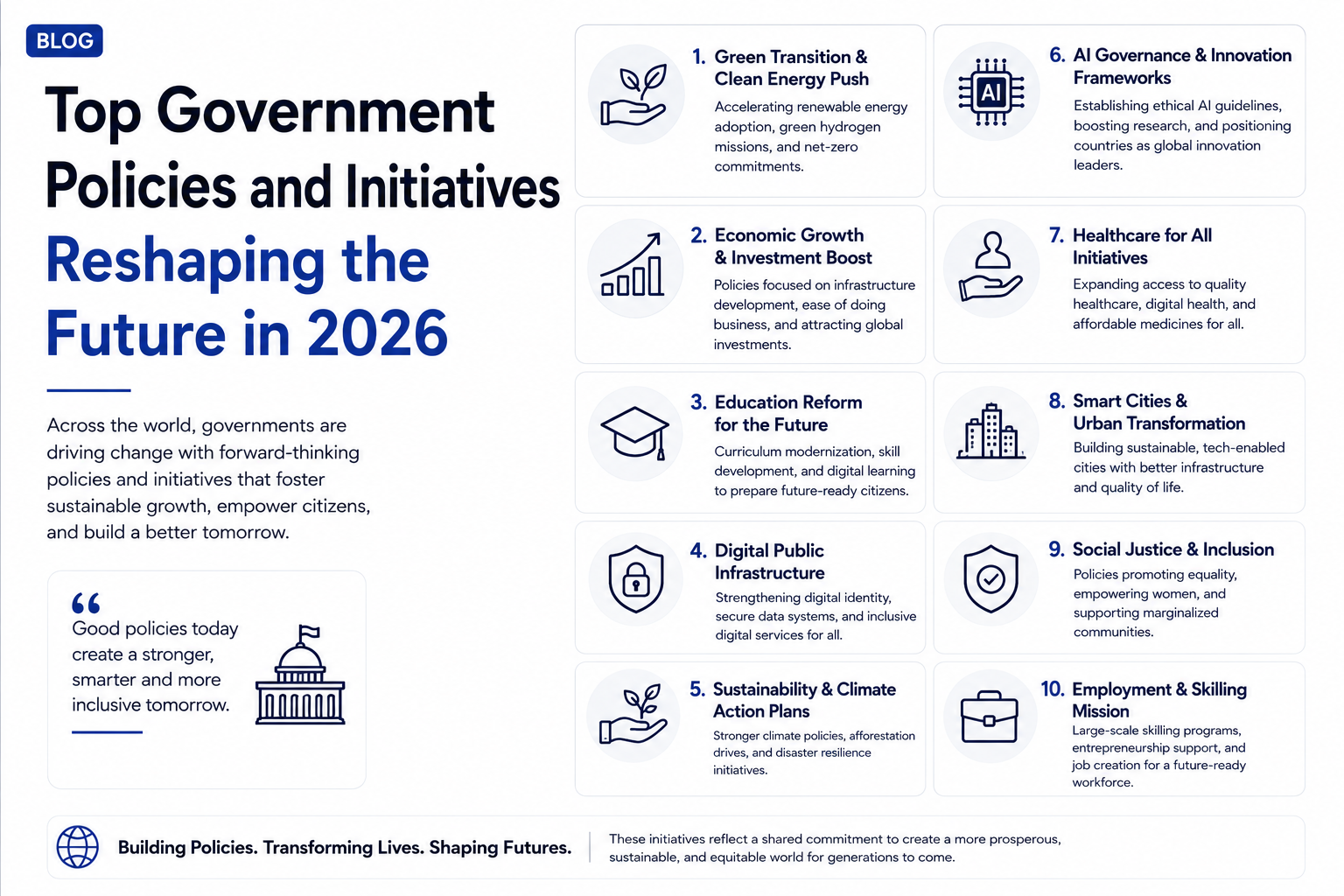
As we approach 2026, governments around the globe are rolling out transformative policies and initiatives to address pressing challenges and harness emerging opportunities. From sustainability to digitalization, these government-led efforts are set to redefine the landscape of economies, societies, and the environment. In this blog post, we explore the most impactful government policies and initiatives trending in 2026 and how they are shaping a brighter, more resilient future.
1. Green Transition and Climate Action
Net-Zero Commitments
Climate change remains at the forefront of global policy agendas. In 2026, more countries are formalizing net-zero emissions targets, with comprehensive action plans to decarbonize key sectors including energy, transportation, and industry. The European Green Deal, the United States' updated Clean Energy Standard, and China’s accelerated carbon neutrality roadmap are prime examples driving this green transition.
Investments in Renewable Energy
- Expansion of solar and wind energy infrastructure
- Incentives for green hydrogen projects
- Public-private partnerships for clean technology innovation
These measures are not only mitigating environmental impacts but also creating new jobs and industries, making sustainability a pillar of economic growth.
2. Digital Transformation and Smart Governance
National AI Strategies
Artificial Intelligence (AI) is revolutionizing governance in 2026. Governments are deploying AI-powered platforms for public services, from healthcare diagnostics to smart traffic management. Countries like Singapore and South Korea are at the forefront, implementing ethical AI guidelines and investing in digital upskilling for civil servants.
E-Governance and Citizen Engagement
- Expansion of digital IDs and e-voting systems
- Open data initiatives to increase transparency
- Mobile-first public service delivery
These digital policies are making governments more efficient, transparent, and responsive to citizens’ needs.
3. Economic Resilience and Inclusive Growth
Universal Basic Income (UBI) Pilots
In response to automation and economic disruptions, several countries are piloting Universal Basic Income programs. Finland, Canada, and select US states are evaluating the impact of UBI on poverty reduction, labor market participation, and mental well-being.
Support for Small Businesses and Startups
- Tax incentives and grants for entrepreneurs
- Regulatory sandboxes for fintech and healthtech startups
- Access to affordable credit and training programs
These initiatives are fostering innovation and ensuring that growth benefits all segments of society.
4. Healthcare Innovation and Pandemic Preparedness
Strengthening Public Health Infrastructure
The COVID-19 pandemic underscored the need for robust healthcare systems. By 2026, governments are investing heavily in disease surveillance, digital health records, and telemedicine. The World Health Organization’s Global Health Security Agenda is a key international framework guiding national efforts.
Accelerating Vaccine Development
- Public funding for R&D in mRNA and next-gen vaccines
- International collaboration for rapid outbreak response
- Equitable vaccine distribution programs
These policies aim to ensure better preparedness for future health emergencies.
5. Education Reform for the Future Workforce
Focus on Digital and Green Skills
Education systems are evolving to prepare students for tomorrow’s jobs. Governments are updating curricula to emphasize coding, data science, climate literacy, and critical thinking. Germany’s dual education system and India’s National Education Policy 2020 are leading examples scaling up vocational and STEM education.
Lifelong Learning Initiatives
- Free or subsidized online courses for adults
- Partnerships with tech companies for skill certifications
- Universal access to digital learning tools
This lifelong learning approach is vital for workforce adaptability in a rapidly changing world.
Conclusion
The government policies and initiatives trending in 2026 are bold, innovative, and future-focused. By driving green growth, digital transformation, economic inclusion, healthcare innovation, and education reform, governments are laying the foundation for a sustainable and resilient future. Staying informed and engaged with these policy shifts is essential for individuals and businesses alike.
References
- European Commission. (2024). European Green Deal.
- World Economic Forum. (2025). Future of Jobs Report.
- OECD. (2025). Digital Government Index.
- World Health Organization. (2025). Global Health Security Agenda.