
Introduction: The Human Side of Digital Marketing
In a world increasingly dominated by automation, artificial intelligence, and big data, the importance of human-centered digital marketing has never been more significant. While technology continues to revolutionize how brands connect with consumers, the need for authentic, meaningful engagement remains at the heart of successful marketing strategies. In this post, we’ll explore why prioritizing the human element in digital marketing is essential for building lasting relationships, fostering trust, and driving sustainable business growth.
The Shift Toward Human-Centered Marketing
Digital marketing has evolved from simple promotional tactics to sophisticated, data-driven campaigns. However, as consumers become more digitally savvy, they also crave genuine connections with brands. According to a Salesforce study, 84% of customers say being treated like a person, not a number, is crucial to winning their business.
What is Human-Centered Digital Marketing?
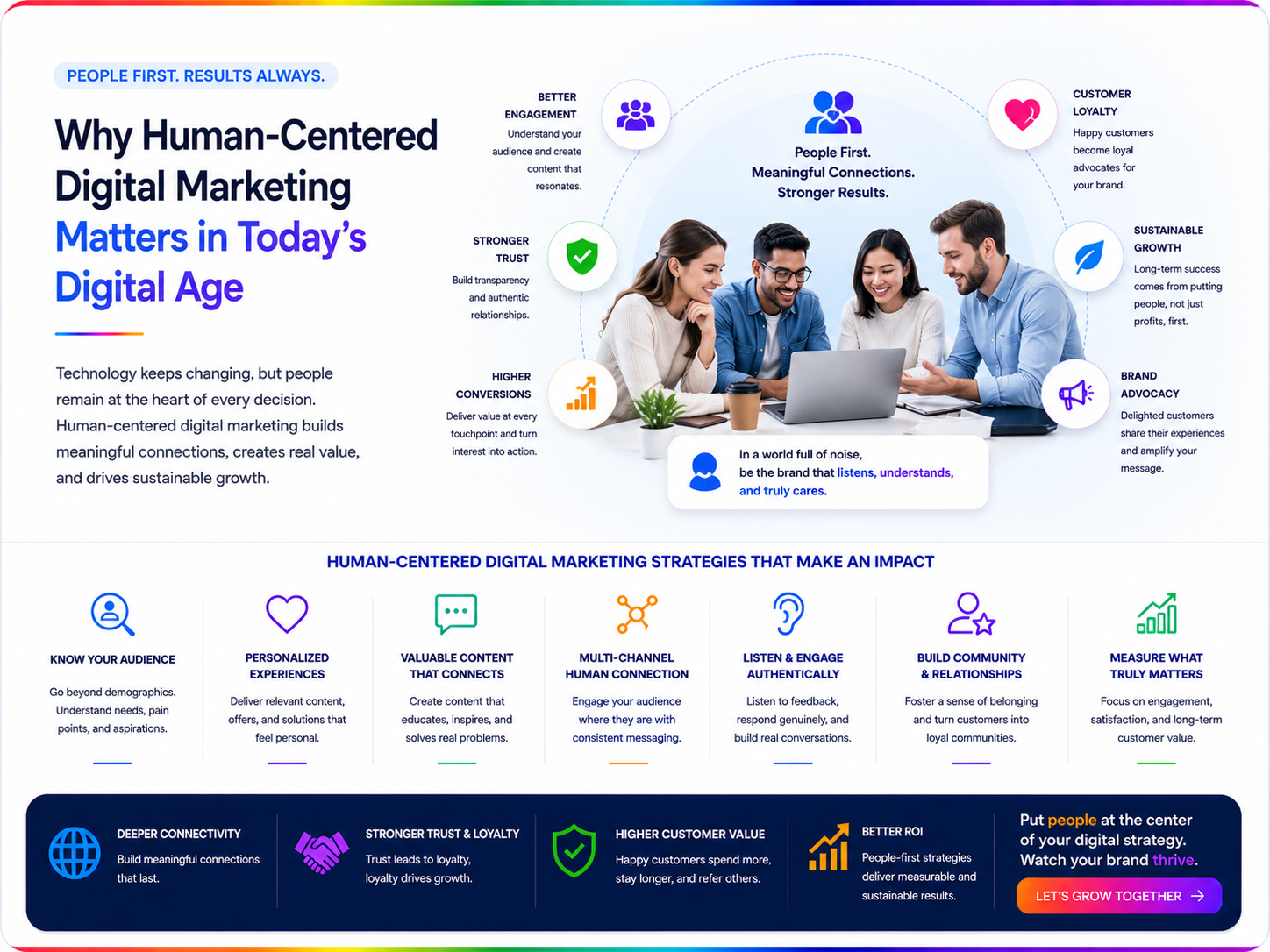
Human-centered digital marketing focuses on understanding the values, needs, and aspirations of your audience. It means designing campaigns that resonate emotionally, communicate authentically, and prioritize user experience. This approach goes beyond targeting demographics; it’s about building empathy and community.
Benefits of Humanizing Your Digital Marketing Strategy
- Increased Engagement: People are more likely to engage with brands that reflect their values and understand their needs.
- Brand Loyalty: Authentic interactions foster trust and long-term loyalty, as seen in the rise of community-driven brands.
- Positive Word-of-Mouth: Satisfied customers are more likely to recommend brands that make them feel valued.
Key Elements of Human-Centered Digital Marketing
1. Storytelling
Stories are powerful tools for forging emotional connections. Brands like Nike and Dove have successfully used storytelling to highlight real people and authentic experiences, driving higher engagement and brand recall (Forbes).
2. Personalization
Personalization involves using data responsibly to deliver relevant content and offers. According to Accenture, 91% of consumers are more likely to shop with brands that provide relevant offers and recommendations.
3. Empathy and Listening
Listening to your audience—through social media, surveys, and reviews—shows that you value their feedback. Tools like social listening platforms help brands respond in real time, addressing concerns and celebrating successes.
4. Community Building
Online communities, such as Facebook Groups or brand forums, create spaces for customers to connect, share experiences, and advocate for your brand. These communities often become self-sustaining sources of loyalty and advocacy.
Practical Tips for Implementing Human-Centered Strategies
- Know Your Audience: Use analytics and direct feedback to develop detailed buyer personas.
- Be Transparent: Clearly communicate your brand values and business practices.
- Create Interactive Content: Encourage participation through polls, live chats, webinars, and user-generated content.
- Respond Authentically: Address both positive and negative feedback with genuine empathy.
- Invest in Customer Experience: Ensure your website, emails, and ads are user-friendly and accessible to all.
Case Study: The Power of Human Connection
One example of human-centered marketing in action is Airbnb. By focusing on real hosts, authentic stories, and a sense of belonging, Airbnb has transformed the travel industry. Their "Belong Anywhere" campaign emphasized community, inclusion, and personal connections, setting them apart from traditional hospitality brands.
Challenges and How to Overcome Them
Despite its advantages, human-centered digital marketing comes with challenges:
- Balancing personalization with privacy concerns
- Scaling authentic interactions across large audiences
- Maintaining consistency in voice and values
To overcome these, brands should adopt ethical data practices, invest in customer service training, and use technology to enhance—not replace—human touchpoints.
Conclusion: The Future is Human
As digital landscapes shift, brands that prioritize the human element will stand out. By building genuine relationships, listening to your audience, and fostering community, you can build a loyal customer base and drive long-term success. Remember: in the digital age, being human is your biggest competitive advantage.