
Why Customer Lifetime Value Matters
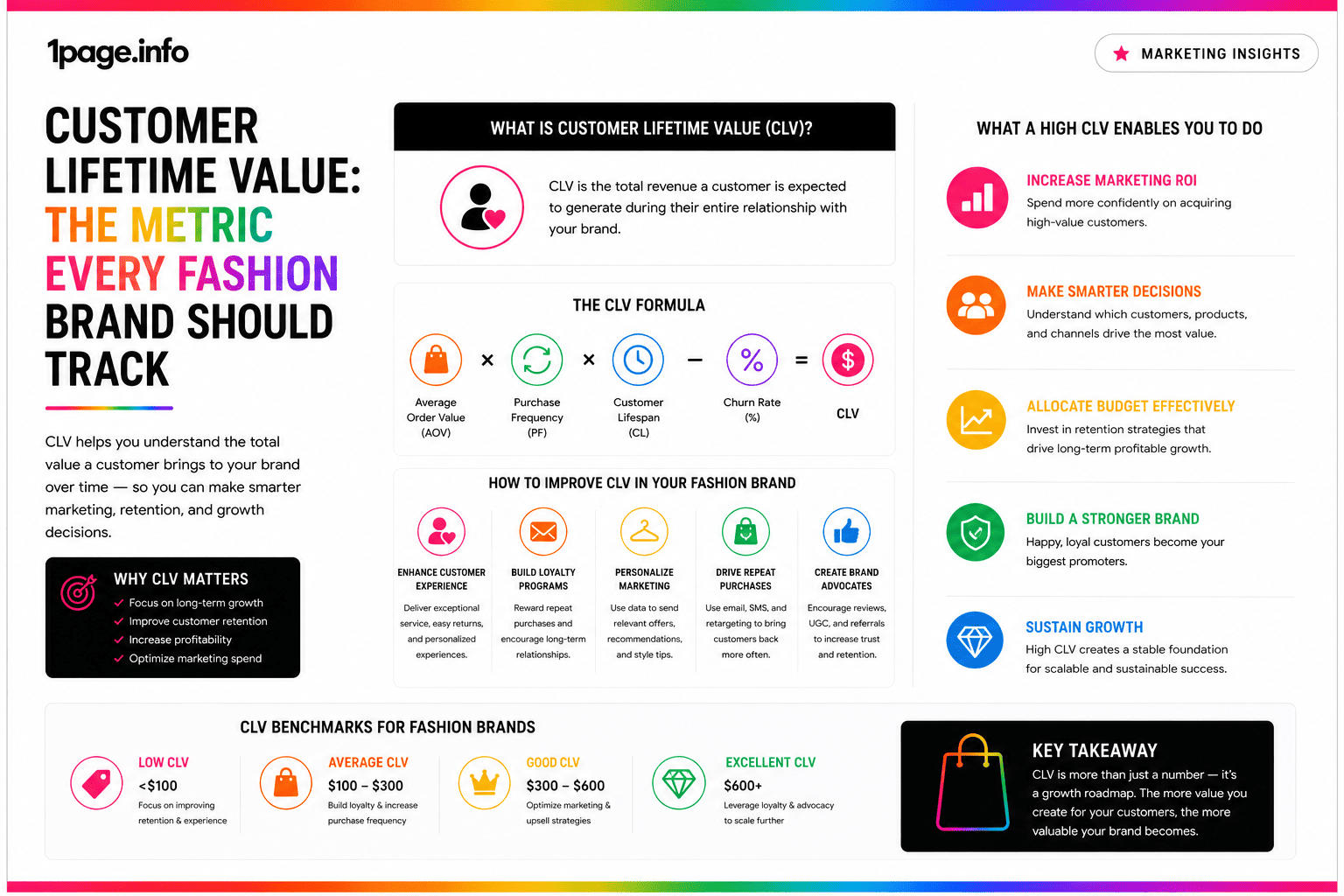
Customer Lifetime Value or what people call CLV is a way to figure out how much a customer is worth to a business over the time they are buying from them. It is not about the first time a customer buys something. Customer Lifetime Value helps businesses see how important it is to keep customers coming back.
Many fashion companies spend a lot of money to get customers but they do not think about the customers they already have. Customers who come back to a company like the brand they know the products are good and it does not take as much work to get them to buy again.
When a business knows what Customer Lifetime Value is they can make choices, about how to spend money on marketing how to treat customers and how to keep them coming back. This helps the business grow in a way that will last. Companies that sell clothes and improve Customer Lifetime Value often make money without having to spend a lot more on advertising.
How to Calculate Customer Lifetime Value
Figuring out the Customer Lifetime Value does not have to be tough. One simple way to do this is to multiply the amount a customer spends on an order by the average number of times they buy something in a year.
Then you multiply that result by the number of years a customer stays with you. For instance let us say a customer spends ₹4,000 per order they buy things four times a year. They remain a customer for five years. In this case the Customer Lifetime Value would be ₹80,000. Even though companies might use complicated math to calculate the Customer Lifetime Value, a simple calculation can still give you useful information about how customers behave and how profitable they are in the long run.
Knowing the Customer Lifetime Value helps fashion brands like yours understand how money you can spend to get new customers without losing money. This is important, for the Customer Lifetime Value to make sure you are making a profit.
Why Repeat Purchases Increase Profitability
Repeat purchases are really important for making customers keep coming. When a customer buys something from you again and again they are more valuable than someone who just buys once and never returns.
Fashion brands can get people to come back and buy again by sending them emails that're just for them suggesting products that are popular at that time of year giving them special deals and checking in with them after they make a purchase. If you treat your customers well and make sure your products are always good people will want to shop with you again.
When people have good experiences shopping they are more likely to keep coming to your store. The easier you make it for customers to buy from you again the more each customer is worth to you over time. Repeat purchases make a difference, in this.
Using Upselling to Increase Customer Value
When a company tries to get customers to buy a version of something that is called upselling. This can be a thing for both the customer and the company. For example a company that sells clothes can say to a customer "You know what would look great with those pants? A nice shirt to go with them or a better kind of fabric that will last longer."
The goal of upselling is to make the customer happy not to get them to spend more money. So the suggestions should be things that the customer will really like and find useful. If a company does upselling in a way over time it can get customers to spend a little more money each time they buy something. This is good for the company because it means customers will be more valuable to them in the run.
Companies that sell clothes should always think about what the customer needs when they are trying to sell them something. Upselling is a way to do this and it can be good for the customer and the company, like when a fashion brand uses upselling to help customers find what they want.
How Cross-Selling Supports Higher Sales
When you buy something cross-selling is when a store shows you products that go well with what you bought. This way you do not have to buy a thing to replace the old one you can just get something that goes with it. For example if you are buying a dress you might also want to buy shoes that match a handbag, some jewelry or other things that go with the dress. This makes it easier for you to shop.
You will probably spend a bit more money. Cross-selling is really good when the store knows what you like and what you have bought before. Some stores that sell clothes online use computers to suggest things that you might like.
They show you these things while you are shopping. Cross-selling is good for you because it helps you find things you might like. It is good, for the store because they can make more money.
The Importance of Retention Campaigns
Customer retention campaigns are for keeping customers who have already bought from you engaged. These campaigns help build relationships and encourage loyalty over a time. Fashion brands often send out newsletters to offer deals give rewards on birthdays launch products and have exclusive promotions.
This helps them stay in touch with customers who have bought from them before. Regular communication reminds customers about the brand. It also introduces products that fit what they like. This makes them more likely to buy from the brand. Customer retention campaigns usually cost less, than trying to get customers.
They focus on people who already know and trust the business. A steady plan to retain customers helps get value out of each customer over a long time. The customer retention campaigns help build trust. The customer retention campaigns make customers feel valued. The fashion brands use customer retention campaigns to increase sales.
How Loyalty Programs Improve Customer Lifetime Value
Loyalty programs are really good for customers because they get rewards for shopping with the brand over and over. These programs make customers want to buy from the brand and they help customers feel more connected to the brand. For example fashion brands will give customers points when they make a purchase or they will give them discounts that only members can get.
Customers might also get to see clothes before anyone else or they might get a special gift on their birthday or they might become a VIP member and get extra benefits. Customers like it when a brand says thank you for shopping with them. This makes customers want to keep buying from the brand instead of going to a different brand. Loyalty programs that are well thought out also make customers more interested in the brand.
Help the brand have a long term relationship with the customer. When a brand has a loyalty program and also treats its customers well the loyalty program becomes a big reason why customers keep shopping with the brand for a long time and this is really important, for the brand because it means they will make more money from each customer over time.
Measuring and Improving CLV Over Time
We need to keep an eye on the customer lifetime value on a basis as part of our business reports. By doing this fashion brands can see if the things they are doing to keep customers are actually working. We should also look at how people buy from us again how much they spend each time how many customers stay with us and how many people are part of our loyalty program.
These things help us understand how our customers are doing overall. If we look at these numbers all the time we can find ways to make our marketing suggest products that customers will like and talk to customers in a way that makes sense to them.
As customers change what they do we can change our plans to keep making customers happy and to make money in the long run. If we keep making things better our business will be strong, for a time.
Conclusion
Customer Lifetime Value is a metric for fashion brands to track. It helps them focus on building long-term relationships with customers than just making quick sales.
Fashion businesses can increase Customer Lifetime Value by getting customers to buy from them again. They can do this by upselling and cross-selling products running retention campaigns and creating loyalty programs that offer real value. Brands that focus on keeping existing customers tend to spend less on finding new ones.
This approach can lead to profits in the long run. By investing in customer relationships fashion brands can build a more sustainable and profitable business, for the future.