
Introduction: The Dawn of Digital India 2.0
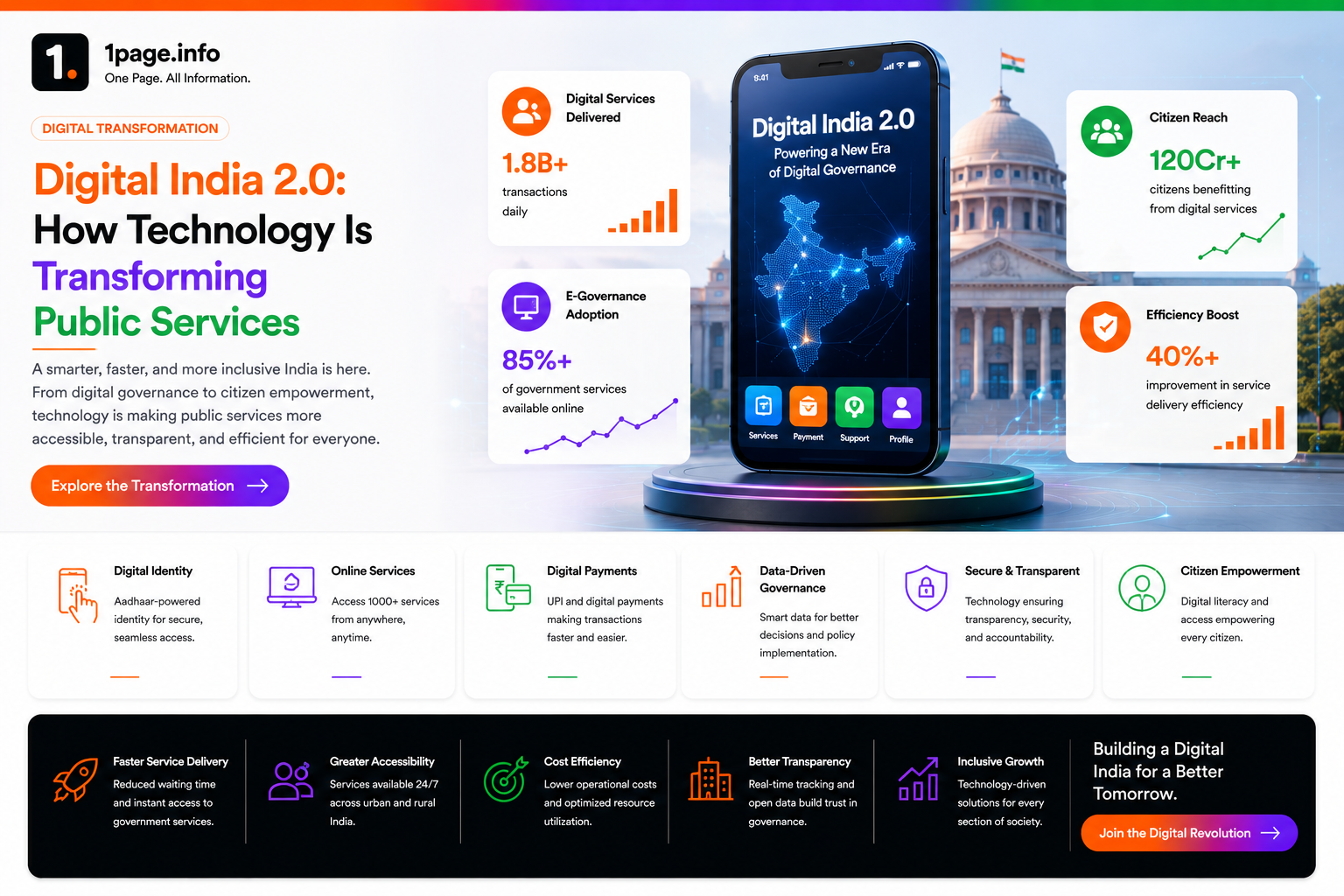
India’s journey towards a digital future began with the ambitious Digital India initiative in 2015, aiming to transform the nation into a digitally empowered society and knowledge economy. As we enter the era of Digital India 2.0, technology is now at the heart of public service delivery, unlocking unprecedented opportunities for efficiency, transparency, and citizen empowerment.
The Evolution: From E-Governance to Digital-First Governance
The first phase of Digital India focused on building digital infrastructure, increasing internet penetration, and promoting digital literacy. Today, Digital India 2.0 is taking a step further by integrating advanced technologies such as Artificial Intelligence (AI), Machine Learning (ML), Blockchain, and the Internet of Things (IoT) into the fabric of public services.
Key Milestones of Digital India 2.0
- Expansion of Digital Infrastructure: BharatNet is connecting thousands of villages with high-speed broadband, ensuring rural communities are no longer left behind.
- Unified Digital Platforms: The DigiLocker and UMANG apps provide citizens with seamless access to over 1600 services, from document storage to applying for government schemes.
- Financial Inclusion: Through the Jan Dhan-Aadhaar-Mobile (JAM) trinity, millions have gained access to banking, subsidies, and digital payments, reducing leakages and empowering the underbanked.
How Technology Is Transforming Public Services
Let’s delve deeper into how cutting-edge technology is reshaping public service delivery across sectors:
1. Healthcare: Telemedicine and Digital Health Records
The Ayushman Bharat Digital Mission is creating a unified national digital health ecosystem. Citizens now have access to telemedicine services, digital health IDs, and e-pharmacy platforms. This ensures timely, affordable, and quality healthcare, especially in remote areas.
2. Education: E-Learning and Digital Classrooms
Initiatives like Diksha and SWAYAM have brought high-quality educational resources online. AI-driven personalized learning tools are helping bridge learning gaps, while virtual classrooms make education accessible to all, regardless of geography or socioeconomic status.
3. Governance: Transparent and Efficient Services
Government services are now just a click away. Citizens can apply for documents, pay taxes, and access welfare schemes online. Blockchain technology is being piloted for secure land records, while AI chatbots assist citizens in real-time, reducing bureaucratic delays and corruption.
4. Agriculture: Smart Farming and Market Access
IoT sensors and AI-powered analytics are helping farmers monitor crops and weather conditions. Platforms like eNAM are connecting farmers directly to buyers, improving price discovery and reducing middlemen, thereby boosting farmer incomes.
5. Urban Services: Smart Cities and E-Governance
India’s Smart Cities Mission leverages IoT, data analytics, and mobile apps to improve urban mobility, waste management, and public safety. Residents can track buses, report civic issues, and access utility bills online, making urban life more convenient and sustainable.
Benefits for Citizens: Empowerment, Inclusion, and Transparency
- Empowerment: Technology brings services closer to the people, enabling self-service and reducing dependency on intermediaries.
- Inclusion: Digital platforms break socio-economic barriers, ensuring services reach even the remotest regions and marginalized groups.
- Transparency: Digital records and online transactions reduce corruption, enhance accountability, and build trust in public institutions.
Challenges and the Road Ahead
Despite significant progress, challenges such as digital literacy gaps, cybersecurity concerns, and connectivity issues in remote areas remain. To fully realize the vision of Digital India 2.0, the government, industry, and civil society must collaborate to:
- Strengthen digital infrastructure, especially in rural and underserved areas.
- Promote awareness and training programs to enhance digital literacy.
- Implement robust cybersecurity frameworks to safeguard citizen data.
- Encourage innovation through public-private partnerships.
Conclusion: Towards a Smart, Inclusive Future
Digital India 2.0 is not just a technological upgrade—it’s a transformative movement reshaping how public services are delivered and experienced. By harnessing the power of technology, India is paving the way for a more inclusive, transparent, and empowered society. For citizens, the promise is clear: a smarter, faster, and fairer access to the services that matter most.