

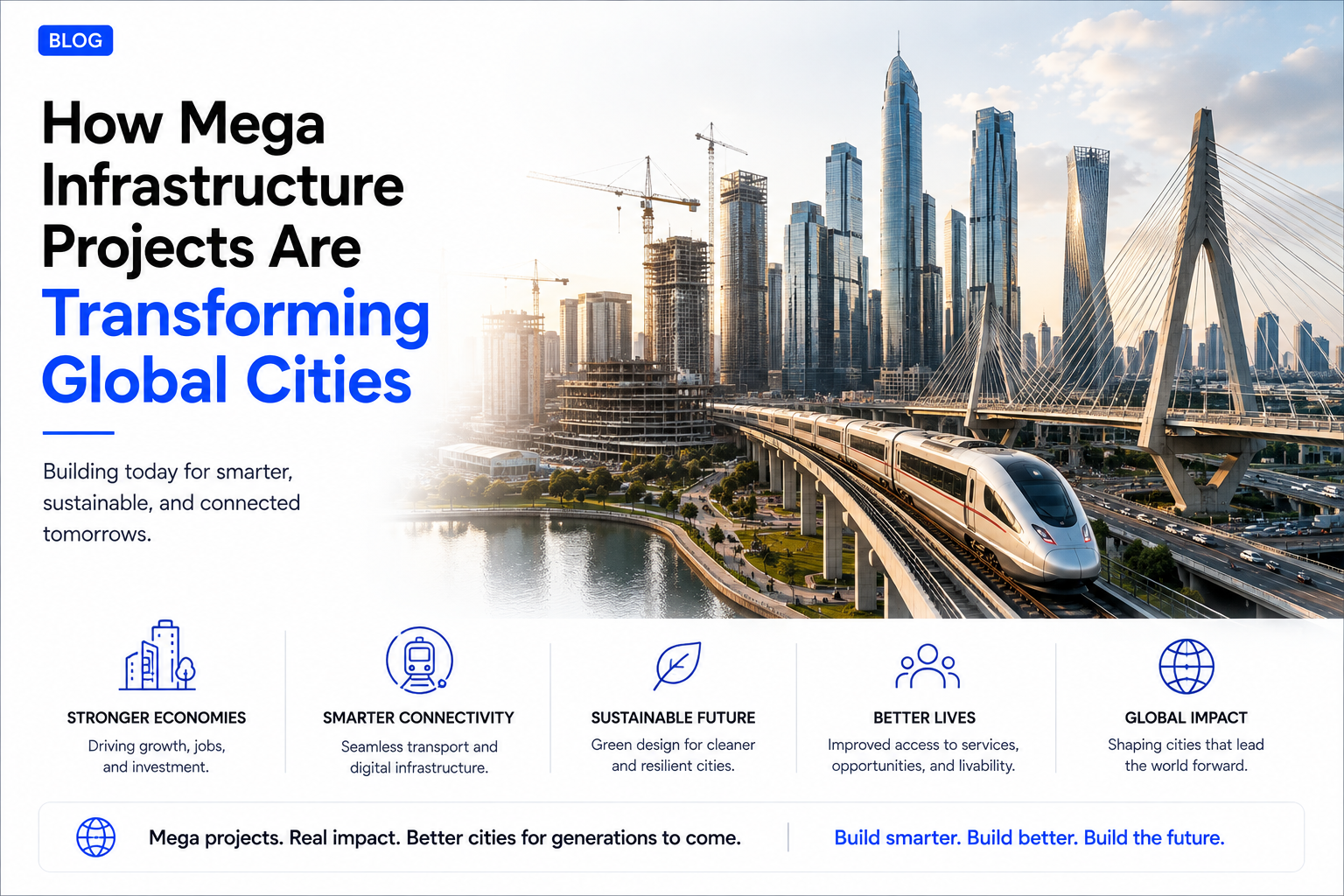
Introduction: The Rise of Mega Infrastructure Projects
Across the globe, urban landscapes are undergoing rapid transformation, driven by massive infrastructure projects that aim to address growing populations, economic demands, and sustainability goals. These mega projects, often costing billions and spanning years or even decades, are reshaping the way cities function, connect, and thrive. From new transportation networks to ambitious smart city initiatives, the impact of these developments is monumental.
Defining Mega Infrastructure Projects
Mega infrastructure projects are large-scale, complex ventures typically involving substantial investment and coordination among multiple stakeholders. They encompass a range of sectors, such as transportation, energy, water management, and urban development. Their scale and ambition often make them icons of progress and innovation, setting new benchmarks for urban living.
Key Mega Projects Reshaping Cities Worldwide
1. Transportation Networks
- Crossrail (Elizabeth Line), London: This new high-speed rail line, completed in 2022, revolutionizes connectivity across London and its outskirts, reducing travel times and easing congestion.
- Grand Paris Express, France: Currently underway, this massive expansion of the Paris metro will add 200 kilometers of new track and 68 stations, enhancing mobility for millions.
- Jakarta-Bandung High-Speed Rail, Indonesia: Southeast Asia’s first high-speed rail line, launched in 2023, is set to boost economic growth and urban integration.
2. Urban Regeneration and Smart Cities
- Hudson Yards, New York City: The largest private real estate development in U.S. history, Hudson Yards is transforming Manhattan’s West Side with innovative mixed-use spaces, green areas, and advanced technology.
- NEOM, Saudi Arabia: An ambitious $500 billion project, NEOM aims to build a futuristic mega-city powered by renewable energy and cutting-edge technology, setting new standards for sustainability and urban design.
3. Sustainable and Resilient Infrastructure
- Thames Tideway Tunnel, London: This “super sewer” is designed to modernize the city’s Victorian-era sewage system, reducing pollution and preparing the city for future growth.
- Shenzhen Bay Innovation and Technology Zone, China: Integrating green spaces, research facilities, and smart infrastructure, this project exemplifies the shift toward eco-friendly urban environments.
Benefits of Mega Infrastructure Projects
- Economic Growth: Large-scale projects create jobs, attract investment, and stimulate local economies. They act as catalysts for broader urban and regional development.
- Improved Connectivity: Enhanced transportation networks reduce travel times, boost productivity, and foster greater urban integration.
- Sustainability and Resilience: Modern infrastructure incorporates eco-friendly technologies and resilient designs that help cities adapt to climate change.
- Quality of Life: Urban regeneration initiatives offer improved green spaces, cultural amenities, and smart services, making cities more liveable and attractive for residents and visitors.
Challenges and Considerations
Despite their advantages, mega projects are not without challenges. Common issues include:
- Cost Overruns and Delays: Many projects exceed budgets and timelines due to unforeseen complexities and stakeholder negotiations.
- Displacement and Social Impact: Large developments can lead to the displacement of communities and disruption of local economies if not managed inclusively.
- Environmental Concerns: Construction and operation can have significant environmental footprints, making sustainable planning and mitigation essential.
The Future of Urban Transformation
As urban populations continue to swell — with projections indicating 68% of the world’s population living in cities by 2050 — the need for innovative, resilient, and sustainable infrastructure is greater than ever. Mega projects will play a pivotal role in shaping the cities of tomorrow, integrating technology, sustainability, and inclusivity into their core frameworks.
Emerging trends include the rise of smart infrastructure, widespread adoption of renewable energy, and an emphasis on mixed-use, transit-oriented developments. The lessons learned from today’s mega projects will inform the next generation of urban transformation, ensuring that cities remain vibrant, accessible, and sustainable for decades to come.
Conclusion
Mega infrastructure projects are more than just feats of engineering — they represent the ambitions and aspirations of global cities striving to meet the challenges of the 21st century. While complex and often controversial, their potential to drive progress, enhance quality of life, and set new standards for urban living is undeniable. As these projects unfold, they will continue to inspire, challenge, and redefine what’s possible in urban development.
References:
- United Nations, World Urbanization Prospects, 2018
- World Economic Forum, Global Infrastructure Outlook, 2023
- BBC, "Crossrail: The Journey So Far," 2022
- NEOM Official Website, 2024
- Grand Paris Express, Société du Grand Paris, 2023