
Introduction
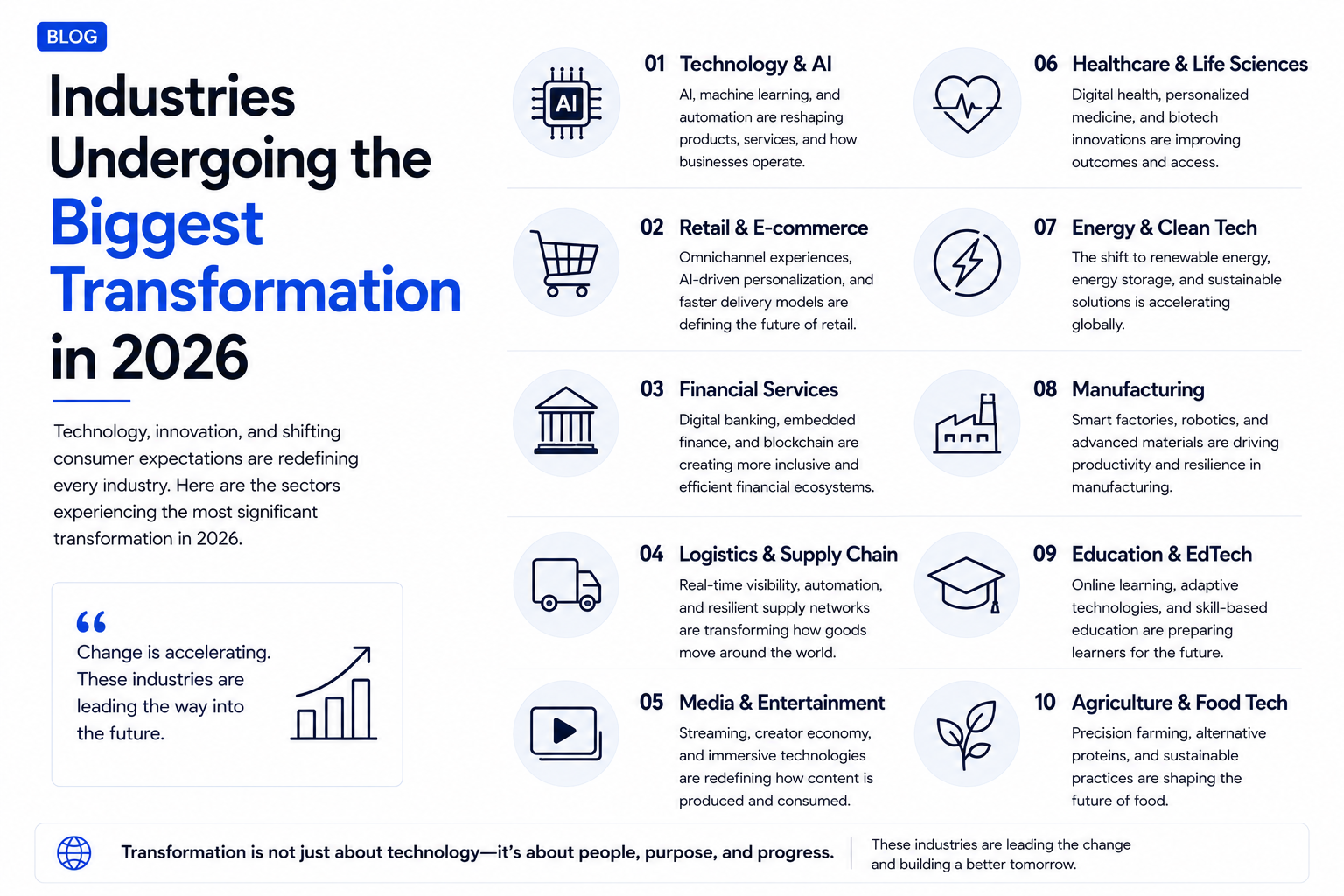
As we approach 2026, several industries are poised for unprecedented change, driven by technological advances, evolving consumer demands, and global challenges. Businesses and professionals who stay ahead of these transformations stand to gain a competitive edge in the rapidly shifting landscape. Let’s explore which industries are undergoing the most significant transformations and what’s fueling their evolution.
1. Healthcare: A Digital Revolution
The healthcare industry is at the forefront of transformation, thanks to advancements in artificial intelligence (AI), telemedicine, and biotechnology. In 2026, we can expect:
- Widespread Telehealth Adoption: Virtual consultations and remote monitoring will become the norm, increasing accessibility and reducing costs.
- AI-Powered Diagnostics: AI and machine learning will assist in disease detection and personalized treatment plans, improving patient outcomes.
- Digital Health Records: Seamless integration of patient data across providers will enhance care coordination and efficiency.
Why This Matters
These shifts promise not only better patient care but also streamlined operations and new business models for providers and insurers.
2. Automotive: The Era of Smart Mobility
The automotive sector is rapidly evolving, fueled by autonomous vehicles, electrification, and smart infrastructure. Trends for 2026 include:
- Electric Vehicle (EV) Dominance: Major automakers are launching a wave of EVs, driven by stricter emissions regulations and consumer demand.
- Autonomous Driving: Self-driving technology is moving from pilot programs to real-world deployment, transforming how people and goods move.
- Connected Cars: Vehicles will increasingly communicate with each other and city infrastructure, enhancing safety and traffic management.
Why This Matters
This transformation will impact not only manufacturers but also logistics, urban planning, and the energy sector.
3. Retail: The Rise of Experiential and Online Shopping
Retailers are reinventing themselves to cater to digital-first consumers. In 2026, we’ll see:
- Omnichannel Experiences: Seamless integration between online and in-store shopping will be standard, offering convenience and personalization.
- AI-Driven Personalization: Retailers will leverage data to anticipate customer preferences and optimize inventory.
- Sustainable Practices: Eco-friendly packaging and supply chains will become a competitive differentiator.
Why This Matters
Retail transformation is not just about e-commerce growth but about delivering tailored, memorable experiences that foster loyalty.
4. Energy: Accelerating the Green Transition
The energy sector is undergoing a seismic shift as the world races toward sustainability goals. By 2026, expect to see:
- Renewable Energy Expansion: Solar, wind, and other renewables will dominate new energy investments.
- Smart Grids: Digital technologies will optimize energy distribution and consumption.
- Energy Storage Innovations: Breakthroughs in battery technology will support renewable integration and grid stability.
Why This Matters
Transitioning to sustainable energy not only addresses climate change but also creates new jobs and business opportunities.
5. Finance: The Digital and Decentralized Future
Financial services are being reshaped by digitalization and the rise of decentralized finance (DeFi). Notable trends for 2026 include:
- Fintech Disruption: Mobile payments, robo-advisors, and peer-to-peer lending platforms will further democratize access to financial services.
- Blockchain and Crypto: Increased adoption of blockchain for transactions, identity management, and smart contracts.
- AI in Risk Management: Enhanced fraud detection and personalized financial products powered by AI.
Why This Matters
Finance’s transformation will empower consumers and businesses with greater control, transparency, and efficiency.
Conclusion
From healthcare to finance, these industries are on the brink of dramatic transformation by 2026. Embracing innovation and adapting to these changes will be crucial for organizations aiming to thrive in the future economy.
References
- World Economic Forum, The Future of Jobs Report, 2023
- McKinsey & Company, Industry Trends 2024
- Deloitte Insights, 2026 Industry Outlooks