

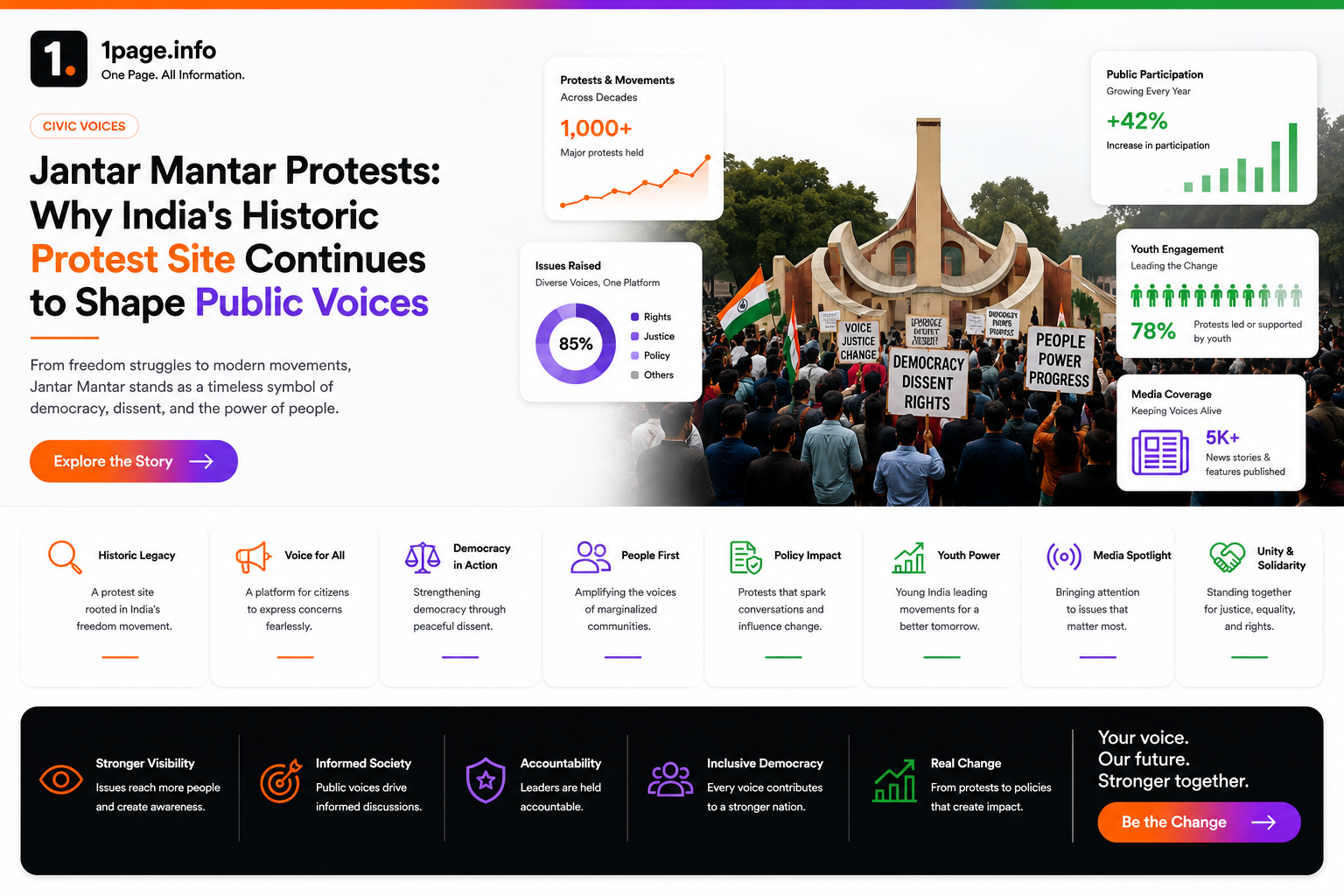
For decades, Jantar Mantar in New Delhi has stood as more than a historical monument. It has become one of India's most recognized spaces for peaceful demonstrations, where citizens, students, workers, social organizations, and activists gather to raise concerns and seek attention from policymakers. As public discussions around governance, employment, education, women's safety, and social justice continue to evolve, Jantar Mantar remains at the center of India's democratic landscape. In recent months, the location has once again witnessed protests on a variety of issues, reflecting the growing importance of public participation in shaping national conversations. Whether the demonstrations involve demands for policy reforms, employment opportunities, better governance, or justice in specific cases, Jantar Mantar continues to symbolize the constitutional right to peaceful assembly. Located in the heart of New Delhi, Jantar Mantar has long served as a designated area where organized protests can take place with official permission. Its proximity to Parliament and major government offices has made it a strategic location for individuals and organizations wishing to bring attention to public concerns. Unlike spontaneous street demonstrations, protests at Jantar Mantar are generally planned events where participants gather to submit memorandums, address the media, and engage in peaceful dialogue. This structured environment has made the site an important platform for democratic expression. The issues raised at Jantar Mantar vary widely, highlighting the diversity of challenges faced across the country. Recent demonstrations have included demands related to employment opportunities, examination reforms, reservation policies, women's rights, environmental protection, farmers' concerns, healthcare access, pension schemes, and better public services. Many protesters also use social media platforms alongside on-ground demonstrations to amplify their message. Hashtags, live videos, and citizen journalism often help protests gain nationwide attention within hours, increasing pressure on authorities to respond. Digital platforms have transformed how protests are organized and communicated. Information spreads rapidly through platforms such as X, Instagram, Facebook, and YouTube, allowing supporters from different regions to stay informed and participate online. At the same time, authorities and fact-checking organizations continue to encourage citizens to verify information before sharing updates, ensuring that discussions remain accurate and responsible. Responsible digital participation has become an important part of modern civic engagement. India's Constitution guarantees citizens the right to freedom of speech and peaceful assembly, subject to reasonable restrictions for maintaining public order and security. Organizers generally seek permission from local authorities before conducting demonstrations, while law enforcement agencies manage security arrangements to ensure public safety. Peaceful protests play an essential role in democratic societies by providing citizens with a lawful mechanism to express concerns and influence public policy. Maintaining non-violence and respecting legal guidelines helps ensure that these demonstrations remain constructive. Over the years, several campaigns that began at Jantar Mantar have influenced national discussions, encouraged parliamentary debates, and prompted administrative reviews. Even when immediate policy changes do not occur, sustained public engagement often increases awareness and encourages broader conversations across society. Media coverage, public opinion, and civic participation together shape how these protests are perceived and how governments respond to emerging concerns. India is going through a lot of changes in society, economy and technology. Because of this people taking part in the government is still very important. Jantar Mantar will probably keep being a place where people from backgrounds can come and express their thoughts and ideas without any trouble. Jantar Mantar is important for reasons. It is not about the protests that happen there. It is about what these protests mean. A place where people can talk to each other, where the government's accountable, to the people and where citizens can take part in what happens in their country. Nowadays people can come together in person. Use the internet to make their voices heard. Jantar Mantar is a reminder that democracy works best when people are actively involved in making their countrys future better. Jantar Mantar will keep being a place for people to speak up and make a difference in India.Why Jantar Mantar Is India's Most Recognized Protest Venue
Key Issues Driving Recent Protests
The Role of Social Media
Legal Framework and Public Responsibility
Impact on Policy and Public Awareness
Looking Ahead
Jantar Mantar remains India's most iconic protest venue, where citizens gather to peacefully voice concerns on employment, education, social justice, and governance. Explore why this historic site continues to play a vital role in democratic expression and how recent protests are shaping public discourse.