
The Digital Industry in 2024: An Era of Rapid Transformation
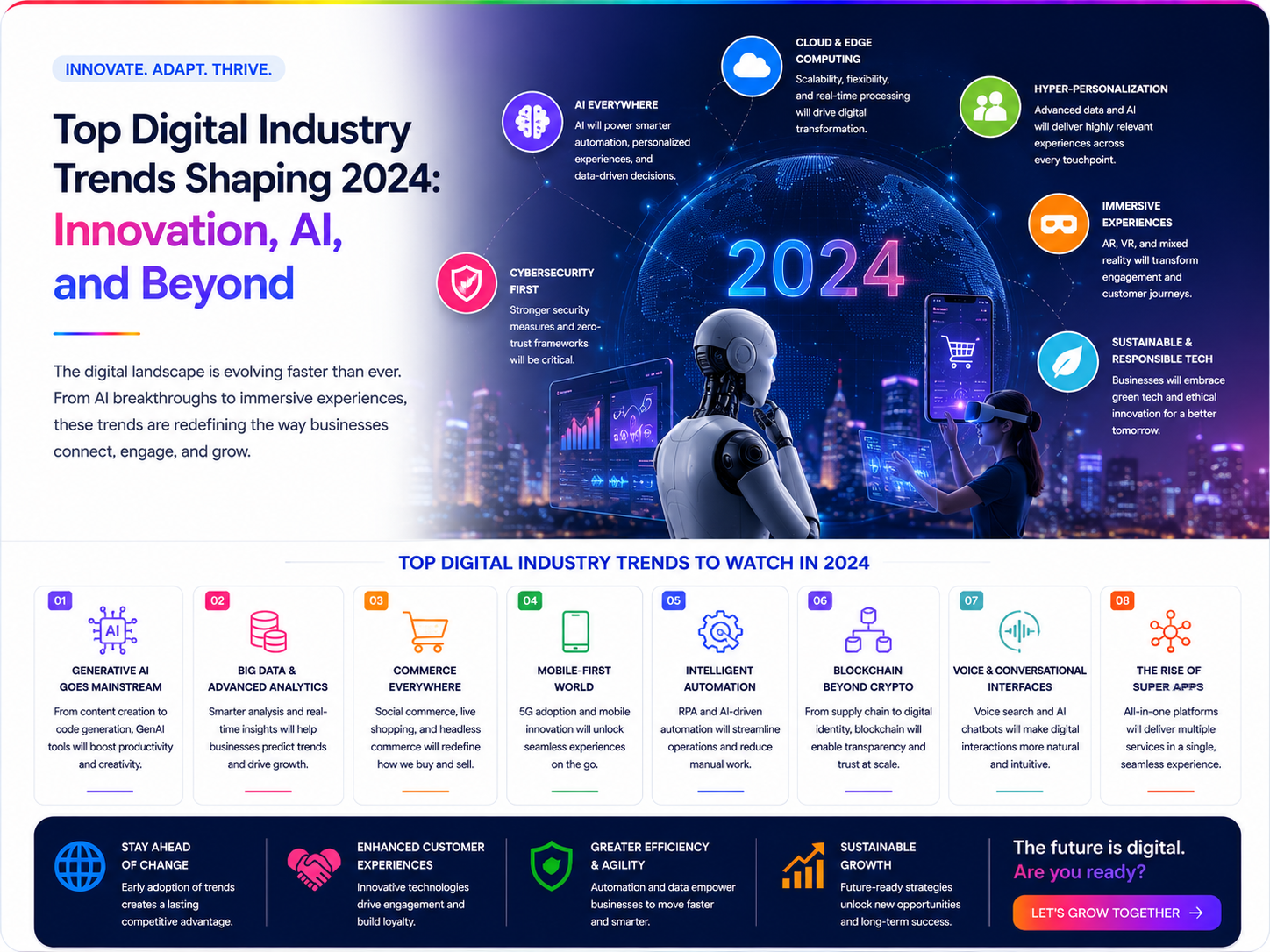
The digital industry is experiencing unprecedented growth and innovation in 2024. From artificial intelligence (AI) and automation to sustainability efforts and the rise of decentralized technologies, businesses and consumers alike are witnessing a significant evolution. Staying informed about these trends is crucial for organizations aiming to stay competitive and for individuals seeking to future-proof their careers.
1. Artificial Intelligence (AI) Dominates Digital Transformation
AI has moved from hype to mainstream, becoming the cornerstone of digital strategies across sectors. In 2024, generative AI tools are empowering businesses to automate content creation, enhance customer service, and optimize operations. According to McKinsey, over 60% of organizations have integrated AI into at least one business function, reflecting its growing acceptance and utility.
- Generative AI: Platforms like ChatGPT and DALL-E are reshaping marketing, design, and software development.
- AI-Driven Analytics: Businesses leverage AI to extract actionable insights from massive data sets, enabling smarter, faster decisions.
- AI in Cybersecurity: With cyber threats escalating, AI enhances threat detection and incident response, safeguarding digital assets.
2. The Rise of Decentralized Technologies
Blockchain, Web3, and decentralized finance (DeFi) are no longer just buzzwords. In 2024, these technologies are underpinning new business models and digital experiences.
- Blockchain for Transparency: Supply chains, healthcare, and finance are leveraging blockchain to enhance traceability and trust.
- Web3 Applications: Decentralized apps (dApps) are gaining traction, offering users more control over their data and digital identities.
- Digital Currencies: Central Bank Digital Currencies (CBDCs) and stablecoins are reshaping global payments and commerce.
3. Sustainable Digital Practices
As climate change remains a pressing issue, the digital industry is embracing sustainability. Organizations are adopting greener data centers, optimizing energy usage, and leveraging digital solutions to reduce their ecological footprint.
- Eco-Friendly Cloud Computing: Leading providers like Google Cloud and Amazon Web Services are investing in renewable energy.
- Green Software Engineering: Developers are prioritizing efficient coding practices to minimize resource consumption.
- Digital Twins for Efficiency: Virtual replicas of physical systems help companies test and optimize processes without waste.
4. Remote Work and the Hybrid Workforce
The pandemic permanently altered workplace dynamics, and in 2024, hybrid work is the norm. Digital collaboration tools, cloud-based platforms, and secure remote access have become essential for productivity and employee satisfaction.
- Collaboration Platforms: Tools like Microsoft Teams, Slack, and Zoom continue to evolve, offering seamless communication and integration.
- Digital Employee Experience: Employers use AI to personalize workflows, automate mundane tasks, and support well-being.
- Cybersecurity for Remote Teams: Enhanced security protocols and zero-trust architecture protect distributed workforces from threats.
5. The Explosion of Digital Content and Marketing Innovation
Content remains king, but the way it’s created and consumed is changing. Short-form videos, immersive AR/VR experiences, and influencer marketing are driving engagement in 2024.
- Short-Form Video: Platforms like TikTok and Instagram Reels dominate social media marketing strategies.
- AI-Powered Personalization: Marketers use AI to deliver tailored content, boosting conversion rates and customer loyalty.
- Immersive Technologies: AR and VR are enhancing online shopping, education, and entertainment, offering users richer digital experiences.
6. Cybersecurity in a Hyperconnected World
With the expansion of IoT devices and cloud adoption, cybersecurity remains a top priority. In 2024, companies deploy advanced threat intelligence, automation, and employee training to combat evolving risks.
- Zero-Trust Security: This approach assumes no device or user is trustworthy by default, reducing vulnerabilities.
- AI-Driven Threat Detection: Automated systems identify and respond to threats in real time, minimizing damage.
- Privacy-First Solutions: Consumers demand greater control over their data, prompting businesses to prioritize privacy compliance.
Conclusion: Staying Ahead in the Digital Race
The digital industry in 2024 is defined by rapid innovation, increased automation, and a focus on sustainability and security. Businesses that embrace these trends will be better positioned to succeed in an increasingly digital and competitive landscape. Individuals, too, must adapt by acquiring new digital skills and staying informed about emerging technologies.