
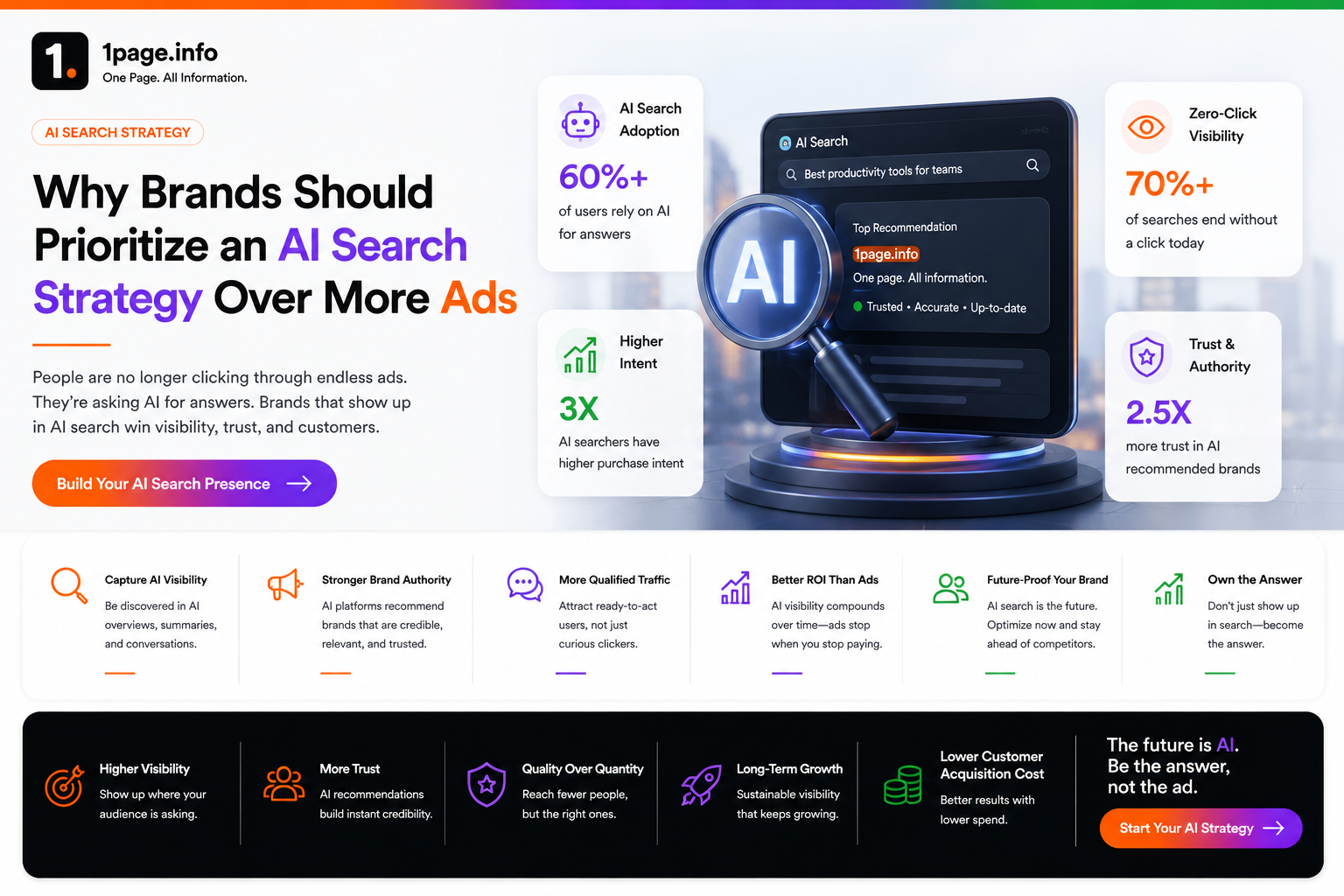
Why Brands Should Prioritize AI Search Strategy Over More Ads
In today's hyper-competitive digital landscape, brands are constantly searching for ways to attract, engage, and convert customers. For years, the default answer has been to increase advertising spend more ads, bigger budgets, and wider reach. But as consumer behavior evolves and technology advances, it's clear that simply pouring money into ads is no longer a sustainable or effective strategy. Instead, brands need to pivot and invest in an AI-powered search strategy before doubling down on their advertising efforts.
The Changing Digital Marketing Landscape
Digital advertising has become more expensive and less effective over time. With rising customer acquisition costs, ad fatigue, and increasing privacy restrictions, brands are feeling the pressure to deliver better results with tighter budgets. Simultaneously, the way people search for information is changing—thanks largely to artificial intelligence and machine learning technologies that are reshaping search engines and user expectations.
AI-driven search is now at the heart of the customer journey. Users expect instant, relevant, and personalized answers to their queries across platforms, whether they’re using Google, voice assistants, or even on-site search bars. If your brand isn’t optimizing for AI-powered search, you risk losing visibility and relevance, no matter how much you spend on ads.
What Is an AI Search Strategy?
An AI search strategy involves optimizing your brand’s digital presence and content for modern, AI-driven search engines and platforms. This goes beyond traditional SEO and incorporates:
- Natural language processing (NLP) to understand and answer user intent.
- Conversational and voice search optimization for queries made through smart speakers and mobile devices.
- Structured data and schema markup to help AI engines interpret your content.
- Personalization by leveraging AI to serve content tailored to individual users.
By aligning your strategy with how AI systems process and rank information, you ensure your brand is found organically—reducing dependence on paid ads.
The Pitfalls of Relying Solely on Ads
Investing in ads can provide a quick boost in traffic, but it’s a temporary solution with several downsides:
- Rising Costs: As competition increases, so do ad prices. Your ROI diminishes over time unless you constantly increase spend.
- Ad Blindness: Users are becoming adept at ignoring ads, especially those that feel irrelevant or intrusive.
- Short-Term Results: Once you stop paying, the traffic and visibility vanish. There’s little to no lasting impact.
- Privacy Changes: Cookie restrictions and privacy regulations are making ad targeting less effective.
In contrast, an AI-centric search strategy builds sustainable, long-term visibility and engagement.
How AI Search Strategy Outperforms More Ads
Here are the key reasons why brands should focus on AI search optimization before increasing their ad budgets:
- Organic Reach: AI-optimized content ranks higher and stays visible longer, driving ongoing traffic without recurring costs.
- Enhanced User Experience: AI search delivers more relevant, personalized results, increasing user satisfaction—and loyalty.
- Future-Proofing: As search engines and platforms become even more AI-driven, early adopters will maintain a competitive edge.
- Better Insights: AI tools provide deep data on user intent and behavior, helping refine both organic and paid strategies.
Implementing an AI Search Strategy: Steps for Brands
Not sure where to start? Here’s how brands can build an effective AI search strategy:
- Audit Current Content: Assess your website and existing content for compatibility with AI search (e.g., voice-readiness, mobile responsiveness, structured data).
- Leverage Structured Data: Use schema markup to help AI engines understand your content’s context and relevance.
- Focus on User Intent: Create content that answers real questions and solves real problems for your audience.
- Optimize for Conversational Search: Adapt your content for long-tail, natural language queries used in voice search.
- Invest in AI Tools: Use AI-powered SEO platforms for keyword research, content optimization, and performance tracking.
- Monitor and Iterate: Continuously measure performance and adapt your strategy as AI search technologies evolve.
AI Search and Ads: Better Together, but Prioritize Search First
It's important to note that an AI search strategy and advertising are not mutually exclusive. In fact, a strong organic presence amplifies the effectiveness of your ads—by boosting trust, authority, and click-through rates. However, without a solid AI-driven search foundation, even the best ads struggle to deliver sustainable results.
Conclusion
In a world where technology and consumer expectations are rapidly evolving, brands that want to stay ahead must rethink their digital strategies. Shifting focus from more ads to a robust AI search strategy is the key to long-term growth, visibility, and customer loyalty. By embracing AI-driven search optimization now, brands can set themselves up for lasting success—while making every advertising dollar count more than ever before.