
AI Agents: The Trend That’s Hard to Ignore
From boardrooms to tech meetups, the excitement around AI agents is palpable. Tech giants are investing billions, startups are racing to launch the next “autonomous assistant,” and LinkedIn feeds are flooded with posts about how AI agents will revolutionize every industry. But amid this frenzy, a practical question remains: Does your business actually need an AI agent?
The answer, for most organizations, is a resounding not yet.
What Exactly Is an AI Agent?
First, let’s clarify what we mean by “AI agent.” Unlike simple chatbots or automation scripts, AI agents are software entities that can autonomously perceive their environment, make decisions, and take actions to achieve specific goals, often chaining together multiple tasks across different systems. Today’s best-known examples include OpenAI’s GPT-4-powered agents, Google’s Gemini, and custom solutions built atop frameworks like LangChain or AutoGPT.
AI agents promise to handle complex workflows: scheduling meetings, following up on leads, managing inventory, or even orchestrating customer support across multiple channels. But this is a far cry from the simple, task-specific automations most companies actually use.
Why the Hype?
The buzz around AI agents stems from several factors:
- Technological leaps: Language models and multi-modal AI have reached impressive new heights.
- Big promises: Vendors tout autonomous agents as the key to massive productivity gains and cost savings.
- FOMO (Fear of Missing Out): No business wants to be seen as lagging behind the AI curve.
But as with any trendy technology, it’s easy to get swept away by hype and overlook the practicalities.
What Real Problems Do AI Agents Solve?
AI agents excel in scenarios where workflows are:
- Complex and repetitive: Tasks that require chaining together multiple steps, decisions, and data sources.
- Dynamic: Environments where rules change frequently, and human intervention is costly or impractical.
- Data-rich: Situations where there’s enough structured and unstructured data for the agent to learn and make informed decisions.
For example, a logistics company managing thousands of shipments across continents may benefit from an AI agent that can re-route deliveries in real time based on weather patterns, customs delays, and client requirements. Or a financial services firm might deploy agents for compliance monitoring across massive transaction datasets.
Why Most Businesses Don’t Need an AI Agent (Yet)
Let’s get practical. While AI agents are powerful, most businesses—especially small and medium-sized companies—don’t have workflows that justify their complexity or cost. Here’s why:
- Your Problems Aren’t Complex Enough
If your most pressing challenges revolve around scheduling, basic customer inquiries, or standard data entry, tried-and-true automation tools (like Zapier, RPA, or even Excel macros) can handle these efficiently—with less risk and lower expense.
- Data Quality and Access Issues
AI agents thrive on high-quality, accessible data. Many businesses still grapple with siloed systems, inconsistent data entry, or legacy software that doesn’t “talk” to modern APIs. Without clean and connected data, AI agents are more liability than asset.
- Implementation Overhead
Deploying AI agents isn’t plug-and-play. It requires integration work, testing, monitoring, and ongoing maintenance. For most companies, the ROI simply isn’t there—at least not yet.
- Change Management Challenges
Rolling out autonomous software changes workflows, impacts job roles, and often meets resistance. Change management is a major undertaking—one many organizations underestimate.
Case Study: When an AI Agent Is Overkill
Consider a local e-commerce retailer. The owner wants to automate customer support. While an AI agent could theoretically handle returns, shipping updates, and product recommendations, setting up such a system would require extensive data integration, training, and oversight. In reality, deploying a robust chatbot or an FAQ knowledge base would solve 95% of their needs—faster and at a fraction of the cost.
How to Decide If Your Business Needs an AI Agent
Before jumping on the AI agent bandwagon, ask yourself these questions:
- Do I have workflow pain points that existing automation tools can’t solve?
- Is my data organized, accessible, and of high quality?
- Can I clearly define the goals and boundaries for what the agent should (and shouldn’t) do?
- Do I have the resources (time, budget, expertise) to implement and maintain an agent?
If the answer is “no” to most of these, focus on improving your core processes and data hygiene first. AI agents may be the future—but there’s no reward for adopting them before you’re ready.
Alternatives: Smarter, Simpler Automation
Don’t underestimate the power of simpler automation tools that have been battle-tested for years:
- Chatbots for basic customer support or lead qualification.
- Workflow automation platforms (like Zapier, Make, or Power Automate) for connecting apps and automating repetitive tasks.
- Robotic Process Automation (RPA) for high-volume, rule-based processes.
- Business intelligence dashboards for actionable data insights.
These tools deliver real ROI without the steep learning curve and risk of bleeding-edge AI agents.
Conclusion: Focus on Problems, Not Hype
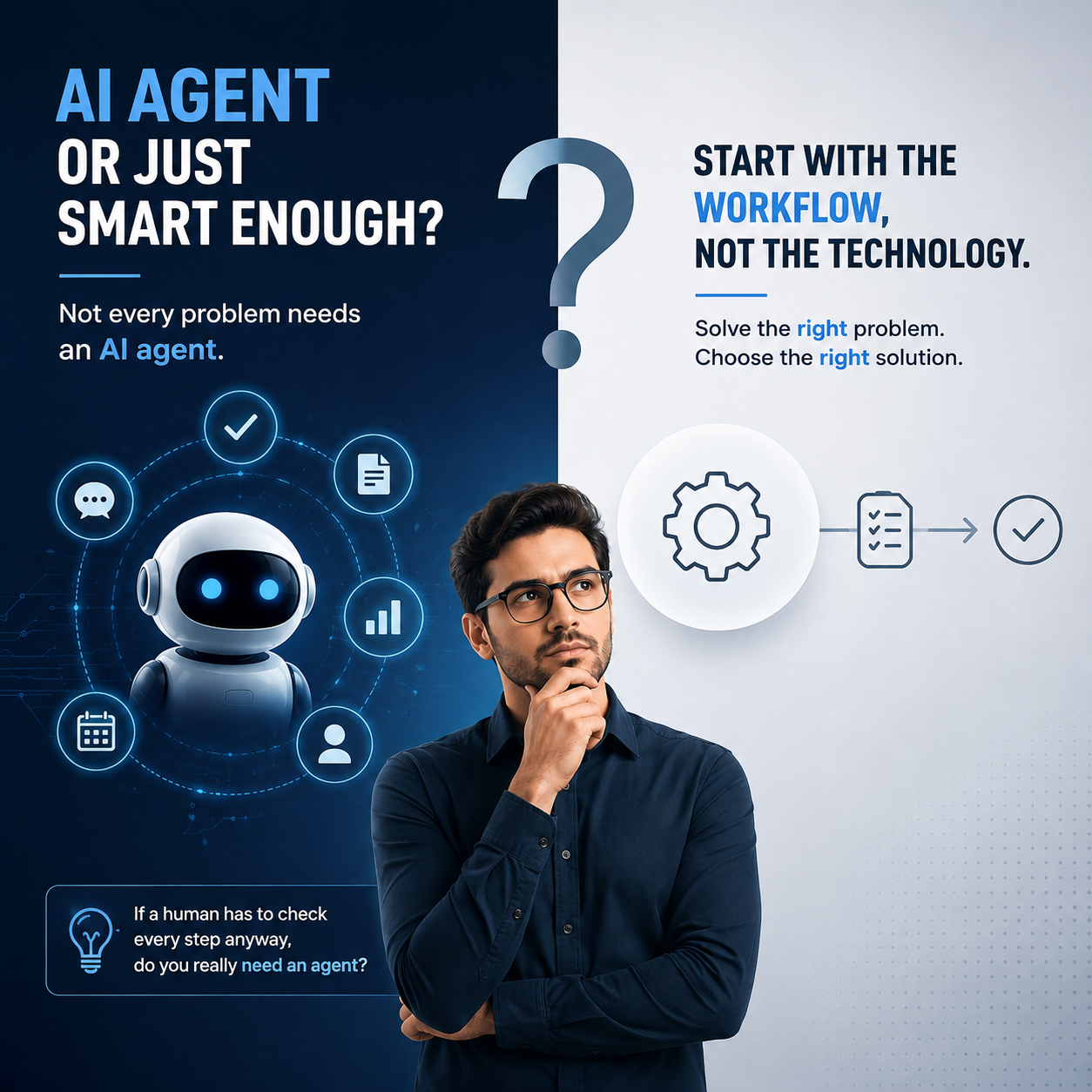
AI agents are exciting, and in the right context, they can unlock new levels of efficiency and intelligence. But for most businesses, the tried-and-true mantra still applies: Start with the problem, not the technology.
Don’t let the current hype distract you from what matters most: delivering value for your customers and team. Automate where it makes sense, get your data house in order, and keep an eye on how AI agents evolve. When the time is right—and you have a real need—they’ll be waiting. Until then, resist the urge to chase every tech trend. Your bottom line will thank you.