
Why Sportswear Startups Are Winning in 2026
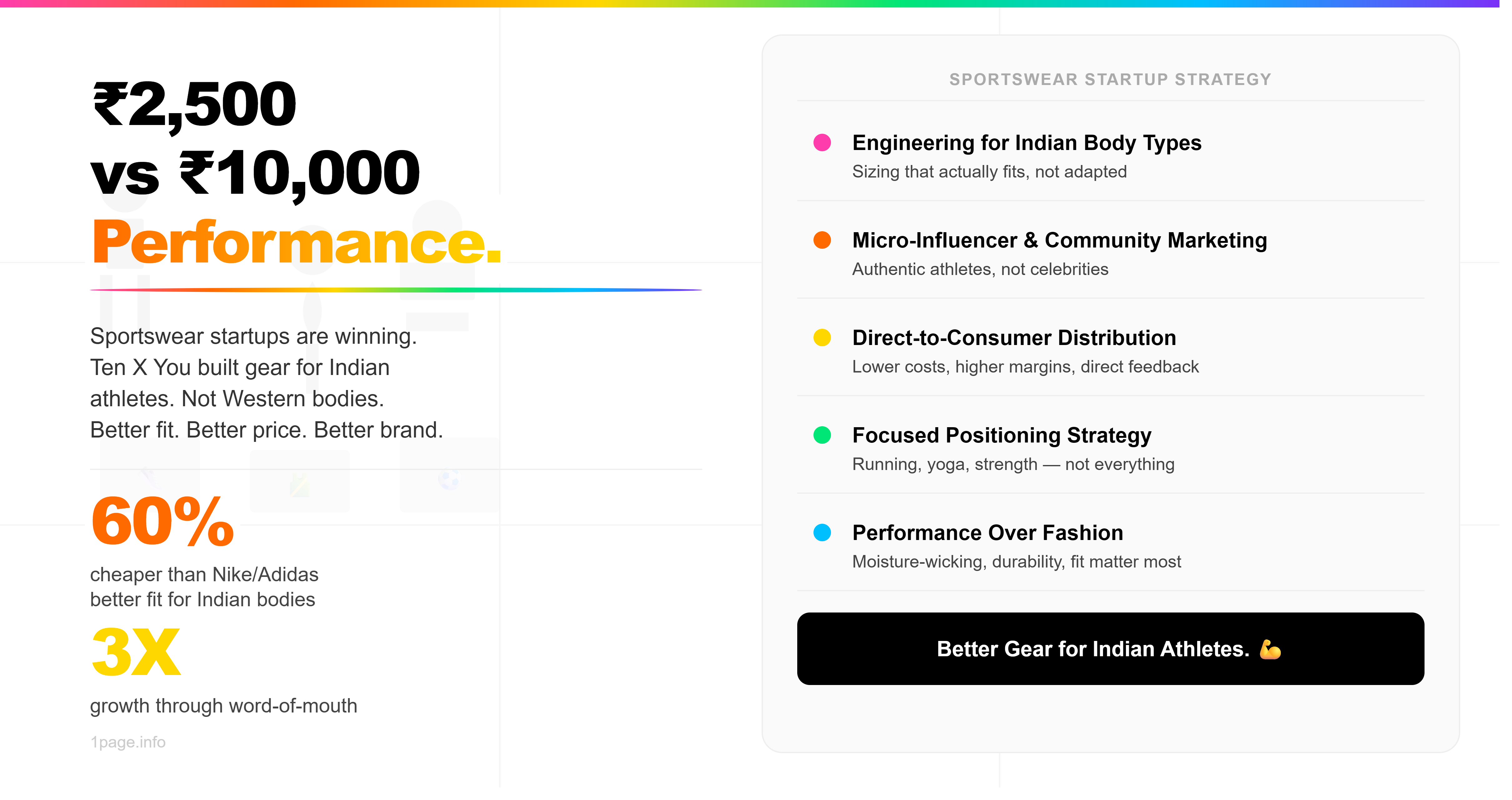
India's athletic market is fundamentally different from mature Western markets. Western athletes have access to established sportswear brands. Indian athletes are just beginning to care deeply about performance gear. They have different body types. Different climate needs. Different style preferences. Different price sensitivities.
Legacy sportswear brands optimized for Western markets struggle to serve Indian athletes effectively. Their sizing is wrong. Their designs do not account for Indian climate. Their pricing is too high. Their marketing does not resonate with Indian fitness culture.
Sportswear startups have no legacy constraints. They can build products specifically for Indian athletes. They can set pricing at levels Indian athletes can afford. They can market in ways that resonate with Indian fitness culture. This positioning advantage is massive.
Ten X You is a perfect example. The Bengaluru-based startup identified a specific gap. Indian athletes wanted performance sportswear. They wanted products designed for Indian bodies. They wanted affordability without sacrificing quality. They wanted brands that understood their fitness journey.
Ten X You built exactly that. The company entered the market with a focused positioning. Not trying to be everything to everyone. Not trying to compete with Nike or Adidas on heritage or global brand recognition. Instead competing on understanding, relevance, and value.
The result is rapid growth. Customers choose Ten X You because the brand feels built for them. Not adapted for them. Built for them from the ground up.
Understanding the Indian Athlete
The foundation of successful sportswear marketing in India is understanding the Indian athlete. This athlete is different from Western athletes in important ways.
First, the Indian athlete is cost-conscious. Performance matters but price matters equally. They want quality. They also want affordable. They will not pay ₹10,000 for leggings just because a celebrity endorses them. But they will pay ₹2,500 for leggings that perform well and fit their body.
Second, the Indian athlete values fitness functionality over fashion. While Western athletes might wear athleisure (sportswear worn casually), Indian athletes primarily wear sportswear for working out. They care about moisture-wicking. They care about impact protection. They care about durability. They care less about fashion collaborations with designers.
Third, the Indian athlete has different body proportions. Most sportswear is designed for Western body types. Indian women tend to have different proportions. Indian men have different proportions. Sizing is often wrong. Fit is uncomfortable. Sportswear startups that engineer sizing specifically for Indian bodies gain instant competitive advantage.
Fourth, the Indian athlete trains in different conditions. Summer in India is hot and humid. Monsoons bring moisture and sweat. Winter is mild. Sportswear needs to handle these conditions. International brands designed for temperate climates perform poorly in Indian heat. Indian startups can optimize for actual Indian conditions.
How Sportswear Startups Are Positioning Themselves
Successful sportswear startups in India are using specific positioning strategies to stand out.
First, they position around performance for Indian athletes. Not performance for elite athletes. Not performance for professional runners. Performance for regular Indians doing regular fitness routines. Yoga. Running. Strength training. Swimming. These are the sports that matter to mainstream India.
Second, they position around affordability without compromising quality. The brand message is clear: you do not need to spend ₹8,000 on leggings to get good performance. You can get excellent performance at ₹2,500 if you buy from a brand that does not waste money on celebrity endorsements and global distribution.
Third, they position around Indian heritage and understanding. The brand narrative is that these are Indian companies built by people who understand Indian athletes. Not multinational companies figuring out India. This creates emotional resonance.
Fourth, they position around specific fitness communities. One startup might focus on runners. Another might focus on yoga practitioners. Another might focus on strength athletes. By focusing on a specific community the startup becomes the expert brand for that community.
Customer Acquisition Strategies for Sportswear Brands
Sportswear startups are using specific customer acquisition channels that work better than traditional advertising.
The first channel is fitness influencers and athlete partnerships. These are not celebrity endorsements. These are partnerships with micro-influencers who are actually passionate about fitness. A yoga instructor with 50,000 engaged followers becomes a brand advocate. Real fitness enthusiasts who train with your products become word-of-mouth channels.
The second channel is community building around fitness. Successful sportswear brands organize running clubs. Yoga communities. Strength training groups. They become the brand that hosts the community, not just sells products. Community members feel invested in the brand's success and become advocates.
The third channel is content marketing around fitness. Blogs about training tips. Videos about proper form. Guides to choosing the right gear. This content attracts fitness enthusiasts searching for information. Some of those people eventually become customers.
The fourth channel is direct-to-consumer sales through online channels. By selling directly to consumers the brand avoids retail markups. It can price affordably and still make margins. It also gets direct customer feedback that informs product development.
The fifth channel is strategic retail partnerships. Rather than trying to compete in every sport retail store the brand partners with specific retailers that align with its positioning. A yoga-focused brand partners with yoga studios. A running brand partners with running clubs that sell gear.
Building Brand Trust in a Crowded Market
The sportswear market is becoming crowded. Established brands are fighting startups. Startups are fighting each other. Building trust becomes critical.
Successful startups build trust through transparency. They explain their product development process. They show where products are made. They share the thinking behind pricing. Customers appreciate brands that do not hide anything.
They build trust through customer reviews and testimonials. Real customers sharing real experiences matter more than celebrity endorsements. A blog post from a runner sharing how Ten X You shorts perform during summer runs carries more weight than a Nike advertisement.
They build trust through product quality and consistency. The brand ships products that perform as advertised. The brand makes returns easy. The brand responds quickly to customer issues. Trust compounds when customers have positive experiences.
They build trust through community engagement. The brand participates in fitness communities authentically. Not as a corporate entity selling things. But as a brand that genuinely cares about fitness culture in India.
The Role of Social Media in Sportswear Marketing
Social media is the primary channel for sportswear startup customer acquisition. Instagram and YouTube are where fitness enthusiasts spend time. TikTok reaches younger audiences getting into fitness.
On Instagram, successful sportswear brands post workout photos. They feature community members in their gear. They share training tips. They create aspirational content that makes people want to train harder and look better while training.
On YouTube, successful brands post longer-form content. Training videos. Gear reviews. Athlete interviews. This content builds authority and drives views that convert to customers.
On TikTok, successful brands post short fitness clips. Quick workout tips. Gear transitions. Behind-the-scenes content. The content is authentic and casual, resonating with Gen Z athletes.
The key difference between sportswear startups and established brands on social media is authenticity. Startups feel like they are part of the fitness community. Established brands feel like they are selling to the fitness community. This difference matters.
Pricing Strategy for Sportswear Startups
Pricing is a critical competitive advantage for sportswear startups. They can price below established brands because they have lower overhead and no legacy cost structures.
A successful pricing strategy might look like this. Premium international sports brands charge ₹8,000-15,000 for leggings. Mid-tier brands charge ₹4,000-8,000. Sportswear startups charge ₹2,000-4,000. The price difference is significant but the startup products perform nearly as well because they are designed specifically for Indian bodies and Indian conditions.
This pricing creates a compelling value proposition. Athletes get better fit, better performance, better price. The only thing they miss is the brand heritage of Nike or Adidas. For many Indian athletes that trade-off is easy to make.
Scaling Beyond Initial Success
The challenge for sportswear startups that achieve initial success is scaling profitably. Early success comes from focused positioning in specific markets or communities. Scaling requires expanding to broader markets without losing the brand clarity that made the startup successful in the first place.
Successful startups scale by expanding their product line methodically. If they started with running shoes they might expand to running apparel, then to general activewear. But they do not try to build a complete sports ecosystem immediately.
They scale by entering new geographic markets methodically. If they started in Bengaluru they expand to Mumbai, Delhi, Pune. They do not try to go national immediately.
They scale by raising capital to invest in inventory, marketing, and distribution infrastructure. Most successful Indian sportswear startups will raise venture funding as they scale. The capital allows them to move faster than bootstrapped competitors.
Challenges Sportswear Startups Face
Despite the opportunity, sportswear startups face real challenges. The first challenge is supply chain complexity. Building quality sportswear at scale requires managing manufacturing, quality control, and logistics. Mistakes are expensive and damage brand reputation.
The second challenge is competing against entrenched global brands with massive marketing budgets. Nike and Adidas spend more on advertising than most sportswear startups earn in revenue. The startups must be smarter about marketing, not just spend more.
The third challenge is capital intensity. Building inventory for multiple product lines across multiple sizes is expensive. Many startups run out of cash before achieving profitability.
The fourth challenge is retaining talent. As startups scale they need experienced executives. But competing for talent against established companies is difficult. Compensation is lower. Prestige is lower.
The Future of Sportswear Startups in India
The outlook for sportswear startups in India is positive. Fitness culture will continue growing. Athletic participation will increase. Athletes will demand better-fitting, better-performing, more affordable gear. This demand creates ongoing opportunity for startups that serve Indian athletes well.
Some startups will consolidate. Some will be acquired by larger companies. Some will eventually go public. A few will become billion-dollar companies. But the core opportunity remains: serve Indian athletes better than legacy brands do.
Conclusion
Sportswear startups are booming in India because they identified a real gap. Indian athletes want performance gear designed for them. They want affordability. They want brands that understand their fitness journey. Legacy sports brands do not deliver on these needs.
Ten X You and emerging sportswear startups are capturing this opportunity through focused positioning, authentic community building, and smart marketing. They understand their customers. They build products for them. They price competitively. They engage authentically on social media.
The startups that win in 2026 will be the ones that maintain brand clarity while scaling. The ones that build real trust with customers. The ones that keep quality high while prices stay low. The ones that build communities around fitness, not just sell products.
India's sportswear market is just beginning. The biggest winners are probably still private companies not yet founded. But the opportunity is real and the startups entering now have first-mover advantage in building authentic brands for Indian athletes.