
68% of Searches End Without a Click — How Brands Must Rewrite Content for the Zero-Click Era
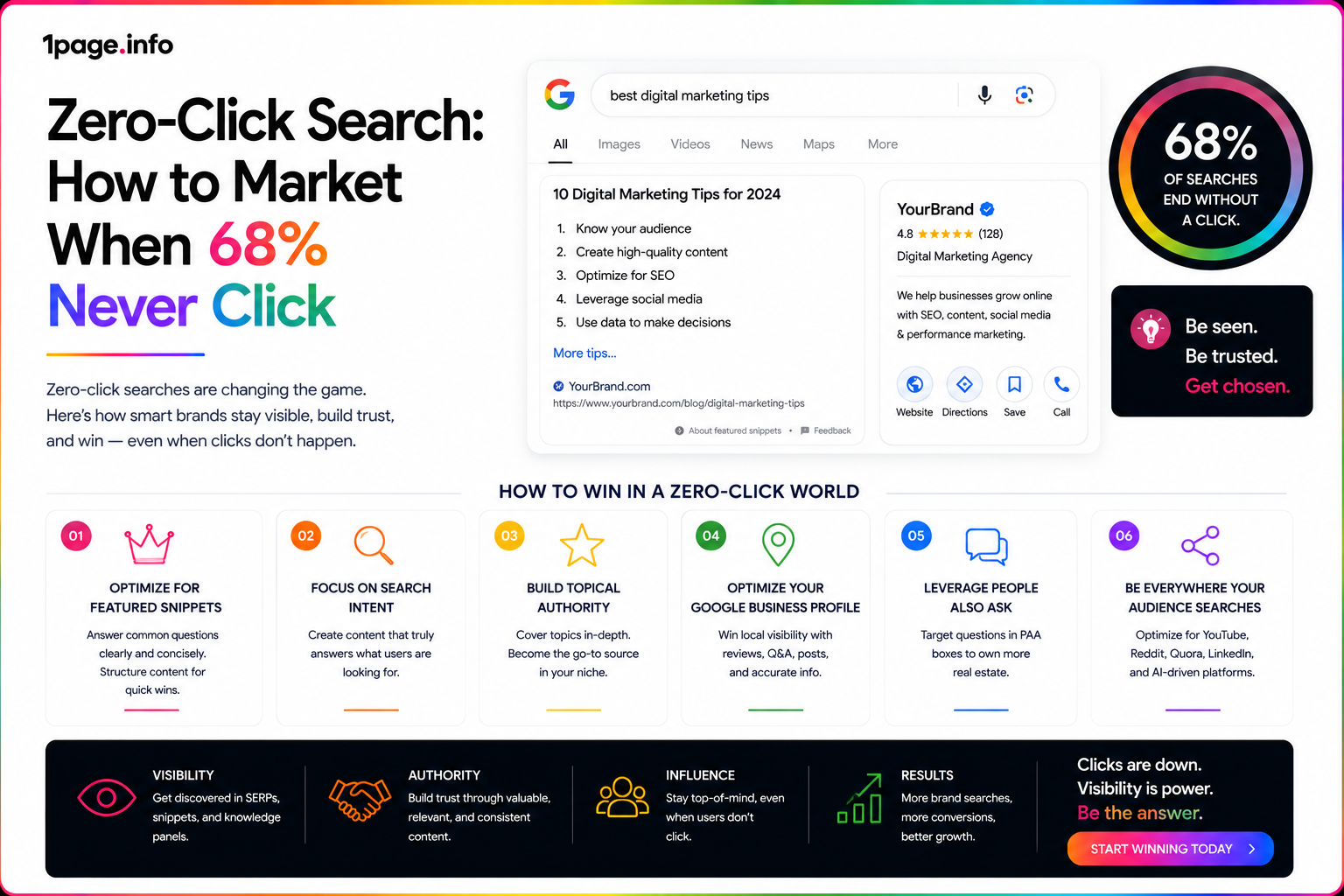
Roughly 68% of US Google searches now end without a single click to any website. The person searched, got their answer directly on the results page, and moved on. No visit. No pageview. No chance for your carefully optimized meta description to do its job.
This number should reorganize how you think about content in 2026. Most teams are still measuring success by traffic. Sessions, pageviews, time on site. Those metrics are becoming less reliable by the month, because the majority of searches never reach your site at all.
Why Are So Many Searches Ending Without a Click?
Google now answers most factual, definitional, and comparison queries directly on the results page. AI Overviews, featured snippets, knowledge panels — the answer sits right there before a user scrolls to the first blue link. If someone asks "what's the difference between GMP and WHO-GMP certification," Google increasingly just tells them, pulling the answer from a page it trusts.
This isn't limited to Google either. ChatGPT and Perplexity work the same way. They synthesize one answer and cite a small handful of trusted sources rather than returning ten links for someone to click through. The person gets their answer inside the chat. They never visit the source at all.
Here's the uncomfortable part: your content can influence a buyer's decision without ever showing up in your analytics. Someone reads a summary of your case study inside an AI answer, forms an opinion about your company, and later searches your brand name directly. Your traffic dashboard shows a branded search with no discernible source. The influence happened invisibly.
What Should You Actually Measure Now?
Clicks and sessions still matter, but they're an incomplete picture. Branded search volume tells you whether people are searching for your company by name after encountering you somewhere else. Saves and shares on social content indicate the content earned enough trust to keep. Newsletter signups and demo requests show intent that bypassed the traditional funnel entirely.
One observation worth flagging: teams that only track last-click conversions are chronically underfunding the content that actually builds trust. A technical guide that never ranks for a high-volume keyword might still be the exact page an AI engine cites when answering a buyer's question. That guide did real work. Last-click attribution gives it zero credit.
Have you checked whether your branded search volume has grown over the past six months, separate from any paid campaign? That number is often a better signal of content influence than your blog's raw traffic count.
How Should Content Actually Change?
Write for extraction, not just for scrolling. If Google or an AI engine is going to lift a paragraph from your page and present it as the answer, that paragraph needs to stand on its own. Clear definitions. Direct answers early. Specific numbers instead of vague claims.
This is exactly why generic content struggles now and specific, documented content wins. A page that says "we offer comprehensive quality solutions" gives an AI engine nothing quotable. A page that says "our facility maintains WHO-GMP certification with a 98% batch consistency rate across the last 40 shipments" gives it something concrete to cite.
Named authorship matters more than it used to. Content published under a real person's name, with visible credentials, gets treated differently than anonymous brand copy. A technical lead publishing a detailed methodology post carries more citation weight than the same content published under a generic "Team" byline.
Key Takeaway
The zero-click era doesn't mean content stops working. It means content works differently, often before a person ever reaches your site. Track branded search, saves, and demo requests alongside traffic. Write with the specificity that gets quoted, not just the polish that gets skimmed. The businesses adjusting their measurement now will understand their actual impact months before their competitors do.