
Why SEO Matters for Food Businesses
Whether you make food products sell farm goods overseas provide food to restaurants or have a food brand your customers are looking online before they decide what to buy. They compare suppliers look at product details check for certifications and visit company websites before sending a message.
If your website does not show up on the page of Google your competitors are probably getting those customers instead. This is why search engine optimization has become a digital marketing strategy for food businesses that want to be more visible get more website visitors and have more qualified leads. Unlike paid ads search engine optimization keeps bringing in visitors over time making it a good investment, for long-term business growth.
Start with Keyword Research
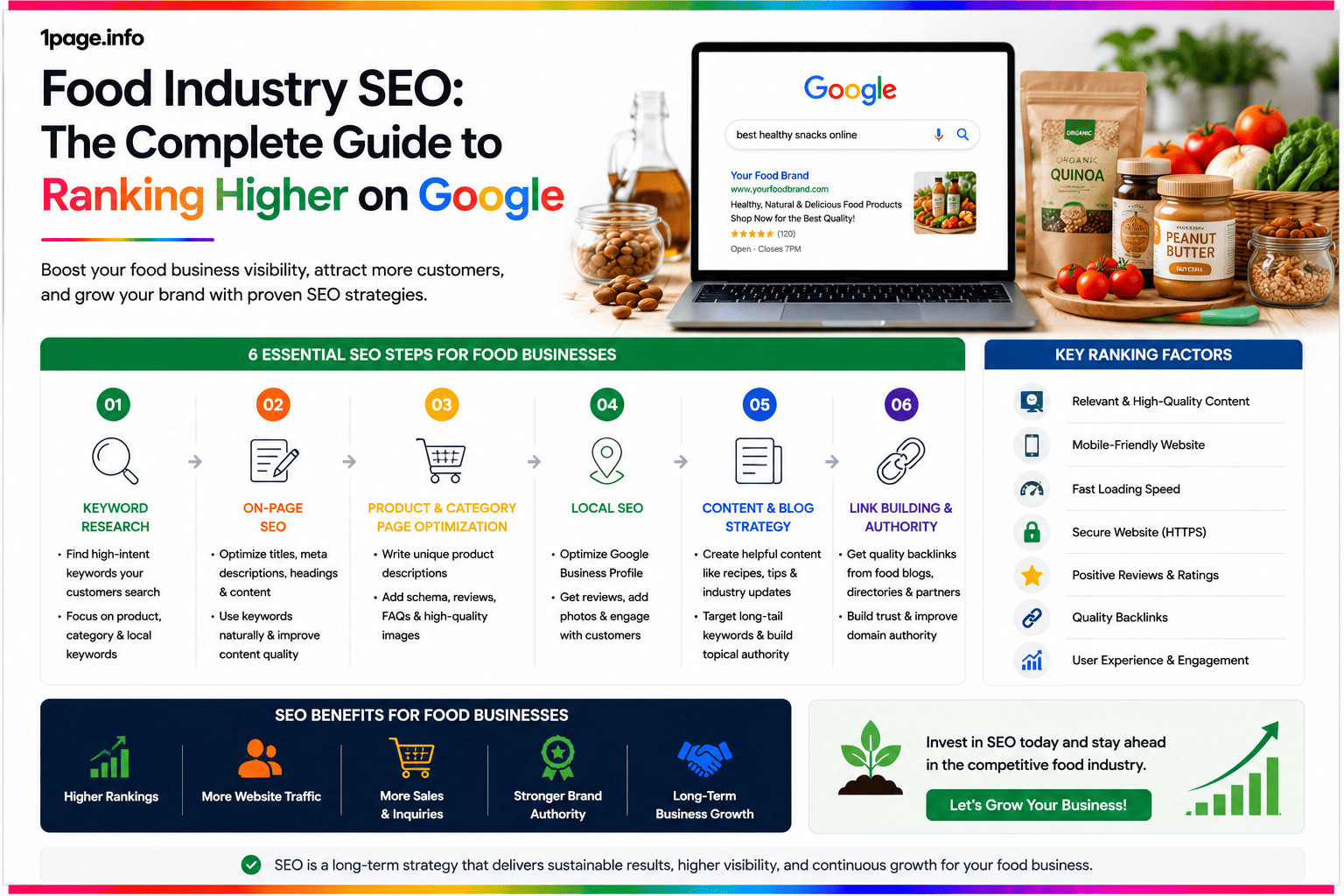
Every successful SEO campaign begins with keyword research. Before creating content or optimizing your website, you need to understand exactly what your customers are searching for.
Instead of targeting broad terms like "food products," focus on keywords with buying intent. Examples include "organic spice manufacturer," "frozen food exporter," "healthy snack supplier," "bulk rice supplier," or "food packaging company." These keywords attract visitors who are already interested in purchasing products.
Don't ignore long-tail keywords. Although they have lower search volumes, they often bring highly qualified traffic because users know exactly what they want. Using a combination of primary, secondary, and location-based keywords helps your website rank for a wider variety of searches.
Optimize Every Website Page
Keyword research is really important when you do it with on-page SEO. Every page that is important needs to have its title tag, a description that tells people what the page is about a big heading that says what the page is called and a web address that is easy for search engines to understand. You should use your target keyword in the content in a way that feels natural and is easy to read.
You should make your pictures smaller so the page loads faster and add words that describe what the picture is. It is an idea to link to other related things on your website like products or blog posts so people and search engines can find their way around. Google likes websites that load fast work well on phones and are easy to navigate.
If you make these things better it can really help your website show up higher in search results. Keyword research and on-page SEO are key, to getting your website to show up in search results for your target keyword.
Build Product Pages That Rank
Many food companies lose valuable SEO opportunities because their product pages contain only a product name and a short description.
A high-ranking product page should answer every question a buyer may have. Include detailed specifications, ingredients, nutritional information, certifications, packaging options, shelf life, storage conditions, export capabilities, available sizes, and industries served.
For example, if you're selling organic turmeric powder, explain its sourcing, processing methods, purity standards, applications, certifications, and packaging options. Add professional images and frequently asked questions to improve user experience.
Detailed product pages not only improve rankings but also increase customer confidence and conversions.
Capture Local Customers with Local SEO
Local SEO is really important for food manufacturers, distributors, wholesalers, restaurants, exporters and regional suppliers serving markets. Many people look for food suppliers by using the name of the place they're in like "food supplier in Mumbai" or "organic food manufacturer near me" or "spice exporter in India".
To make Local SEO work for you you need to make sure your Google Business Profile is complete and up to date and that you have the business information. You should also ask your customers to leave reviews and add pages to your website that talk about the areas you serve. This can really help you show up in search results.
Businesses that show up in Googles results usually get more visitors to their website and they also get more phone calls and inquiries from people who live nearby. Local SEO is important, for food manufacturers, distributors, wholesalers, restaurants, exporters and regional suppliers. It can really help them get more customers.
Use Blogging to Build Authority
A blog is one of the most powerful SEO tools for food businesses.
Instead of publishing only promotional content, create articles that educate your audience. Answer common customer questions, explain industry trends, discuss food safety standards, share storage tips, or publish buying guides.
For example, a spice exporter could write about "How to Choose High-Quality Turmeric Powder," while a food packaging company could publish "Best Packaging Solutions for Frozen Foods." These articles target informational searches and introduce potential customers to your business before they're ready to purchase.
Consistently publishing valuable blogs increases your keyword coverage and establishes your business as an industry expert.
Earn High-Quality Backlinks
Backlinks are really important for search engine optimization. When good websites link to your website Google thinks your website is very good. Food companies can get backlinks by making interesting things like research, reports and guides.
They can also get backlinks by working with food bloggers, newspapers and other food companies. For example if your food company makes a report about packaging food in a way that's good for the earth other websites in the food business might talk about it and link to your website. This helps people know about your company.
Gets you good backlinks. It is better to have a few backlinks from food websites that people respect than to have a lot of backlinks from websites that are not very good. Backlinks from food websites are very valuable, for your company. Food companies should try to get backlinks from these websites.
Learn from Successful Food Brands
Many successful food businesses have built their online presence through consistent SEO rather than relying entirely on paid advertising.
Organic food companies often rank highly by publishing educational blogs on healthy eating and sustainable farming. Food manufacturers create dedicated product pages targeting specific ingredients and certifications. Export businesses build landing pages optimized for international buyers searching for reliable suppliers.
These businesses understand that helpful content builds trust while improving Google rankings over time.
Prepare for Future SEO Trends
Search engine optimization continues to evolve as customer behavior changes.
Voice search is becoming increasingly popular, with buyers using conversational searches like "best organic food supplier near me." AI-powered search results are placing greater importance on high-quality, trustworthy content that demonstrates real expertise.
Video SEO is also becoming more important. Product demonstrations, factory tours, recipe videos, and behind-the-scenes manufacturing content can improve user engagement while increasing visibility across both Google and YouTube.
Businesses that adapt to these trends early will be better positioned to maintain strong rankings in the years ahead.
How Food Businesses Can Grow with SEO
Search engine optimization is a lot more than getting a good spot on search results. It helps your business get seen at every step of the way when a customer is buying something. When you know how people search for things you can make every page of your website better write blogs that teach people things make your product pages stronger work on getting your business seen in search results and get good websites to link back, to yours your food business can get people to visit your website all the time without just paying for ads.
As your website becomes more trusted Google shows it to people, which means you get more people asking about your business people know your brand better and your business grows over time.
Final Thoughts
The food industry is becoming increasingly competitive, making digital visibility essential for long-term success. Buyers now research products, suppliers, and manufacturers online before making purchasing decisions. Businesses that fail to invest in SEO risk losing valuable opportunities to competitors with stronger online presences.
A well-planned SEO strategy built around keyword research, on-page optimization, product page SEO, Local SEO, content marketing, and quality link building creates a strong foundation for sustainable growth. By consistently improving your website and publishing valuable content, your food business can rank higher on Google, generate more qualified leads, and establish itself as a trusted name in the industry.