
Introduction
The marine and shipping industry is really important for trade. It helps connect manufacturers, exporters, importers, logistics companies and businesses from countries. * Companies in this industry offer services like freight forwarding, vessel management, shipbuilding, port services, marine engineering, offshore support, cargo handling and logistics solutions. When customers need these services they usually start by searching.
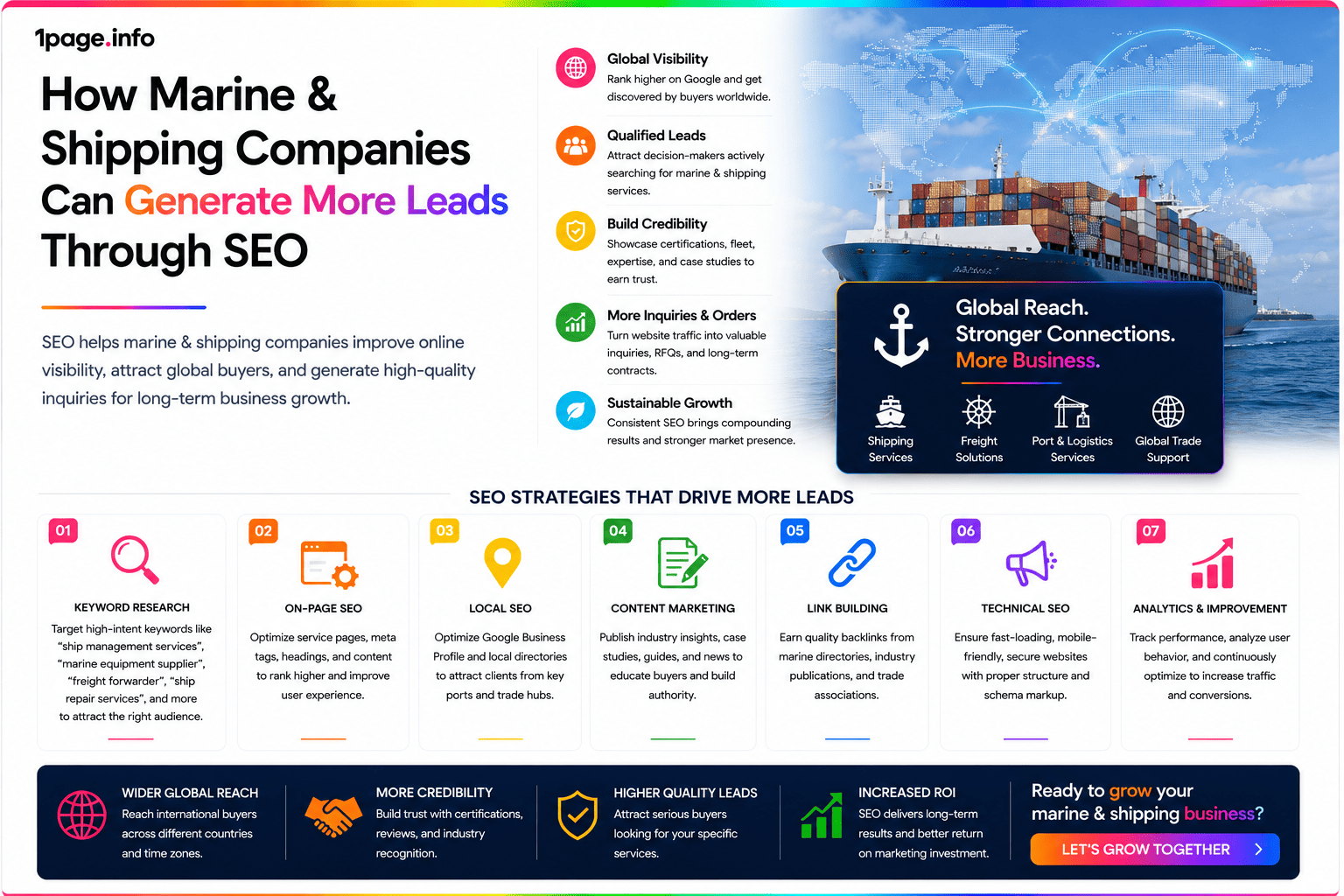
They look at companies websites, services, certifications, fleet information and what other customers say about them. Then do they contact a service provider for a quote. Some old ways of getting business like trade exhibitions, networking and referrals still work well. They are not enough, on their own anymore. Search Engine Optimization or SEO can help marine and shipping companies get noticed online. This way they can attract people who are really looking for shipping and marine solutions.
A good SEO plan can put your business in front of decision-makers. It helps build trust and supports growth for your company. Marine and shipping companies can benefit from SEO to reach customers who are searching for their services. They can improve their visibility and get qualified leads.
Why SEO Is Essential for Marine & Shipping Companies
Business buyers in the marine and shipping industry rely heavily on online research before selecting logistics partners or service providers. Whether they need international freight services, marine engineering, vessel maintenance, shipbuilding, customs clearance, offshore support, or port operations, they expect to find reliable companies through Google.
SEO ensures your business appears when buyers search for marine and shipping services. Companies that rank on the first page of search results are significantly more likely to receive inquiries because they are visible at the exact moment potential customers are evaluating suppliers.
Unlike traditional advertising, SEO focuses on buyers with immediate business requirements. These visitors already know the type of service they need, making them more likely to request quotations or begin commercial discussions. Over time, SEO becomes a long-term marketing asset that continuously generates qualified leads without relying entirely on paid advertising.
Understanding B2B Buyer Search Behavior
The marine and shipping industry primarily serves business customers, making B2B buyer behavior very different from consumer purchasing. Logistics managers, procurement teams, exporters, importers, project managers, and shipping coordinators often conduct extensive research before selecting a service provider.
Buyers compare companies based on operational capabilities, geographic coverage, certifications, compliance standards, fleet capacity, project experience, and customer support. They look for detailed service information, industry expertise, successful project examples, and evidence of reliability before making contact.
Many buyers also search for solutions to specific logistics or transportation challenges before selecting a supplier. Businesses that provide useful technical information and educational content during this research stage are more likely to establish credibility and generate qualified inquiries.
Buyer-Intent Keyword Research for Marine & Shipping Services
Successful SEO begins with understanding how customers search for shipping and marine services. Instead of targeting only broad industry terms, businesses should focus on buyer-intent keywords that indicate commercial purchasing interest. People searching for freight forwarding companies, marine engineering services, offshore logistics, cargo transportation, vessel maintenance, customs clearance, ship repair, port operations, or international shipping solutions are often ready to engage with service providers.
These targeted searches typically generate higher-quality leads because buyers already understand their requirements. Long-tail keywords also provide valuable opportunities by targeting specialized services, industries, and locations. Optimizing content around these searches helps businesses attract qualified visitors while competing in less crowded search results.
Optimizing Service Pages, Fleet Pages, and Logistics Solutions
Service pages are often the first interaction prospective clients have with your business. Every page should clearly explain the services offered, industries served, operational capabilities, geographic coverage, transportation modes, compliance standards, and customer benefits.
Fleet pages are equally important because customers want to understand vessel types, equipment, capacities, operational experience, and available resources before making decisions. Providing detailed fleet information demonstrates transparency while helping buyers evaluate whether your company can meet their operational requirements.
Logistics solution pages should explain how your business handles cargo movement, supply chain management, customs processes, warehousing, multimodal transportation, offshore logistics, and specialized shipping requirements. Well-structured pages improve both user experience and search engine visibility.
Content Marketing for Lead Generation and Industry Authority
Content marketing is really helpful for shipping businesses. It shows that they are experts in what they do and it also helps them do better in search engine rankings. When people are looking for a shipping company they usually search for information on things like shipping rules how international trade works, planning logistics, customs paperwork making freight better staying safe at sea and managing supply chains.
They want to know all about these things before they choose a company to work with. If you put out articles that teach people things updates on what's happening in the industry guides on shipping, information on compliance tips on logistics and ideas on international trade it makes your business look like a trusted source of information. This kind of content brings in people who're actually interested in what you do and it makes your brand look more credible. It is really useful to share stories about projects you have done.
For example you can talk about shipping projects that were complicated logistics solutions work you did offshore or big marine engineering jobs you completed. When you explain what problems your customers had, how you solved them and what they got out of it it shows that you are capable of doing work. This makes people who might want to work with you more likely to get in touch with shipping businesses, like yours.
Local SEO Opportunities for Ports, Shipyards, and Marine Service Providers
Although shipping is a global industry, local SEO remains highly valuable for ports, shipyards, marine engineering companies, logistics providers, repair facilities, and offshore service businesses. Many customers search for nearby marine services based on specific ports, coastal regions, or operational locations.
Optimizing your Google Business Profile with accurate business information, service locations, operating hours, photographs, and customer reviews helps improve local visibility. Businesses serving multiple ports should also create dedicated location pages highlighting services available at each facility.
Local SEO helps shipping companies connect with customers requiring immediate operational support while improving visibility within important maritime regions.
Building Lead Generation Funnels Through SEO
Generating website traffic is only the first step toward acquiring new business. Marine and shipping companies should guide visitors through a structured process that builds confidence before encouraging commercial inquiries.
Educational content often attracts visitors during the research stage, while detailed service pages, fleet information, certifications, customer testimonials, and project case studies help buyers evaluate your capabilities. Once customers are ready to proceed, clear calls-to-action should encourage quotation requests, consultation bookings, shipment inquiries, or direct contact with your sales team.
Providing downloadable service brochures, shipping guides, technical documentation, logistics checklists, or capability statements also encourages visitors to share their contact information, allowing businesses to nurture potential clients through ongoing communication.
Analytics, Conversion Tracking, and ROI Measurement
SEO delivers the best results when supported by continuous monitoring and optimization. Businesses should regularly track website traffic, keyword rankings, inquiry forms, quotation requests, phone calls, document downloads, and lead sources to understand which marketing activities generate the highest-quality opportunities.
Website analytics also reveal which services receive the most attention, which industries generate the strongest interest, and how visitors move through the website before making contact. These insights allow businesses to improve content, strengthen service pages, and optimize the customer journey.
Regular performance analysis ensures that SEO investments continue generating measurable business growth while supporting long-term marketing objectives.
Practical Implementation Guide for Marine & Shipping Businesses
Building a website is the first step to making a strong SEO plan. This website should show what services you offer what your fleet can do what industries you work with what certifications you have, where you operate and what projects you have done. The website needs to be fast work well on phones and be easy to use. It should also give people the information they need to decide if they want to buy from you.
Next you should find out what words people are using to search for things like your services. Then you should make your website better by using these words making your service and fleet pages better writing articles that teach people about your industry and making sure people in your area can find you online. You should also show people the projects you have done by writing stories about them.
You should keep adding technical information to your website make it work better ask your customers what they think and see how people are using your website. This will help you stay visible in search results. Keep getting new leads. You should think of SEO as something that will help you in the run. It will help you be more visible online make you look more credible and get you inquiries from people who are really interested in what you do. SEO is, like building a house it takes time and work. It is worth it. You will get better at it over time. It will help your business grow.
Conclusion
Marine and shipping companies are using SEO to get customers. This is because SEO helps these companies connect with people who are actually looking for shipping services. When people want to hire a company to move their things from one place to another they usually do some research on the internet first.
If a marine or shipping company shows up near the top of the search results that company is more likely to get the job. To get good at SEO, marine and shipping companies need to understand how the people who might hire them make decisions. They also need to make their websites better so people can easily find the information they need. Writing articles and other things that are useful to people in the shipping industry is also an idea.
Marine and shipping companies should also try to be visible in search results for people who are looking for services in their area. If they do all these things they can get more people to contact them and become customers. Investing in SEO is an idea, for marine and shipping companies because it helps them get noticed and grow their business over time. This is important because there are a lot of companies competing with them.